 PlantFun
Plant Needs
Characteristics
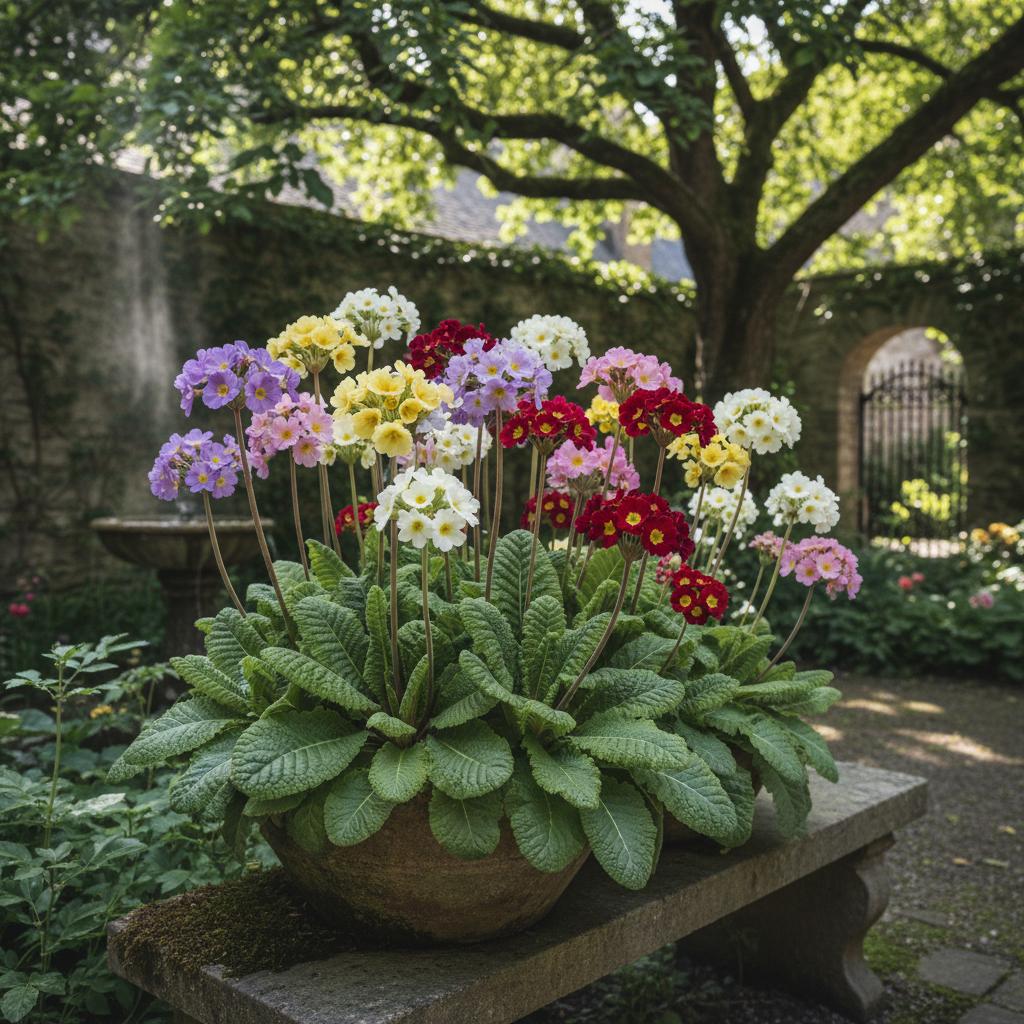
- Leaves: Basal rosette, obovate to spatulate, heavily wrinkled (rugose) texture, crenate to dentate margins, tapering to a short winged petiole;
- Flowers: Actinomorphic, salverform corolla with 5 notched petals, typically pale yellow with a darker yellow center, borne singly on short pedicels;
- Stem: Acaulescent (stemless) in the common species, with flowers arising directly from the basal rosette;
- Roots: Fibrous root system emerging from a short, stout rhizome.
Care Guide
Keep soil evenly moist during active spring growth; reduce slightly in summer if plant goes dormant.
Apply a balanced, half-strength liquid fertilizer as new growth appears.. Avoid over-fertilizing, which promotes excessive foliage at the expense of flowers.
Banana Peel Tea:Steep chopped banana peels in water for 24-48 hours. Dilute 1:1 with water and apply to the soil base to encourage robust spring blooms. Discard solid peels in compost to avoid attracting pests.- Deadhead spent flowers regularly by pinching them off at the base to prolong the blooming period. Remove any yellowing or decaying leaves promptly to maintain airflow and prevent botrytis rot.
Toxicity
Warning: this plant may be toxic.
Pets: Toxic to cats per ASPCA; ingestion may cause mild vomiting and gastrointestinal upset.
Humans: May cause contact dermatitis (primin allergy) in sensitive individuals; mild gastrointestinal upset if ingested in large quantities.
Garden Uses & Culture
Culture: In Victorian flower language, the primrose symbolizes youth, young love, and the sentiment "I can't live without you." It is deeply embedded in European folklore as a key that unlocks spring.
Usage: Widely used as an ornamental bedding plant, in woodland gardens, borders, and spring container displays.