 PlantFun
Plant Needs
Characteristics
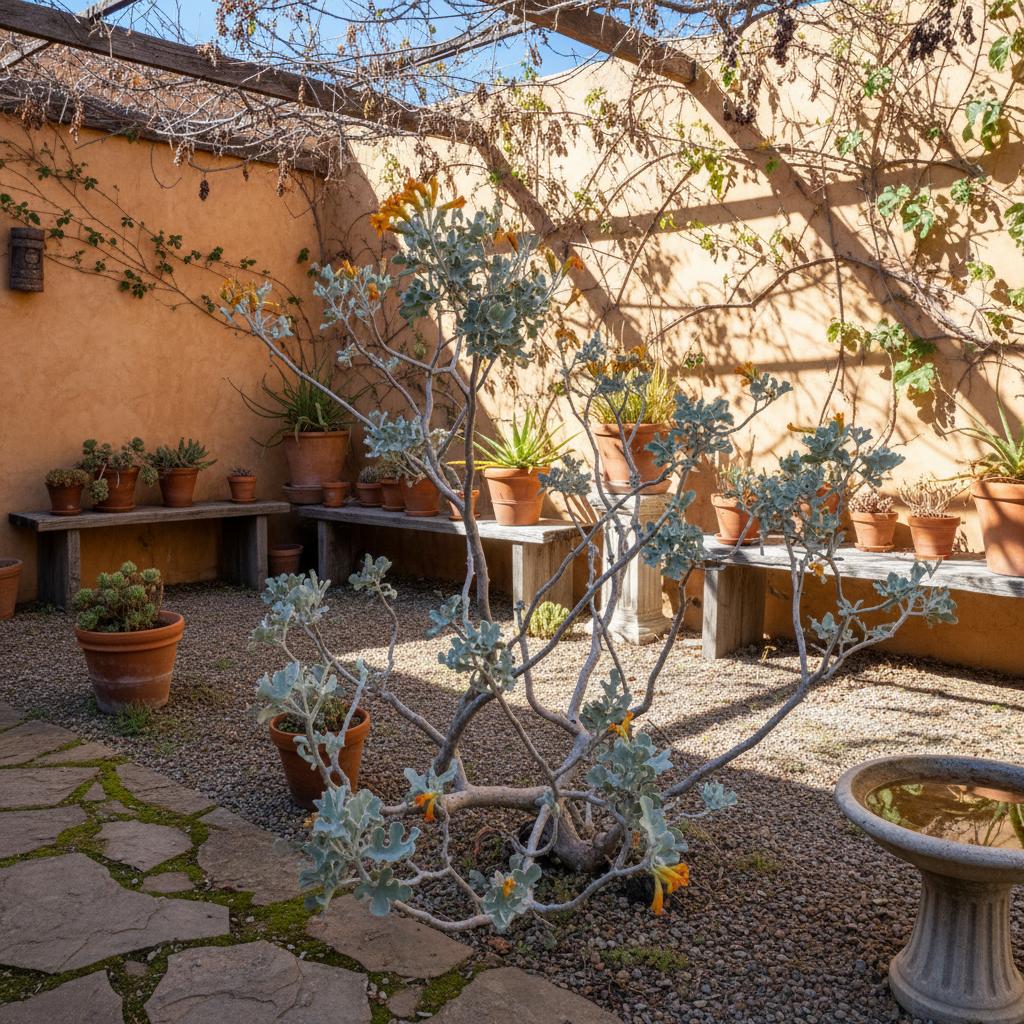
- Leaves: Thick, velvety, gray-green, broadly ovate to suborbicular, coarsely toothed margins, forming a compact, rounded mound;
- Flowers: Small, yellow, discoid flower heads lacking ray florets, nestled closely among the foliage;
- Stems: Short, highly branched, brittle, spreading close to the ground, covered in scurfy hairs.
Care Guide
Water sparingly, allowing soil to dry completely between waterings.
Apply a very light, diluted organic tea if grown in sterile pots; otherwise unnecessary.. Desert natives require very lean soils; excess nutrients will cause leggy, weak growth.
Eggshell Powder:Crush clean, dry eggshells into a fine powder and sprinkle sparingly around the base to mimic mineral-rich desert soils. Avoid high-nitrogen materials like coffee grounds.- Remove dead or decaying foliage at the base to prevent fungal rot;
- Do not prune healthy stems, as the plant's natural mounding habit is its primary defense against harsh elements.
Toxicity
Warning: this plant may be toxic.
Pets: Not listed as toxic by ASPCA; ingestion of rough foliage may cause mild, self-limiting gastrointestinal upset.
Humans: Non-toxic, though not considered edible due to its rough texture and strong scent.
Garden Uses & Culture
Culture: In the American Southwest, its unique, low-mounding 'turtle shell' appearance makes it a fascinating subject of desert botanical studies and xeriscape gardening.
Usage: Primarily used in specialized desert landscaping, rock gardens, and xeriscaping to provide low ground cover.