 PlantFun
Plant Needs
Characteristics
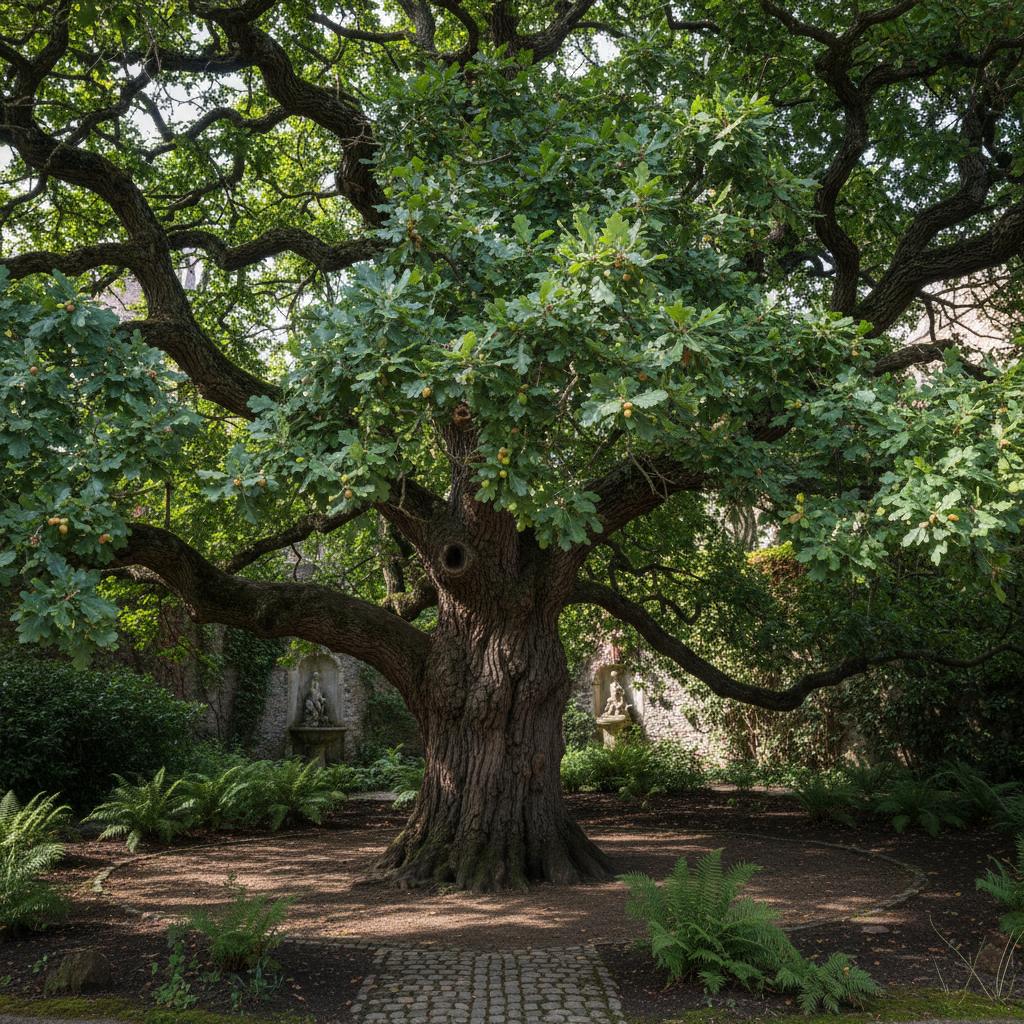
- Leaves: Alternate, obovate to oblong, 7-14 cm long, with 4-7 pairs of deep rounded lobes, very short petiole;
- Flowers: Monoecious; male flowers in drooping yellow-green catkins; female flowers small, inconspicuous, on long peduncles;
- Fruit: Acorns, 2-2.5 cm long, borne on a long stalk (peduncle), cupule covering about one-third of the nut;
- Bark: Grayish-brown, deeply fissured and rugged in mature trees.
Care Guide
Water young trees weekly; mature trees rely entirely on natural rainfall
Apply a layer of organic compost around the drip line if soil is severely degraded. Mature oaks generally do not require supplemental fertilization if left in a naturalized setting with leaf litter.
Leaf Mold Mulch:Gather fallen oak leaves, mix with used coffee grounds and crushed eggshells, and allow to decompose. Apply as a mulch ring around the tree (keeping it away from the trunk) to mimic natural forest floor nutrient cycling.- Timing: Prune only during late autumn or winter dormancy to prevent the spread of oak wilt disease;
- Structure: Remove dead, diseased, or crossing branches to maintain a strong central leader in young trees;
- Caution: Avoid heavy pruning on mature trees, as it can trigger excessive water sprout growth and weaken the tree.
Toxicity
Warning: this plant may be toxic.
Pets: Toxic per ASPCA; ingestion of acorns or young leaves can cause gastrointestinal distress and potential kidney damage in rare cases.
Humans: Raw acorns contain tannins which can cause gastrointestinal upset if consumed in large quantities.
Garden Uses & Culture
Culture: In Celtic and Norse mythology, the oak is a sacred tree associated with thunder gods like Thor and the Dagda, symbolizing strength, longevity, and endurance.
Usage: Provides high-quality, durable timber historically used for shipbuilding, and currently for furniture, flooring, and wine barrels. It is also a crucial ecological keystone species.