 PlantFun
Plant Needs
Sunlight
Requires deep forest shade; relies entirely on the host vine for photosynthesis.
Watering
Absorbs all necessary water directly from the host Tetrastigma vine.
Temperature
Thrives in hot, humid tropical rainforest environments.
Characteristics
- Leaves: Absent; the plant lacks true leaves, stems, or roots, existing entirely as a cellular network within its host vine;
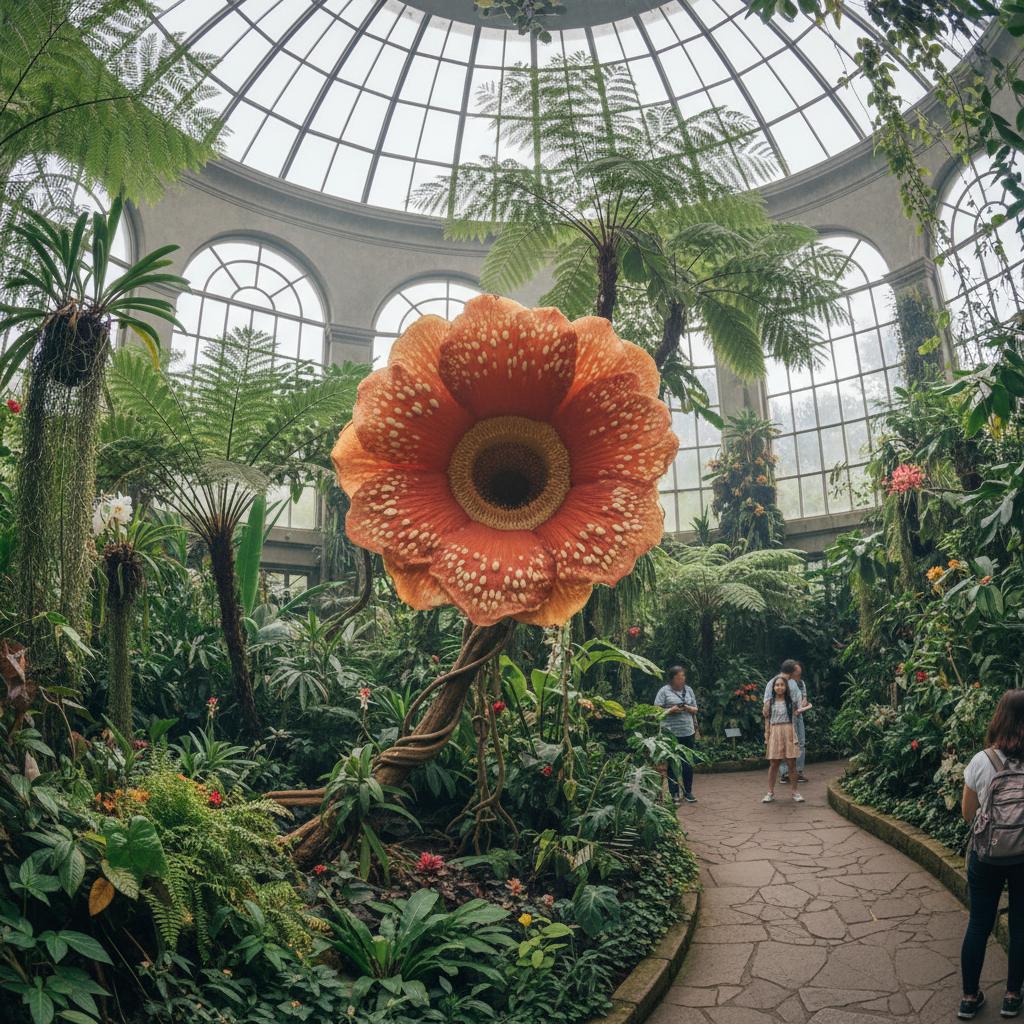
- Flowers: Enormous, up to 1 meter in diameter and weighing up to 11 kg, featuring five thick, leathery, reddish-brown lobes covered in pale, wart-like spots;
- Scent: Emits a strong, putrid odor resembling rotting flesh to attract carrion flies for pollination;
- Structure: The center of the flower contains a deep well (diaphragm) with a central column bearing the reproductive organs.
Care Guide
Watering
N/A
Fertilization
N/A. Draws all nutrients parasitically from the host vine.
Banana Peel Tea:Not applicable to Rafflesia, but if cultivating a host vine, steep banana peels in water for 24 hours to boost vine root health. Avoid foul odors by not leaving peels in water for too long.Pruning
- Pruning is not applicable as the plant has no stems or leaves;
- Do not disturb the flower during its brief 5-7 day blooming period;
- Conservation efforts focus on protecting the host vines from logging and habitat destruction.
Toxicity
Warning: this plant may be toxic.
Pets & Humans
Pets: No known toxicity (per ASPCA guidelines for unlisted non-toxic plants), though highly unlikely to be encountered by pets.
Humans: No known toxicity, though the putrid smell may cause severe nausea.
Garden Uses & Culture
Culture: N/A
Usage: - **Ecotourism**: A major draw for botanical enthusiasts and nature documentaries; - **Scientific Research**: Studied for its extreme parasitic adaptations and massive horizontal gene transfer.