 PlantFun
Plant Needs
Sunlight
Requires bright, indirect sunlight to full sun; protect from intense afternoon sun in peak summer to prevent scorching.
Watering
Water thoroughly when the soil is completely dry; keep strictly dry during winter dormancy.
Temperature
Prefers warm days and cool nights; requires a cool winter resting period (5-10°C) to initiate spring flower buds.
Characteristics
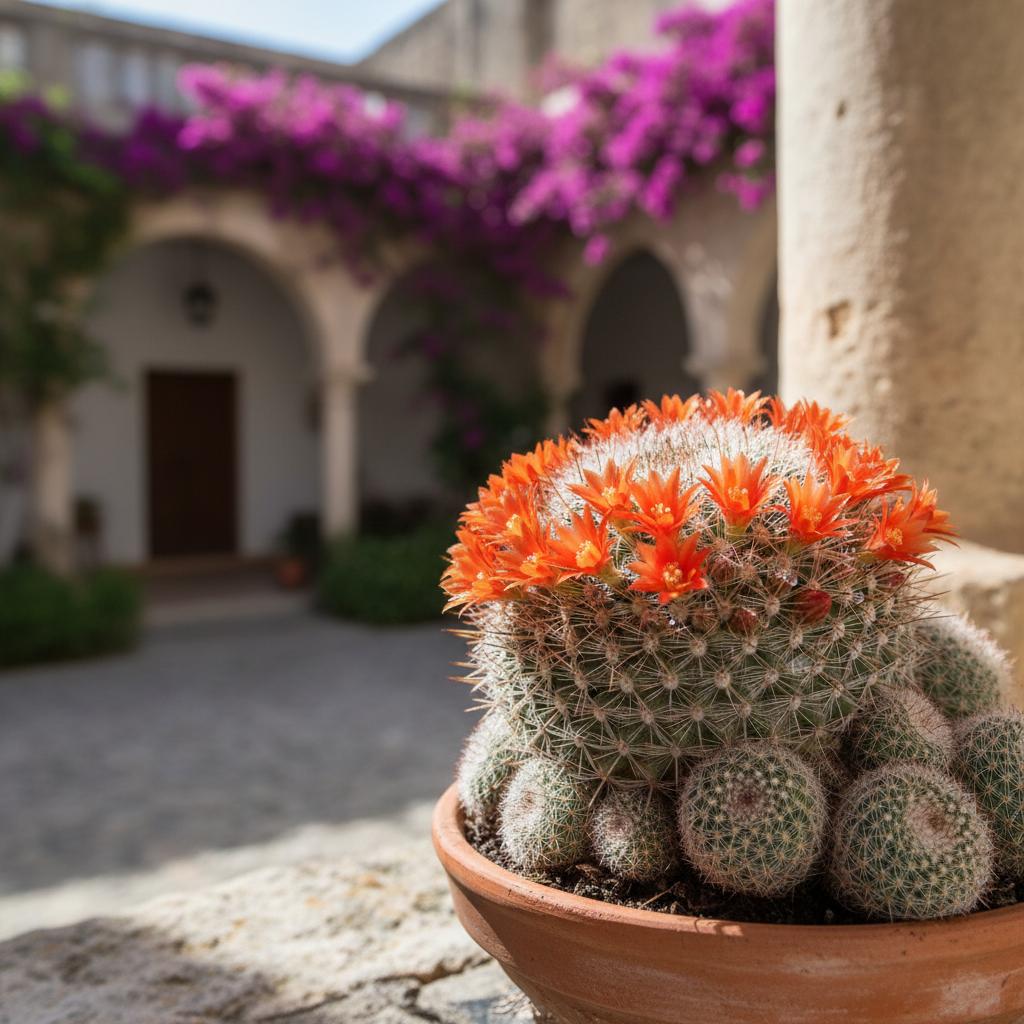
- Stem: Globose to short cylindrical, clustering, bright green, typically up to 5 cm in diameter, with spirally arranged tubercles.
- Areoles and Spines: Small areoles bearing numerous fine, whitish to yellowish radial spines (2-3 mm long); central spines are often absent or indistinguishable from radials.
- Flowers: Funnel-shaped, bright red to orange-red, arising from the lower part of the stem (basal), about 3-4 cm long and wide.
- Fruit: Small, globose, reddish berries containing numerous tiny black seeds.
Care Guide
Watering
Water thoroughly, allowing the soil to dry out completely before watering again.
Fertilization
Apply a diluted, low-nitrogen fertilizer once a month.. Do not fertilize during the winter dormancy period.
Banana Peel Tea:Soak chopped banana peels in water for 24-48 hours, strain, and dilute 1:1 with water. Apply during the spring growing season to encourage prolific blooming. Discard the solid peels in compost; do not leave raw organic matter on the soil surface to avoid mold and fungus gnats.Pruning
- Deadheading: Carefully remove spent flowers with tweezers once they are completely dry to maintain a tidy appearance.
- Offset removal: Clumps can be left to grow naturally, or offsets (pups) can be gently twisted off in spring for propagation.
- Root pruning: Trim dead or rotting roots only during repotting.
Toxicity
Warning: this plant may be toxic.
Pets & Humans
Pets: Non-toxic per ASPCA guidelines for typical cacti, but spines pose a physical hazard if chewed.
Humans: Non-toxic to humans, though the fine spines can cause mechanical skin irritation.
Garden Uses & Culture
Culture: Highly prized in European and American succulent collections for its miniature size, ease of care, and the striking contrast of its vibrant basal blooms against the green stems.
Usage: Excellent for small pots, windowsill gardens, rockeries, and succulent dish gardens.