 PlantFun
Plant Needs
Characteristics
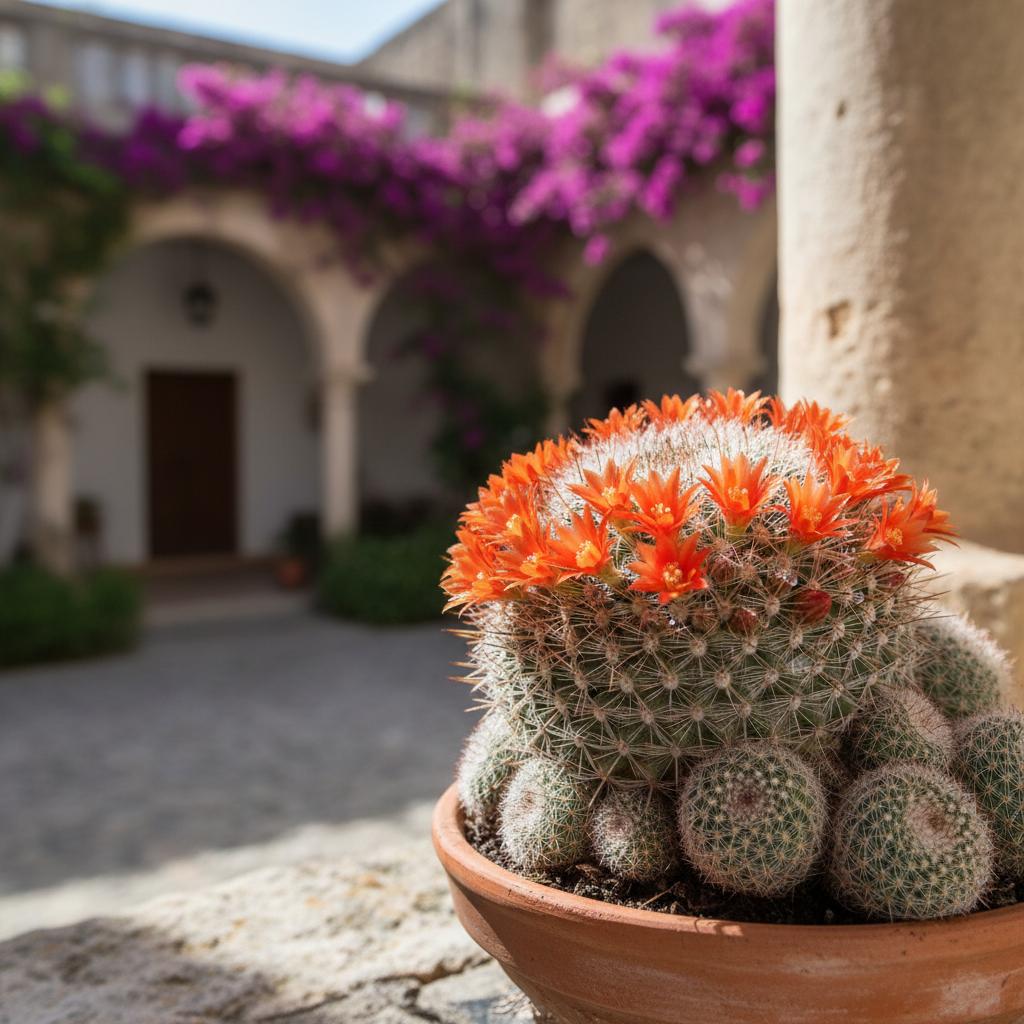
- Stem: Small, globose to depressed-globose, clustering to form dense mounds, featuring small tubercles instead of distinct ribs;
- Spines: Numerous, fine, bristle-like, whitish to pale yellow, covering the stem densely;
- Flowers: Funnel-shaped, bright red to orange, uniquely emerging from the lower areoles near the base of the plant;
- Roots: Fibrous root system, adapted to shallow, rocky soils.
Care Guide
Water thoroughly, allowing excess to drain, then wait until soil is completely dry before watering again.
Apply a diluted, low-nitrogen cactus fertilizer once as growth resumes.. Fertilization recommendations description
Banana Peel Tea:Steep dried banana peels in water for 24 hours. Dilute 1:1 with water. High potassium promotes vibrant basal blooms. Avoid using fresh peels to prevent fungal gnats and odors.- Deadheading: Gently remove spent flowers with tweezers to keep the plant tidy and prevent fungal growth;
- Offset Removal: Carefully detach offsets (pups) with sterile tools if propagation is desired or to control mound size;
- Root Pruning: Trim dead or rotting roots only during repotting.
Toxicity
Warning: this plant may be toxic.
Pets: Non-toxic to cats per ASPCA guidelines; spines may cause physical injury if chewed.
Humans: Non-toxic to humans; poses only a mechanical hazard due to sharp spines.
Garden Uses & Culture
Culture: In Western indoor gardening, small cacti like Rebutia symbolize endurance, resilience, and the unexpected beauty of harsh environments.
Usage: - Highly popular as ornamental houseplants and windowsill decorations; - Used in rockeries and xeriscaping in frost-free, arid climates; - Excellent for miniature desert dish gardens.