 PlantFun
Plant Needs
Characteristics
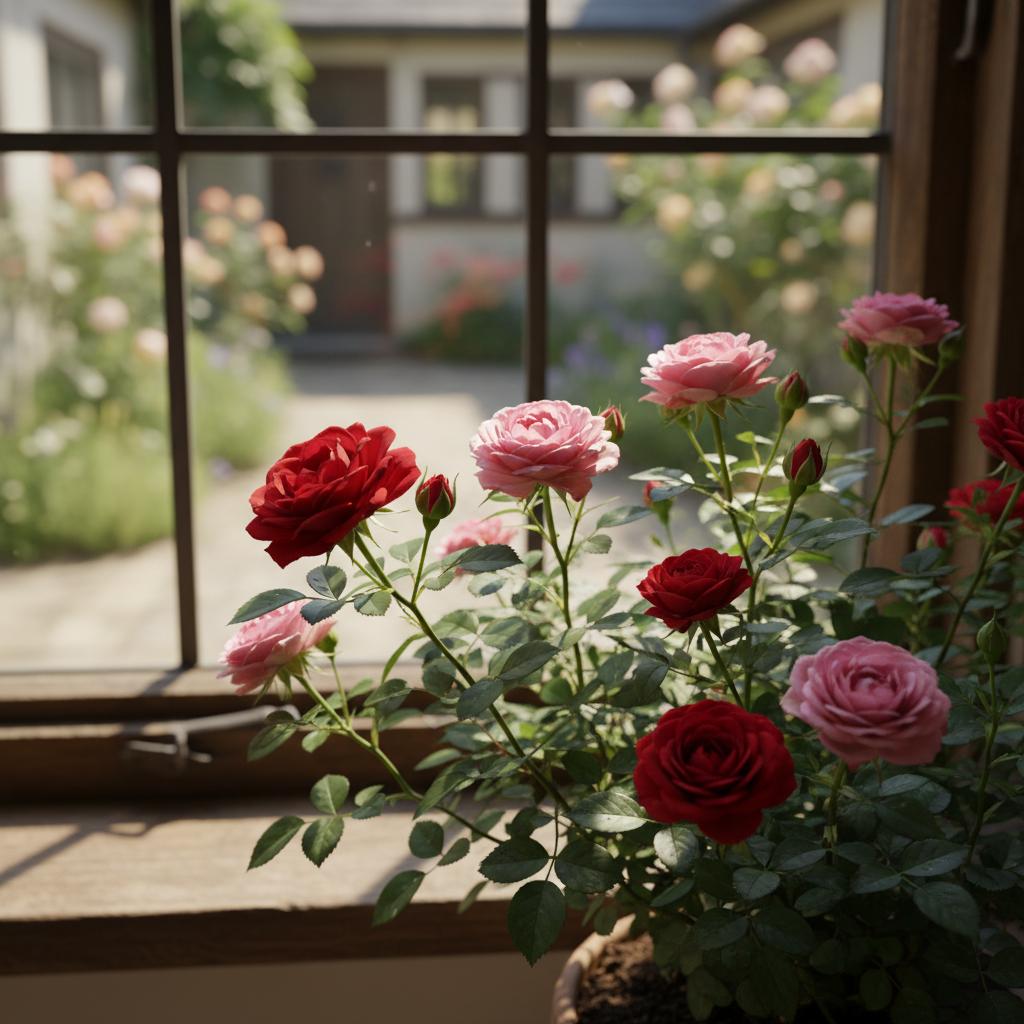
- Leaves: Pinnately compound, small, dark green, glossy, with finely serrated margins;
- Flowers: Small, 2 - 5 cm across, single to fully double, blooming in clusters or solitary, available in red, pink, yellow, white, and orange;
- Stems: Slender, woody, typically armed with small, sharp prickles.
Care Guide
Water deeply when the top inch of soil feels dry, avoiding wetting the foliage.
Begin feeding when new growth appears.. Requires regular nutrient replenishment during the active growing season.
Banana Peel and Eggshell Mix:Steep chopped banana peels in water for 48 hours to extract potassium, and mix with finely powdered, rinsed eggshells for calcium. Pour the liquid around the base of the plant to encourage strong stems and prolific blooms. Discard solid peels in compost to avoid attracting pests or causing odors.- Prune in late winter or early spring before new growth begins;
- Remove dead, diseased, or crossing branches to improve air circulation;
- Deadhead spent flowers regularly during the blooming season to encourage new buds;
- Cut back by about one-third of its height annually to maintain a compact shape.
Toxicity
Warning: this plant may be toxic.
Pets: Non-toxic per ASPCA; safe for cats, though thorns may cause mechanical injury.
Humans: Non-toxic; petals are technically edible, though caution is advised regarding pesticide residue.
Garden Uses & Culture
Culture: In Western culture, roses are the ultimate symbol of love, beauty, and passion. Miniature roses carry this same romantic symbolism but are often associated with delicate affection and intimate, lasting devotion.
Usage: Ideal for container gardening, window boxes, low borders, edging, and as temporary indoor flowering centerpieces.