 PlantFun
Plant Needs
Characteristics
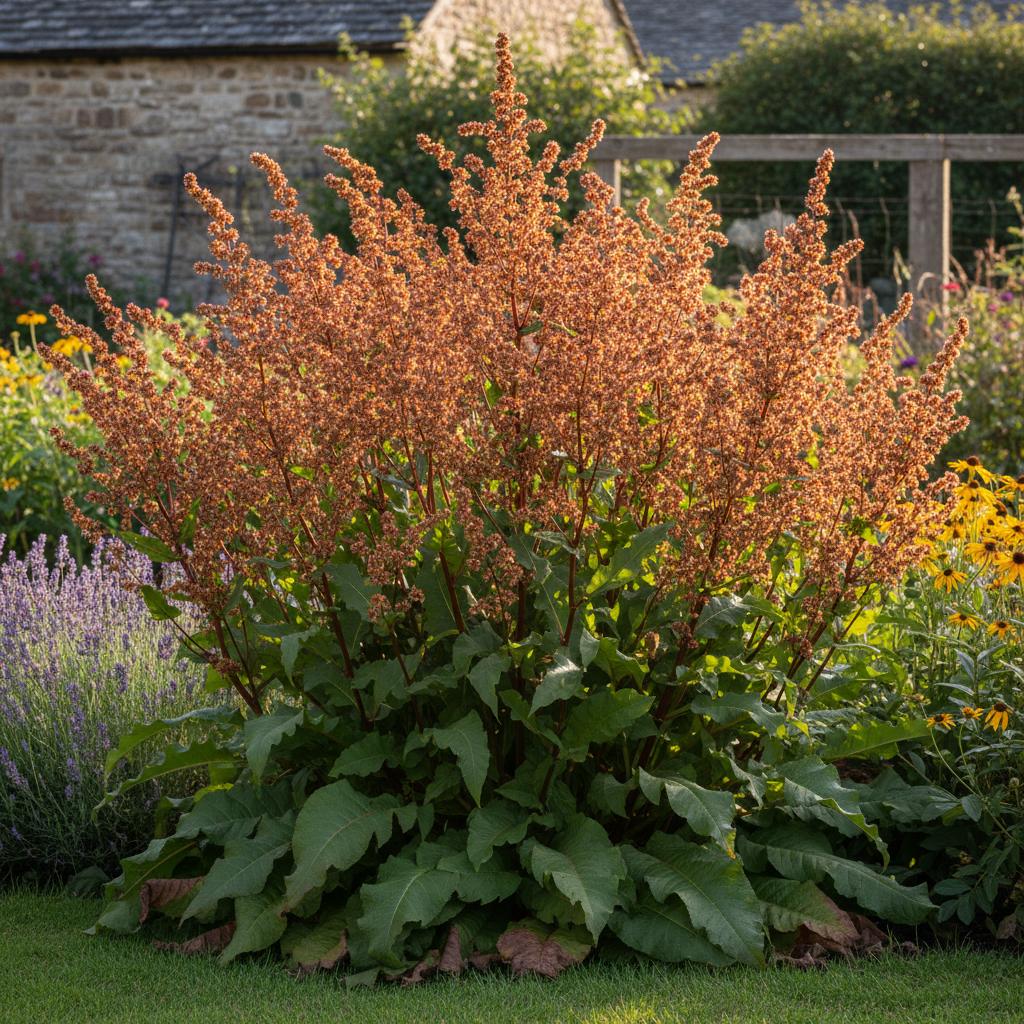
- Leaves: Basal leaves are large, ovate-oblong to lanceolate, up to 30 cm long, with distinctly undulate (wavy) margins and a cordate base;
- Flowers: Inflorescence is a large, dense, whorled panicle; flowers are small, initially greenish but turning deep reddish-brown as they mature;
- Fruit: Fruiting valves are broadly ovate, distinctly toothed (dentate) along the margins, typically bearing a prominent swollen tubercle;
- Stem: Erect, stout, longitudinally ribbed, often branching in the upper half.
Care Guide
Water moderately, allowing the top inch of soil to dry out between waterings.
Apply a light top-dressing of compost if grown ornamentally.. Generally does not require supplemental fertilization in most soils.
Coffee grounds:Sprinkle a small amount of used, cooled coffee grounds around the base to provide a mild nitrogen boost for foliage. Do not apply thickly to avoid mold growth.- Deadheading: Cut down the tall flower stalks before seeds mature and disperse to prevent aggressive self-seeding;
- Foliage cleanup: Remove dead or damaged basal leaves in late autumn or early spring;
- Eradication: If removing the plant, ensure the entire deep taproot is dug out, as it can regenerate from root fragments.
Toxicity
Warning: this plant may be toxic.
Pets: Toxic to cats per ASPCA due to soluble calcium oxalates, which can cause systemic issues if ingested in large amounts.
Humans: Contains soluble oxalates; consuming large quantities of raw leaves can cause gastrointestinal upset or contribute to kidney stones.
Garden Uses & Culture
Culture: In European foraging traditions, various Rumex species have been used as wild potherbs, though they are often viewed primarily as agricultural weeds indicating disturbed or overgrazed land.
Usage: - **Ecological**: Provides habitat and food for certain butterfly and moth caterpillars; - **Foraging**: Young leaves are occasionally consumed after boiling in multiple changes of water to remove oxalic acid, though R. cristatus is less commonly used than R. crispus.