 PlantFun
Plant Needs
Sunlight
Prefers bright, indirect light but is highly adaptable to partial sun or low light conditions.
Watering
Highly drought-tolerant; water only when the soil is completely dry.
Temperature
Thrives in warm temperatures; protect from frost and cold drafts below 10°C.
Characteristics
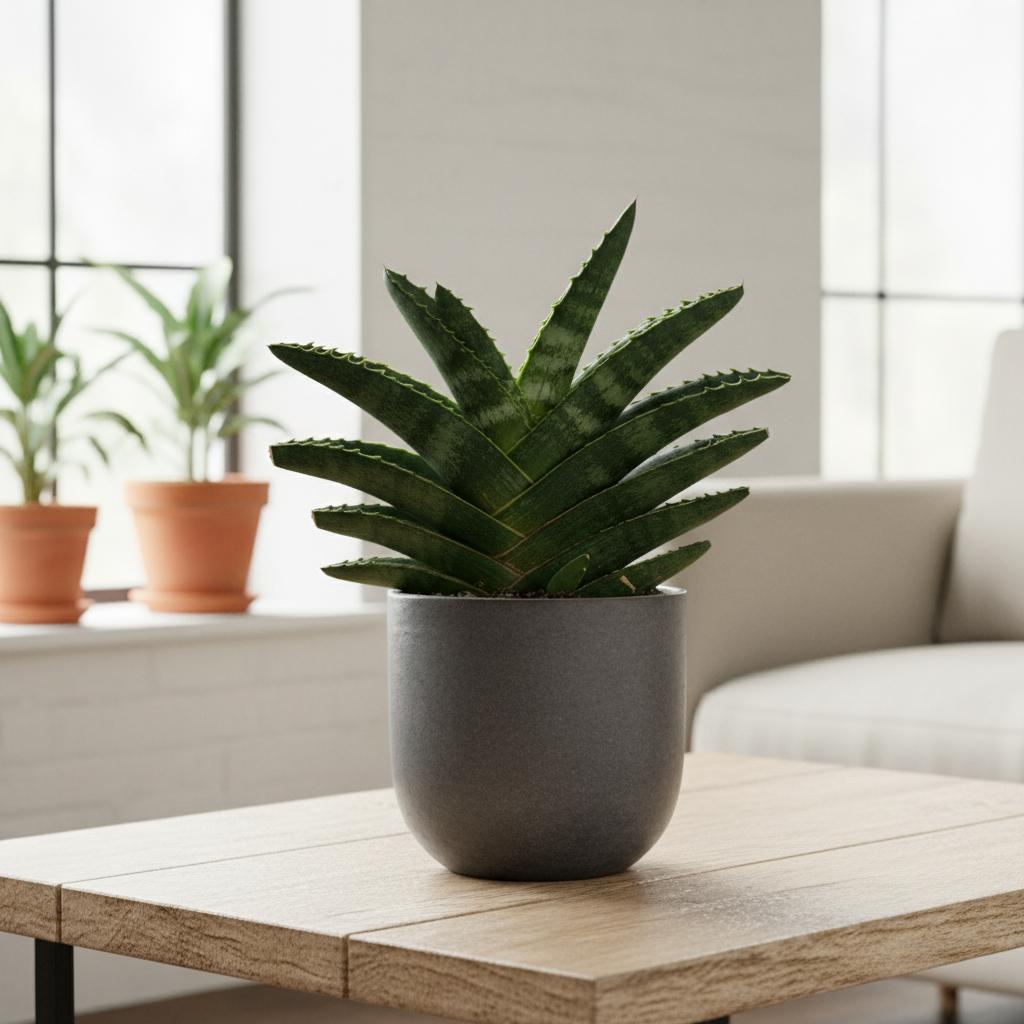
- Leaves: Short, thick, V-shaped (channeled) leaves with sharp tips, arranged in an alternating, tightly stacked spiral; dark green with reddish-brown and white margins.
- Stem: Virtually stemless, growing as a low, compact rosette.
- Roots: Thick, fleshy rhizomes adapted for water storage.
- Flowers: Rarely produced in cultivation; small, grayish-white to pale purplish flowers on a raceme.
Care Guide
Watering
Water thoroughly, allowing excess to drain, then wait until the soil is completely dry before watering again.
Fertilization
Apply a diluted, low-nitrogen succulent fertilizer once.. Feed very sparingly during the active growing season; do not fertilize in winter.
Eggshell Powder:Wash and dry leftover eggshells, crush them into a fine powder, and sprinkle a small amount onto the topsoil. This provides a slow-release calcium boost to support the thick, rigid cell walls of the succulent leaves. Avoid over-application to prevent excessive soil alkalinity.Pruning
- Remove any dead, mushy, or severely damaged leaves at the base using sterile shears.
- Pruning is rarely necessary due to its extremely slow growth rate.
- Do not cut the tips of the leaves, as this will permanently scar the plant and halt growth on that leaf.
Toxicity
Warning: this plant may be toxic.
Pets & Humans
Pets: Toxic (per ASPCA); ingestion can cause nausea, vomiting, and diarrhea.
Humans: Mildly toxic if ingested; contains saponins which can cause gastrointestinal irritation.
Garden Uses & Culture
Culture: Snake plants became highly popular in mid-century modern European and American interior design for their clean, architectural lines and nearly indestructible nature.
Usage: Excellent as a desktop or windowsill ornamental, and highly valued in xeriscaping for warm, arid climates.