 PlantFun
Plant Needs
Characteristics
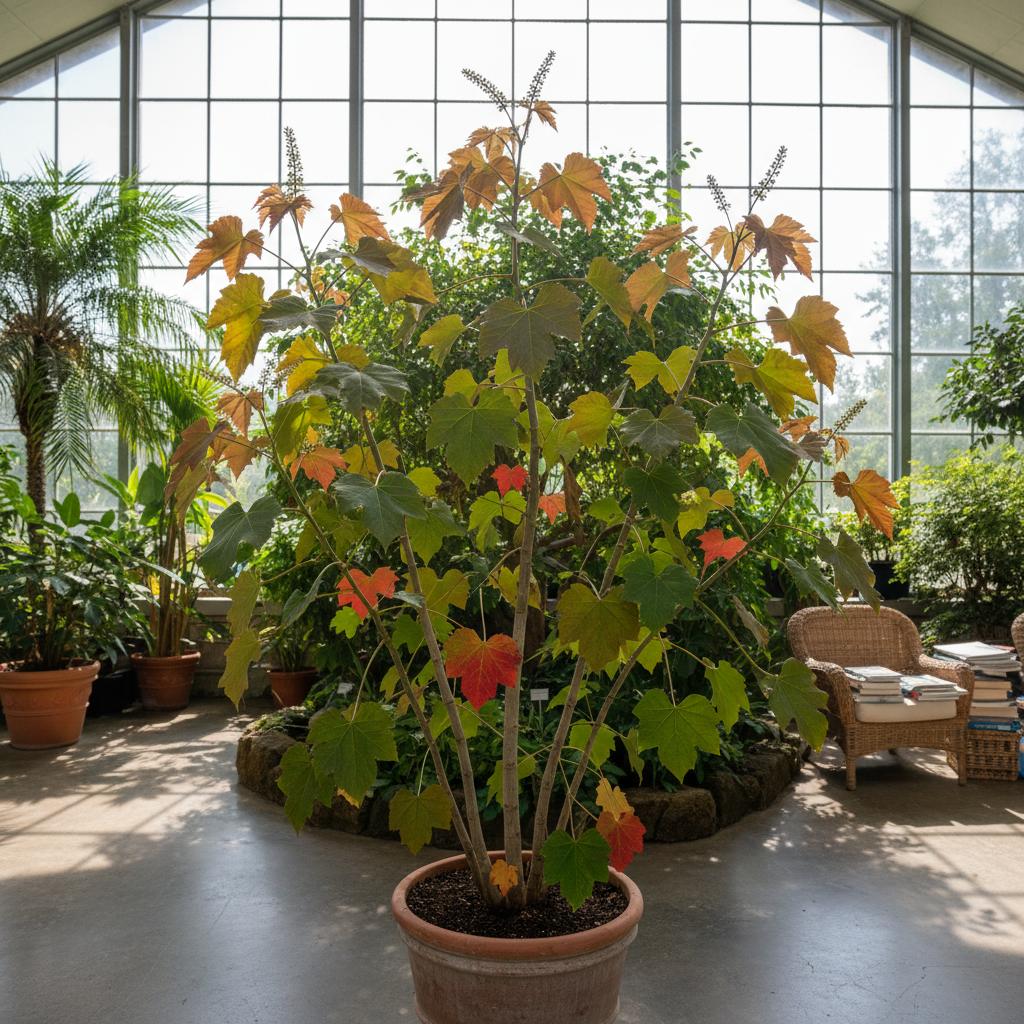
- Leaves: Alternate, simple, elliptic to oblong, with characteristic glands at the junction of the blade and petiole; margins are finely serrate to entire.
- Flowers: Monoecious, borne on terminal spike-like inflorescences; lacking petals, yellowish-green and inconspicuous.
- Bark: Grayish-brown, relatively smooth on young branches, becoming slightly fissured with age; exudes a copious, milky white latex when cut or broken.
- Fruits: A three-lobed, woody capsule that splits open to release seeds covered in a reddish aril.
Care Guide
Keep soil evenly moist but not waterlogged during the active growing season.
Apply a balanced, slow-release fertilizer at the start of the growing season.. Feed monthly during active growth to support foliage development.
Banana Peel Tea:Steep chopped banana peels in water for 24 hours. Dilute 1:1 with water and apply to the soil to boost root health. Discard solids in the compost to avoid attracting pests.- Safety First: Always wear thick gloves and long sleeves when pruning to avoid contact with the toxic, irritating milky sap.
- Timing: Prune in late winter or early spring before new growth begins.
- Technique: Remove dead, diseased, or crossing branches to maintain an open canopy and encourage healthy airflow.
Toxicity
Warning: this plant may be toxic.
Pets: Ingestion causes vomiting and diarrhea; dermal exposure to sap causes irritation and blistering (per ASPCA guidelines for Euphorbiaceae).
Humans: The milky sap contains diterpene esters that can cause significant skin and eye irritation. Ingestion may lead to severe gastrointestinal distress.
Garden Uses & Culture
Culture: N/A
Usage: Primarily serves an ecological role in its native Central American forests. Related species in the genus have historically been tapped for rubber or used for tallow, though this specific species is rarely cultivated commercially.