 PlantFun
Plant Needs
Sunlight
Requires partial shade or dappled sunlight; avoid direct midday sun.
Watering
Requires high humidity and frequent watering, but roots must dry quickly between waterings.
Temperature
Prefers cool to intermediate temperatures with a distinct day-night temperature drop.
Characteristics
- Leaves: Sickle-shaped (falcate), leathery, pale green to yellowish-green, 5-15 cm long;
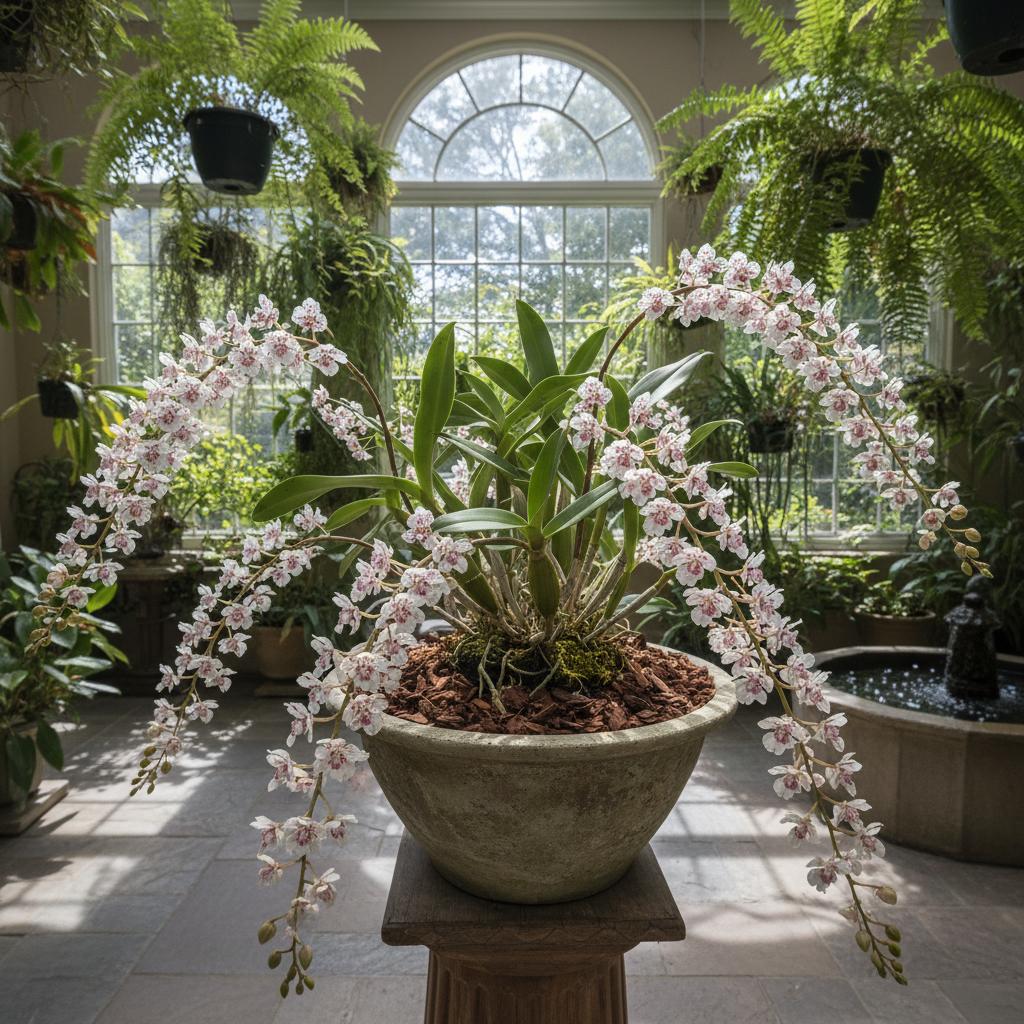
- Flowers: Racemes bearing 3 to 15 highly fragrant, white flowers with a short, fleshy lip marked with yellow and purple/red;
- Roots: Thick, fleshy, extensive aerial roots adapted for clinging to bark or rocks.
Care Guide
Watering
Water frequently as the potting medium approaches dryness.
Fertilization
Apply a weak, balanced orchid fertilizer.. Use fertilizer at quarter or half strength to avoid burning the sensitive aerial roots.
Banana Peel Tea:Steep chopped banana peels in water for 24 hours, strain, and dilute 1:1 with fresh water. Use to water the orchid to promote blooming. Avoid leaving solid peel residue on roots to prevent fungal issues.Pruning
- Remove spent flower spikes at the base using sterilized tools;
- Trim away completely dead, papery, or mushy roots during repotting;
- Never cut healthy, firm green or silvery aerial roots.
Toxicity
Warning: this plant may be toxic.
Pets & Humans
Pets: Non-toxic to cats per ASPCA guidelines for most orchids.
Humans: Generally considered non-toxic to humans.
Garden Uses & Culture
Culture: Highly prized among Western orchid enthusiasts and societies for its delightful fragrance and compact growth habit, often featured in specialized miniature orchid exhibitions.
Usage: Cultivated as an ornamental epiphyte in shade houses, mounted on cork bark, or grown in slatted wooden baskets.