 PlantFun
Plant Needs
Characteristics
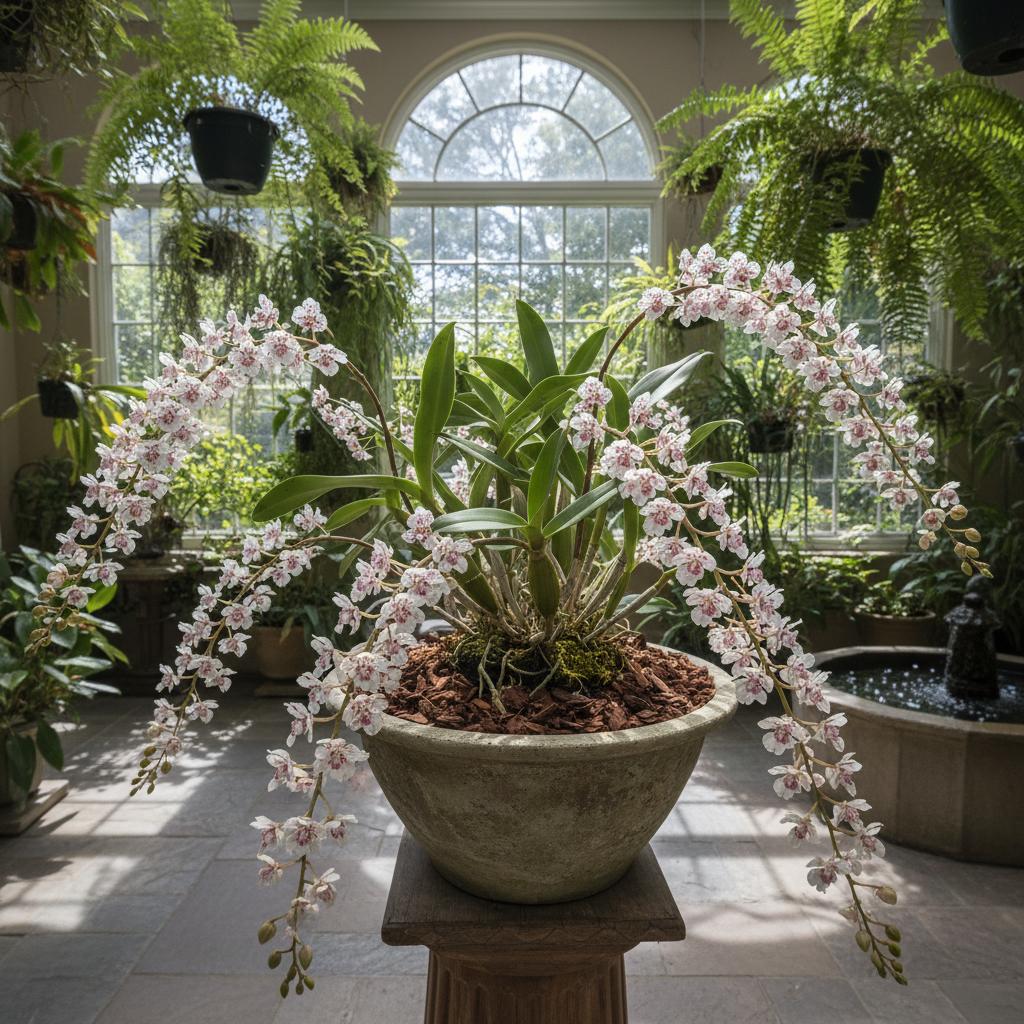
- Leaves: Fleshy, leathery, falcate (sickle-shaped) to lanceolate, arranged in two ranks (distichous) along a short stem;
- Flowers: Racemose inflorescence bearing multiple small, crystalline white flowers, featuring a distinctively lobed, fleshy labellum (lip) marked with yellow and red;
- Roots: Thick, fleshy aerial roots adapted for clinging to tree bark or rocks and rapidly absorbing ambient moisture.
Care Guide
Water frequently as the potting medium approaches dryness, ensuring roots are well-hydrated.
Apply a weak, balanced orchid fertilizer to support new leaf and root growth.. Use fertilizer at 1/4 to 1/2 the recommended strength to avoid burning the sensitive epiphytic roots.
Banana Peel Tea:Soak chopped banana peels in water for 24-48 hours. Strain and dilute 1:1 with fresh water. Pour gently over the bark mix to encourage robust blooming. Discard solids in compost to avoid attracting pests or causing mold on the orchid roots.- Flower Spikes: Cut spent flower spikes near the base with sterilized snips once they have completely dried and turned brown;
- Roots: During repotting, carefully trim away any dead, hollow, or mushy brown roots, leaving the firm white/green roots intact;
- Leaves: Allow old, yellowing bottom leaves to drop naturally; do not tear them off prematurely to avoid stem injury.
Toxicity
Warning: this plant may be toxic.
Pets: Non-toxic to cats per ASPCA guidelines for the Orchidaceae family.
Humans: Generally recognized as safe; no toxic principles known in this genus.
Garden Uses & Culture
Culture: Highly prized in Australian and international orchid cultivation, it symbolizes delicate beauty and resilience, often grown by enthusiasts in specialized shade houses.
Usage: Primarily cultivated as an ornamental plant for its beautiful, fragrant flowers; frequently used in orchid hybridization to create robust, floriferous hybrids.