 PlantFun
Plant Needs
Characteristics
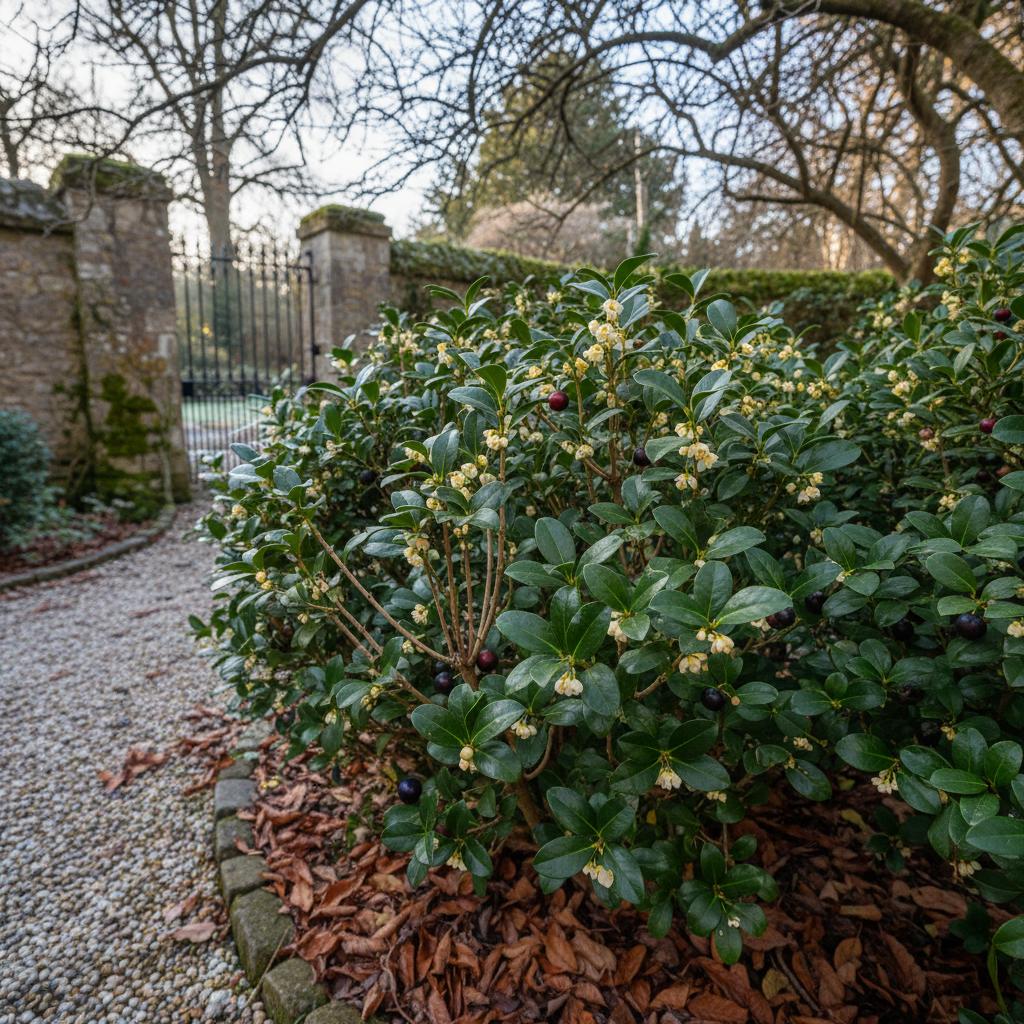
- Leaves: Evergreen, alternate, simple, ovate to elliptic, 3-5 cm long, with a highly glossy, dark green leathery surface and wavy margins;
- Flowers: Small, apetalous, creamy-white, borne in axillary clusters, emitting a powerful, sweet vanilla-like fragrance; male flowers feature prominent yellow anthers;
- Fruit: Fleshy, globose drupes that ripen from green to glossy black (or red in some species), often persisting into the next flowering season;
- Stems: Densely branching, green and glabrous when young, forming a compact, bushy habit.
Care Guide
Water deeply once a week, allowing the top inch of soil to dry out between waterings.
Apply a balanced, slow-release organic fertilizer as new growth appears.. Requires minimal feeding once established; an annual spring mulching is often sufficient.
Coffee grounds top-dressing:Sprinkle used, cooled coffee grounds lightly around the base of the plant and water in. This provides a gentle nitrogen boost and helps maintain the slightly acidic soil conditions woodland plants enjoy. Avoid thick layers to prevent mold.- Prune lightly immediately after flowering in late spring to maintain a compact shape;
- Remove any dead, damaged, or crossing branches to improve air circulation;
- Can be sheared more formally if grown as a low hedge, though this may reduce the next year's berry crop;
- Rejuvenation pruning can be done by cutting older stems down to the base.
Toxicity
Warning: this plant may be toxic.
Pets: May cause mild gastrointestinal irritation if chewed or ingested (per general Buxaceae precautions).
Humans: Generally considered low toxicity, but ingestion of berries or foliage may cause mild stomach upset due to steroidal alkaloids.
Garden Uses & Culture
Culture: Highly prized in British and European winter gardens, it was heavily utilized in Victorian landscaping to inject intense fragrance and evergreen structure into the cold, dormant months.
Usage: Excellent for woodland gardens, shady borders, low evergreen hedging, foundation plantings, and winter-interest gardens. Cut stems are also used in winter floral arrangements.