 PlantFun
Plant Needs
Sunlight
Prefers bright, indirect light or partial shade; avoid harsh direct afternoon sun.
Watering
Requires consistently moist soil during the growing season; do not allow the root ball to dry out completely.
Temperature
Thrives in warm, tropical temperatures and high humidity; intolerant of frost.
Characteristics
- Leaves: Opposite, ovate to lanceolate, glossy dark green with prominent venation, margins entire;
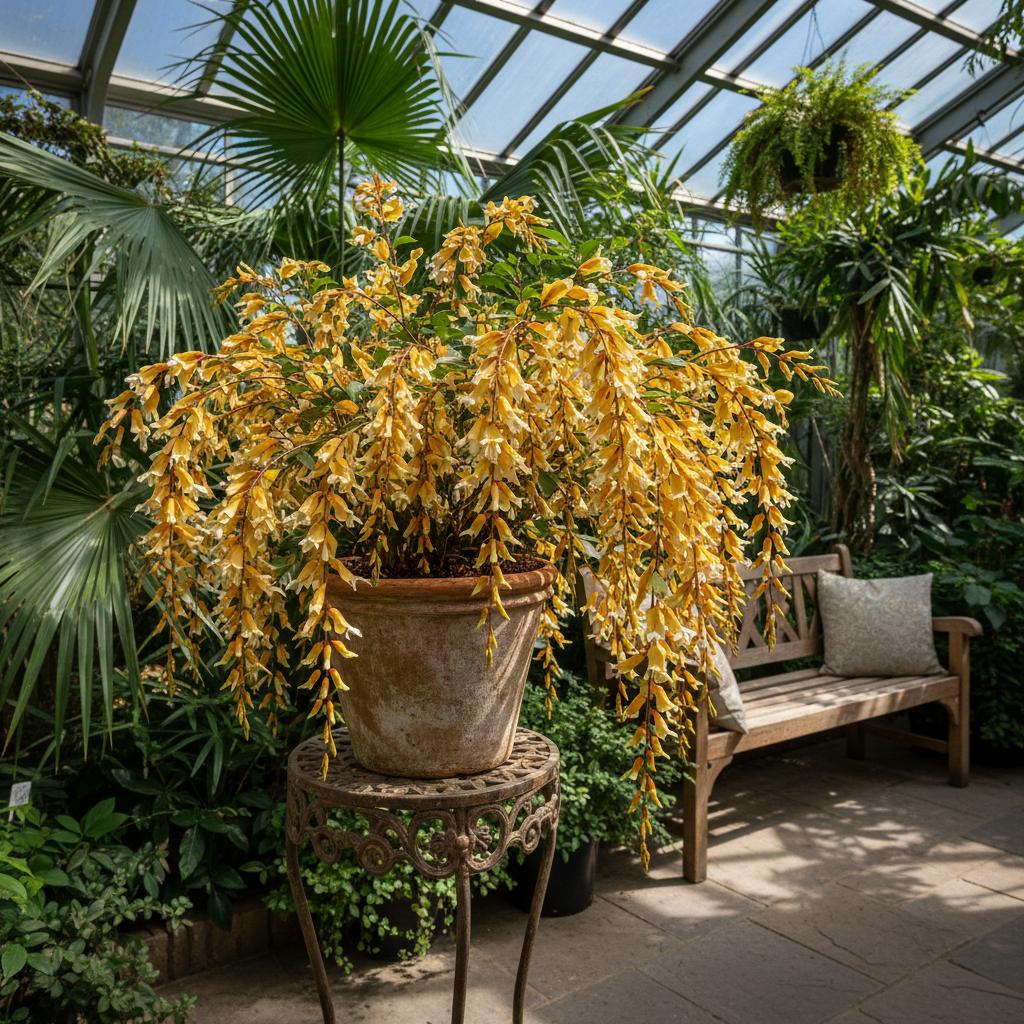
- Flowers: Tubular white to pale yellow corollas emerging from a dense, terminal cluster of thread-like, bright golden-yellow bracts;
- Stem: Upright, branching, herbaceous green turning slightly woody and brownish at the base with age.
Care Guide
Watering
Water thoroughly when the top inch of soil feels dry, maintaining even moisture.
Fertilization
Apply a balanced fertilizer to promote new foliage growth.. Feed regularly during the active growing season.
Banana Peel Tea:Steep chopped banana peels in water for 24-48 hours, strain, and dilute 1:1 with water. Use to encourage vibrant blooms. Discard solids in compost to avoid attracting pests and odors.Pruning
- Prune back stems by one-third after flowering to maintain a compact, bushy shape;
- Remove dead or fading flower heads to redirect energy to new growth;
- Pinch back tips of young plants to encourage branching.
Toxicity
Warning: this plant may be toxic.
Pets & Humans
Pets: Non-toxic to cats (per ASPCA general Acanthaceae guidelines).
Humans: Generally considered non-toxic to humans.
Garden Uses & Culture
Culture: In Victorian England, it was a prized stove-house and conservatory plant, valued for bringing bright golden color to indoor collections during the dreary winter months.
Usage: Cultivated primarily as an ornamental plant for tropical landscapes, greenhouses, and bright indoor spaces.