 PlantFun
Plant Needs
Sunlight
Prefers bright, indirect light but can tolerate medium light conditions.
Watering
Water thoroughly when the top 2 inches of soil become dry.
Temperature
Thrives in warm indoor temperatures; protect from cold drafts.
Characteristics
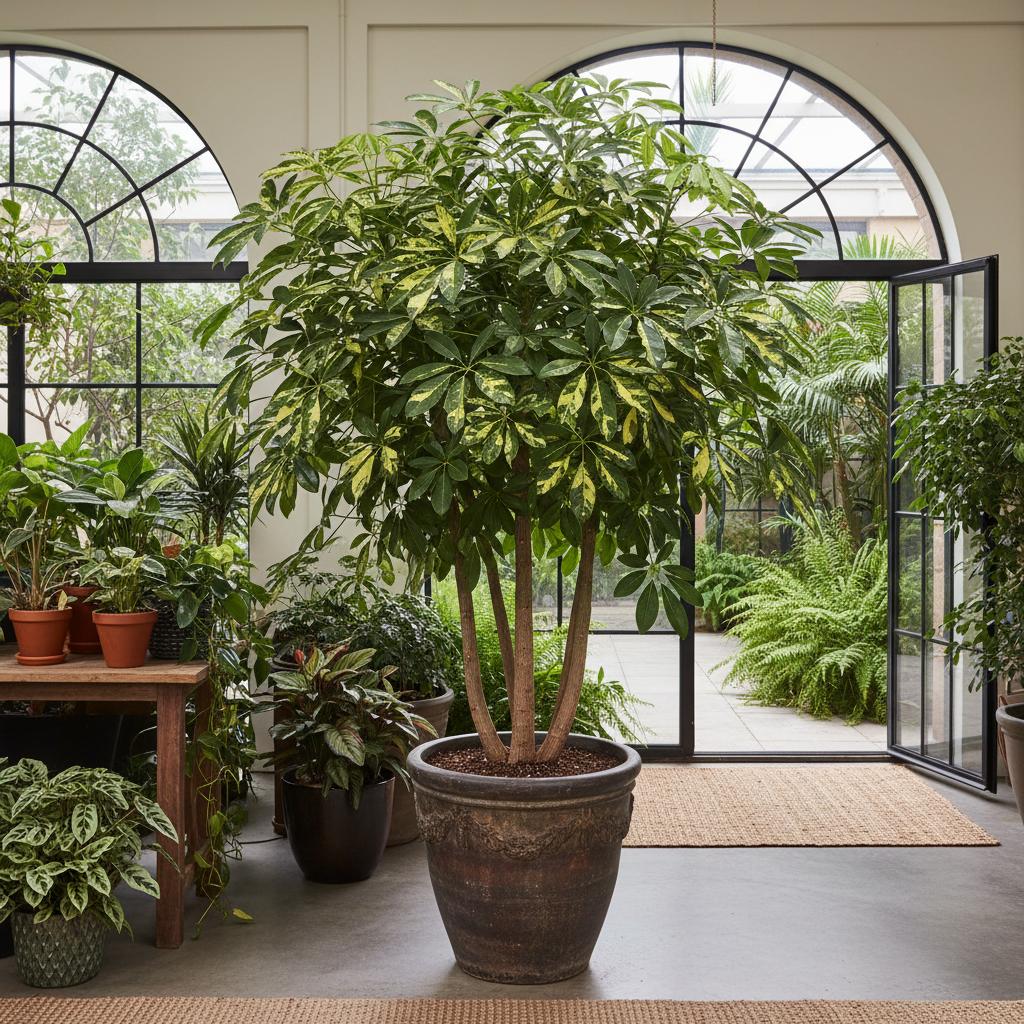
- Leaves: Palmately compound, featuring large, broad, glossy dark green leaflets that radiate from a central stalk, resembling an umbrella;
- Stems: Stout, green when young, becoming woody and brown as they mature, often grown with multiple trunks;
- Flowers: Produces long, radiating red spikes above the foliage when grown outdoors, though flowering is extremely rare in indoor environments.
Care Guide
Watering
Water thoroughly when the topsoil feels dry to the touch.
Fertilization
Apply a balanced liquid fertilizer diluted to half strength.. Do not fertilize during the winter months when plant growth naturally slows down.
Banana Peel Tea:Soak chopped banana peels in water for 24-48 hours. Strain and use the liquid to water the plant. This provides potassium for strong stems and glossy leaves. Discard the peels in compost to avoid attracting pests.Pruning
- Size Control: Prune the top of the main stems to control height and encourage bushier lateral growth;
- Maintenance: Remove any yellowing or dead leaves at the base of the stem to maintain appearance;
- Cleaning: Regularly wipe the large leaves with a damp cloth to remove dust and improve photosynthesis.
Toxicity
Warning: this plant may be toxic.
Pets & Humans
Pets: Toxic to cats per ASPCA. Ingestion causes oral irritation and gastrointestinal upset.
Humans: Contains calcium oxalate crystals which can cause mild skin irritation or oral discomfort if chewed.
Garden Uses & Culture
Culture: Popularized in Western interior design during the 1970s and 1980s, the umbrella tree became a staple in homes, malls, and offices for its bold, tropical aesthetic and robust nature.
Usage: Widely used as a specimen floor plant in interior landscaping and valued for its air-purifying qualities.