 PlantFun
Plant Needs
Characteristics
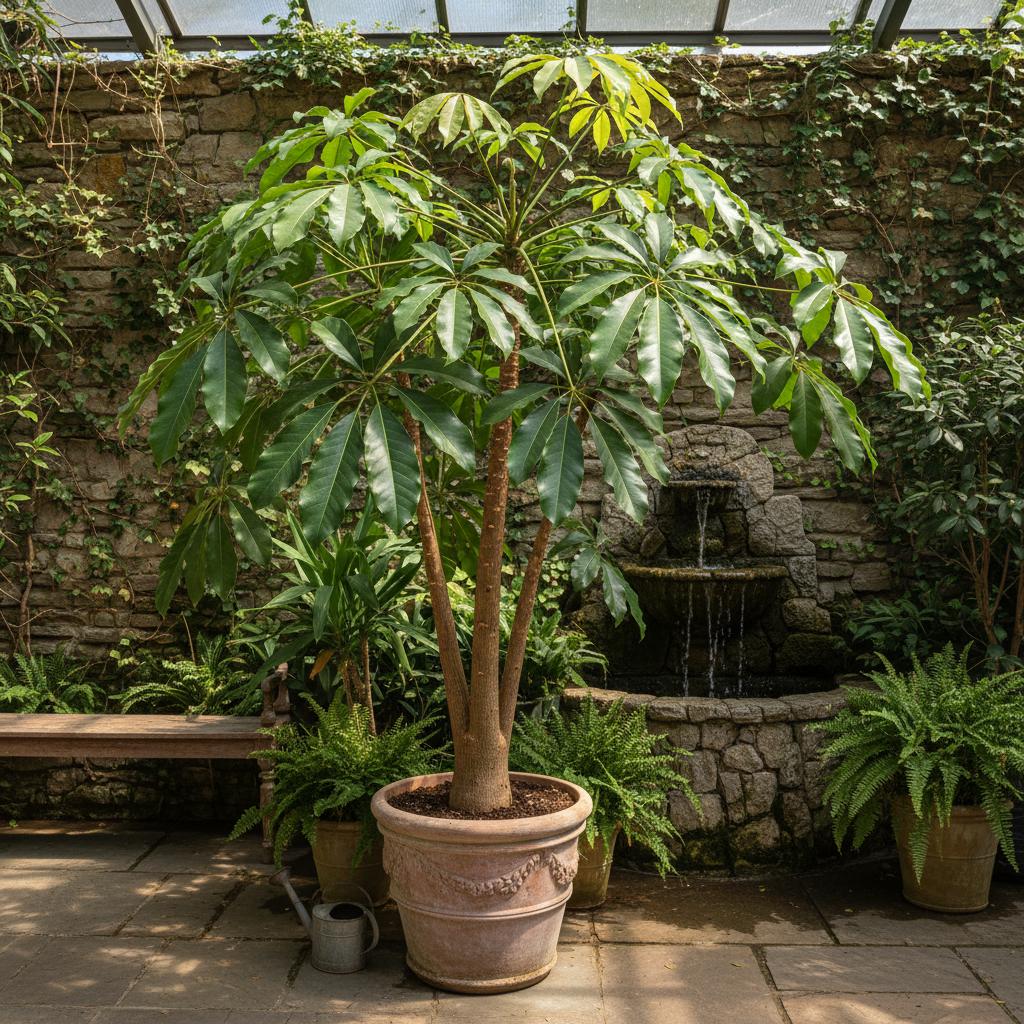
- Leaves: Palmately compound with 7-9 leaflets, glossy dark green, smaller and more compact than the standard species, arranged in an umbrella-like rosette;
- Stems: Slender, green and flexible when young, maturing into woody, light brown trunks;
- Flowers: Small, greenish-yellow, borne in terminal panicles (infrequent in indoor cultivation);
- Roots: Fibrous root system, occasionally developing aerial roots in highly humid environments.
Care Guide
Water thoroughly when the top inch of soil is dry, allowing excess water to drain completely.
Apply a balanced liquid fertilizer diluted to half strength.. Feed only during the active growing season; pause fertilization during late autumn and winter.
Banana Peel Tea:Steep chopped banana peels in a jar of water for 24-48 hours. Strain the liquid and use it to water the plant. Discard the solid peels in the compost; do not leave raw peels on the soil surface as they can attract fungus gnats and cause mold.- Pinch back new growth tips to encourage a bushier, more compact shape;
- Remove any yellowing, dead, or damaged leaves at the base of the petiole;
- Prune leggy stems in early spring to maintain the desired 'Junior' compact form;
- Wipe leaves periodically with a damp cloth to remove dust and improve photosynthesis.
Toxicity
Warning: this plant may be toxic.
Pets: Toxic to cats per ASPCA. Ingestion causes oral irritation, intense burning of the mouth, lips, and tongue, excessive drooling, vomiting, and difficulty swallowing.
Humans: Contains insoluble calcium oxalate crystals causing oral irritation and mild gastrointestinal upset if ingested.
Garden Uses & Culture
Culture: Popularized in Western interior design during the 1970s and 1980s, the umbrella tree became a staple in homes and corporate offices due to its architectural foliage and remarkable adaptability to indoor environments.
Usage: Excellent as a tabletop or floor specimen plant, frequently used in indoor landscaping, and occasionally trained as an indoor bonsai.