 PlantFun
Plant Needs
Characteristics
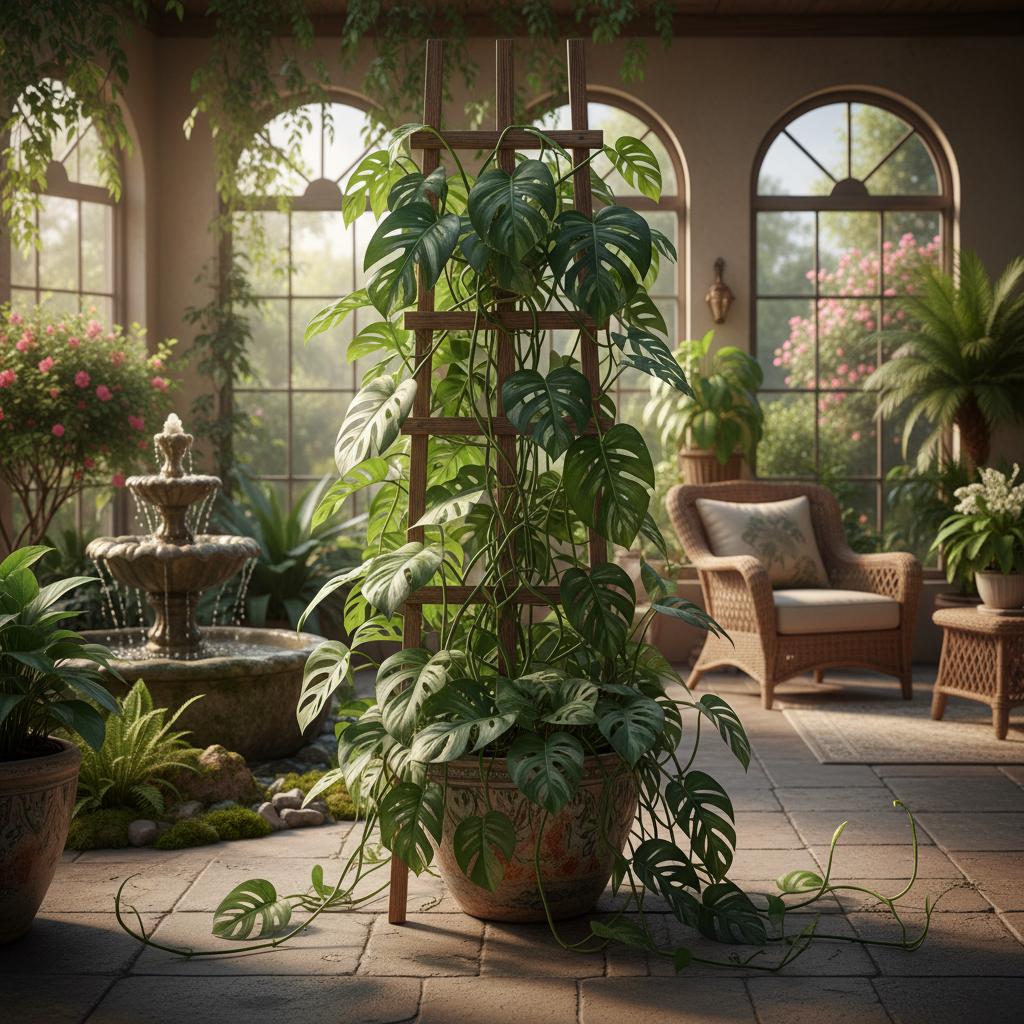
- Leaves: Alternate, heart-shaped (cordate), glossy green with irregular yellow or white variegation, growing much larger and fenestrated in mature wild specimens;
- Stems: Trailing or climbing vines, green to light yellow, producing aerial roots at the nodes for attachment;
- Flowers: Spathe and spadix typical of aroids, though extremely rare in juvenile cultivated plants.
Care Guide
Water thoroughly when the top third of the soil is dry.
Apply a balanced liquid fertilizer diluted to half strength.. Feed during the active growing season; pause fertilization during winter dormancy.
Aquarium Water Fertilizer:Use dirty aquarium change water to water the plant; it provides gentle, natural nitrogen without the risk of chemical burn. Ensure the water has no added salts or medications.- Trim excessively long vines just above a node to encourage bushier growth;
- Remove any fully yellowed or damaged leaves at the base of the petiole;
- Propagate healthy stem cuttings with at least one node in water or soil.
Toxicity
Warning: this plant may be toxic.
Pets: Toxic per ASPCA. Chewing leaves causes oral irritation, intense burning of mouth, tongue and lips, excessive drooling, vomiting, and difficulty swallowing.
Humans: Contains insoluble calcium oxalate crystals causing oral irritation, burning sensation, and swelling if chewed.
Garden Uses & Culture
Culture: Often associated with determination and resilience in Western indoor gardening due to its near-indestructible nature and vigorous growth.
Usage: Widely used as a trailing hanging basket plant, climbing totem plant, and recognized for its indoor air-purifying qualities.