 PlantFun
Plant Needs
Characteristics
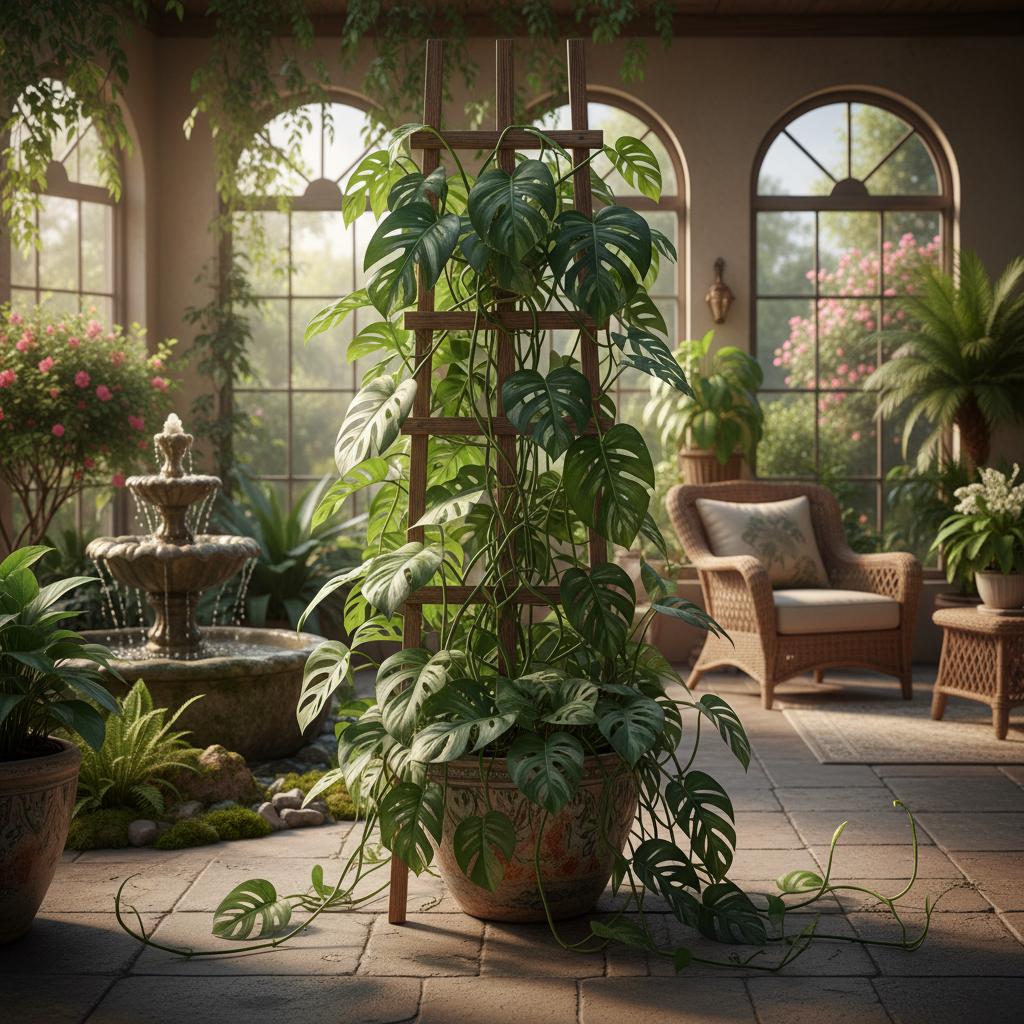
- Leaves: Asymmetrical, heart-shaped, matte dark green with striking silvery-gray irregular splotches and margins, slightly velvety texture;
- Stems: Trailing or climbing, green to slightly woody with age, producing aerial roots at the nodes for clinging;
- Flowers: Typical aroid inflorescence with a small spathe and spadix, though extremely rare in indoor cultivation;
- Roots: Fibrous root system with prominent aerial roots used for epiphytic climbing in its natural habitat.
Care Guide
Water thoroughly once the topsoil dries out, allowing excess water to drain completely.
Apply a balanced liquid fertilizer diluted to half strength.. Avoid fertilizing during the dormant winter months to prevent mineral buildup in the soil.
Banana Peel Tea:Soak chopped banana peels in water for 24-48 hours. Strain the liquid and dilute 1:1 with fresh water before applying to the soil. Discard the solid peels in the compost to avoid attracting fungus gnats. Do not use excessively to prevent salt buildup.- Trim leggy vines just above a leaf node to encourage bushier growth at the base;
- Remove any yellowed or damaged leaves to redirect energy to healthy foliage;
- Propagate healthy stem cuttings (with at least one node) in water or moist sphagnum moss.
Toxicity
Warning: this plant may be toxic.
Pets: Toxic per ASPCA; causes oral irritation, excessive drooling, and vomiting.
Humans: Contains insoluble calcium oxalate crystals causing oral and gastrointestinal irritation.
Garden Uses & Culture
Culture: Highly prized in Western interior design for its elegant, cascading habit and modern, metallic-looking foliage, often featured in hanging baskets or climbing up moss poles in contemporary homes.
Usage: Cultivated primarily as an ornamental houseplant for hanging baskets, high shelves, terrariums, or trained to climb indoor trellises and moss totems.