 PlantFun
Plant Needs
Characteristics
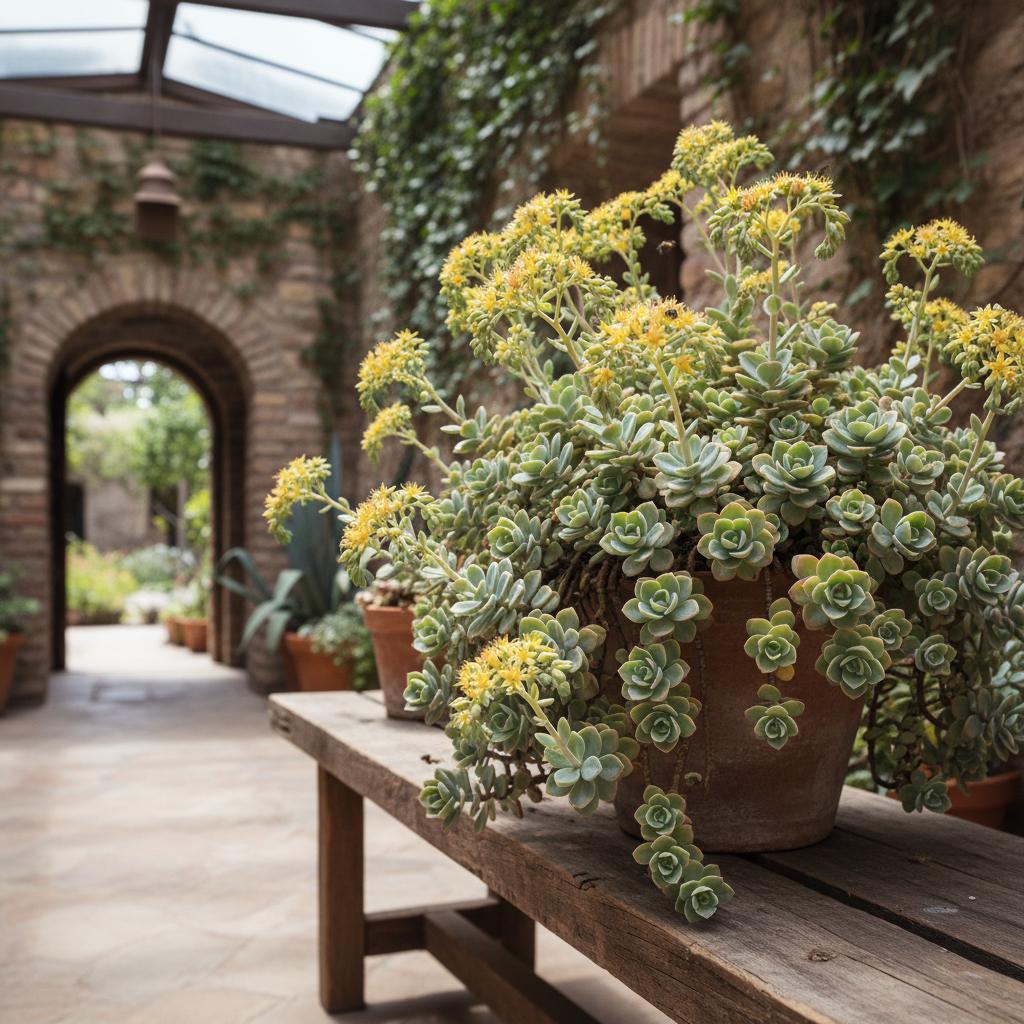
- Leaves: Fleshy, succulent leaves, often arranged in rosettes or spirally along the stem, storing water for drought tolerance;
- Flowers: Small, star-shaped flowers with 5 petals, typically yellow, white, or pink, blooming in terminal clusters;
- Stem: Succulent, trailing or upright stems that root easily at the nodes;
- Roots: Shallow, fibrous root system adapted to quickly absorb surface moisture.
Care Guide
Water thoroughly when the soil is completely dry, allowing excess to drain.
Apply a diluted, balanced fertilizer once at the start of the growing season.. Succulents require very little feeding; over-fertilizing can cause weak, leggy growth.
Banana Peel Tea:Soak chopped banana peels in water for 24 hours. Strain and dilute 1:1 with water. Avoid leaving solid pieces on the soil to prevent pests and odors.- Remove dead or shriveled leaves from the base of the plant;
- Pinch back leggy stems to encourage branching and a more compact shape;
- Replant healthy stem cuttings to propagate new plants.
Toxicity
Warning: this plant may be toxic.
Pets: Non-toxic to cats per ASPCA guidelines.
Humans: Generally considered non-toxic to humans, though ingestion is not recommended.
Garden Uses & Culture
Culture: In Western gardening, stonecrops are symbols of tranquility and endurance, often used in rock gardens and green roofs across Europe and North America due to their hardiness.
Usage: - **Ornamental**: Popular in rockeries, containers, hanging baskets, and as ground cover; - **Ecological**: Star-shaped flowers attract pollinators like bees and butterflies.