 PlantFun
Plant Needs
Sunlight
Requires full sun for the best foliage color and compact growth habit.
Watering
Highly drought-tolerant once established; water only when the soil is completely dry.
Temperature
Extremely cold hardy (USDA Zones 4-9) and heat tolerant.
Characteristics
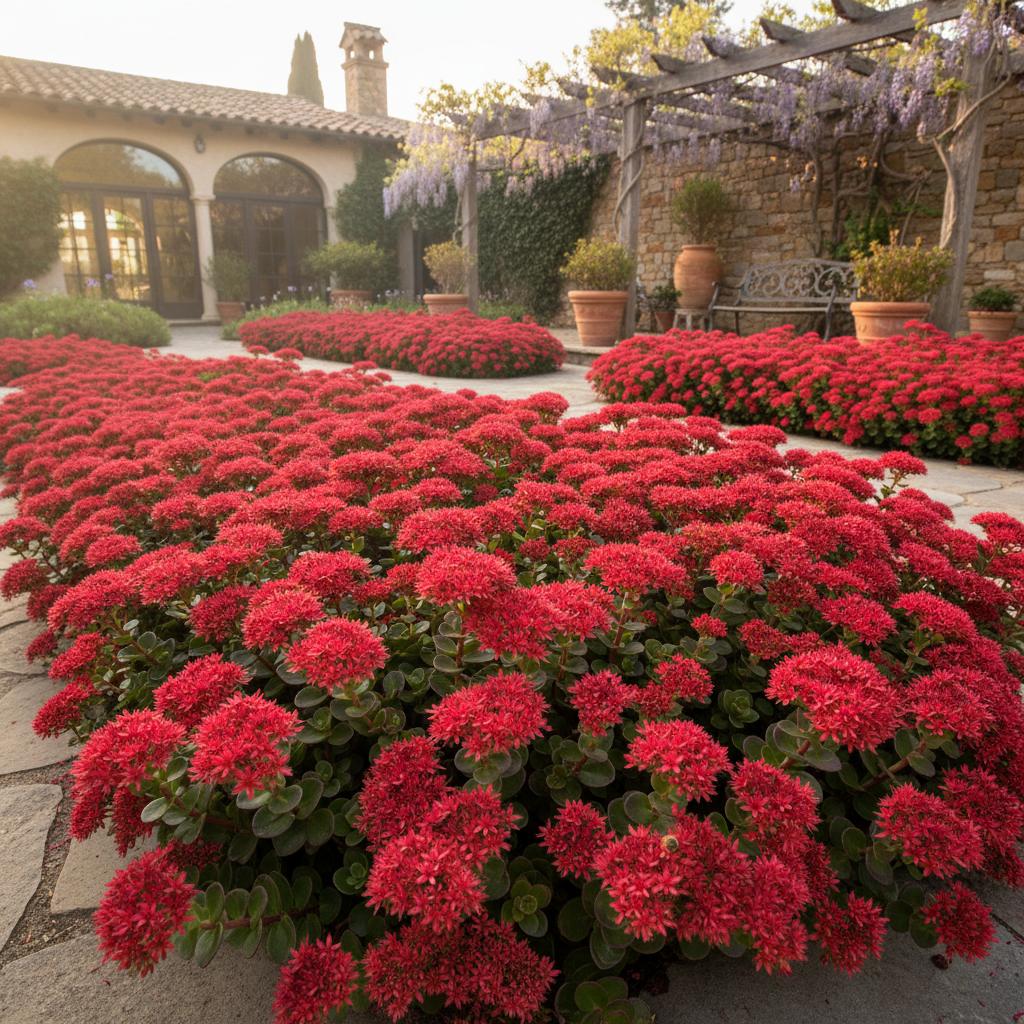
- Leaves: Fleshy, rounded to ovate, deep cherry-red to burgundy foliage that retains its vibrant color from spring through autumn without fading;
- Flowers: Terminal corymb inflorescences featuring large clusters of tiny, star-shaped, deep pink to magenta flowers;
- Stems: Creeping, branching stems that root at the nodes, forming a dense, compact mat.
Care Guide
Watering
Water deeply but infrequently, allowing the soil to dry out completely between waterings.
Fertilization
Apply a very light, low-nitrogen top dressing if soil is extremely poor.. Requires minimal to no fertilization in typical garden soils.
Banana Peel Tea:Steep chopped banana peels in water for 24-48 hours, strain, and dilute 1:1 with water. Apply lightly in spring to support root and flower development. Do not leave raw peels on the soil surface to avoid attracting pests.Pruning
- Leave dried flower heads on the plant for winter interest if desired;
- Trim back dead or untidy stems in early spring before new growth emerges;
- Easily propagated by snipping wandering stems and pressing them into bare soil.
Toxicity
Warning: this plant may be toxic.
Pets & Humans
Pets: Non-toxic to cats per ASPCA guidelines.
Humans: Generally considered non-toxic to humans.
Garden Uses & Culture
Culture: Widely embraced in modern North American and European xeriscaping for its vibrant, water-wise resilience and low-maintenance appeal.
Usage: Excellent for rock gardens, green roofs, container plantings, border edging, and as a weed-suppressing groundcover. Highly attractive to bees and butterflies.