 PlantFun
Plant Needs
Sunlight
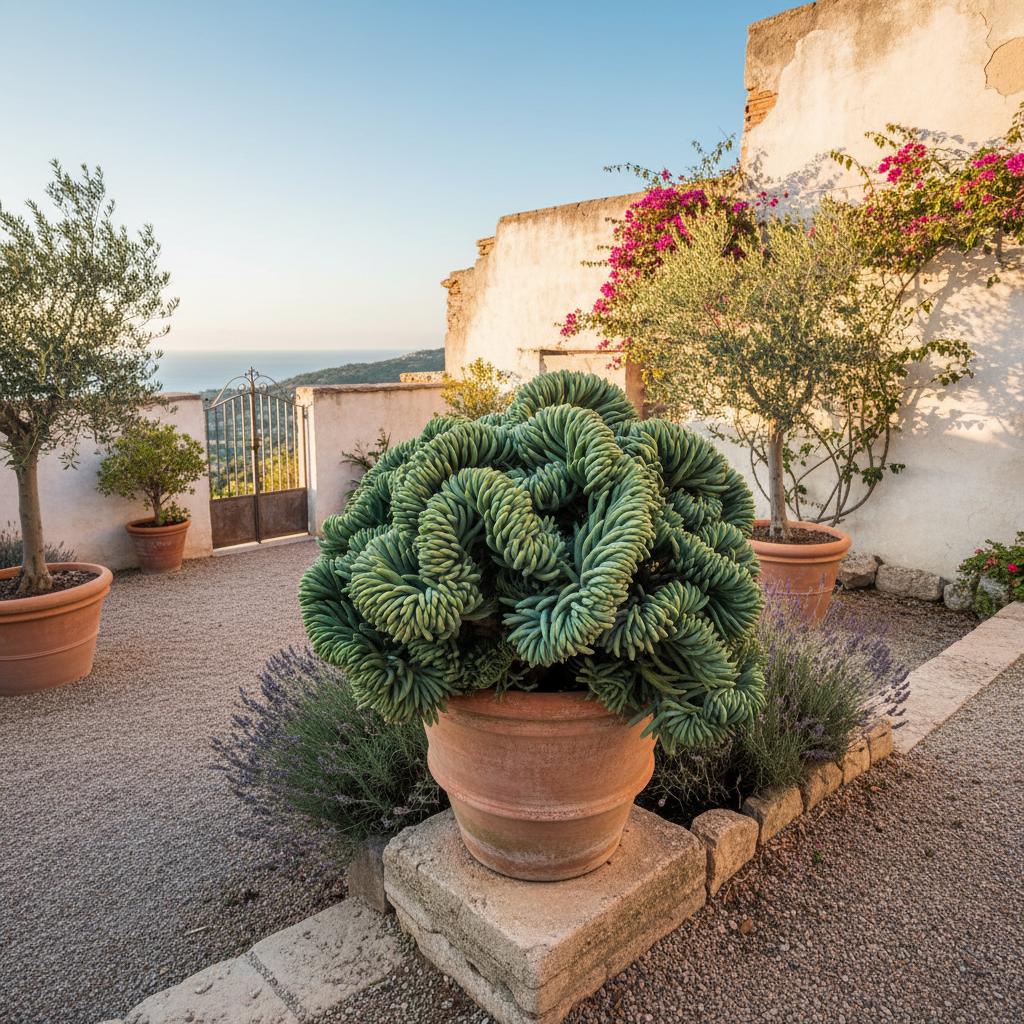
Requires bright, direct sunlight to maintain its compact shape and blue-green color.
Watering
Highly drought-tolerant. Allow the soil to dry out completely between waterings.
Temperature
Prefers warm temperatures; protect from frost and freezing conditions.
Characteristics
- Leaves: Fleshy, glaucous blue-green, cylindrical, upward-pointing, densely packed along the crest;
- Stem: Fasciated (crested), flattened, fan-like, widening at the top, grey-green, becoming woody at the base with age;
- Flowers: Rarely produced on crested forms; normally small, off-white discoid heads lacking ray florets.
Care Guide
Watering
Water thoroughly when the soil is completely dry, allowing excess water to drain.
Fertilization
Apply a diluted, balanced succulent fertilizer once at the start of the growing season.. Requires very little feeding; over-fertilizing can cause weak, leggy growth.
Banana Peel Tea:Soak chopped banana peels in water for 24 hours. Strain and dilute 1:1 with water. Apply to soil, avoiding leaving organic matter on the surface to prevent pests.Pruning
- Remove dead or dried leaves at the base of the plant using sterile tweezers;
- Handle carefully as the heavy crested stem is brittle and prone to snapping;
- Do not prune the crest itself unless removing sections affected by rot.
Toxicity
Warning: this plant may be toxic.
Pets & Humans
Pets: Toxic to cats per ASPCA. Ingestion can cause vomiting, diarrhea, lethargy, and irreversible liver failure.
Humans: Toxic if ingested due to pyrrolizidine alkaloids, which can cause liver damage.
Garden Uses & Culture
Culture: Highly prized in Western succulent collections and modern xeriscaping for its architectural, coral-like appearance.
Usage: Ideal for container gardens, rockeries, and drought-tolerant coastal landscaping.