 PlantFun
Plant Needs
Characteristics
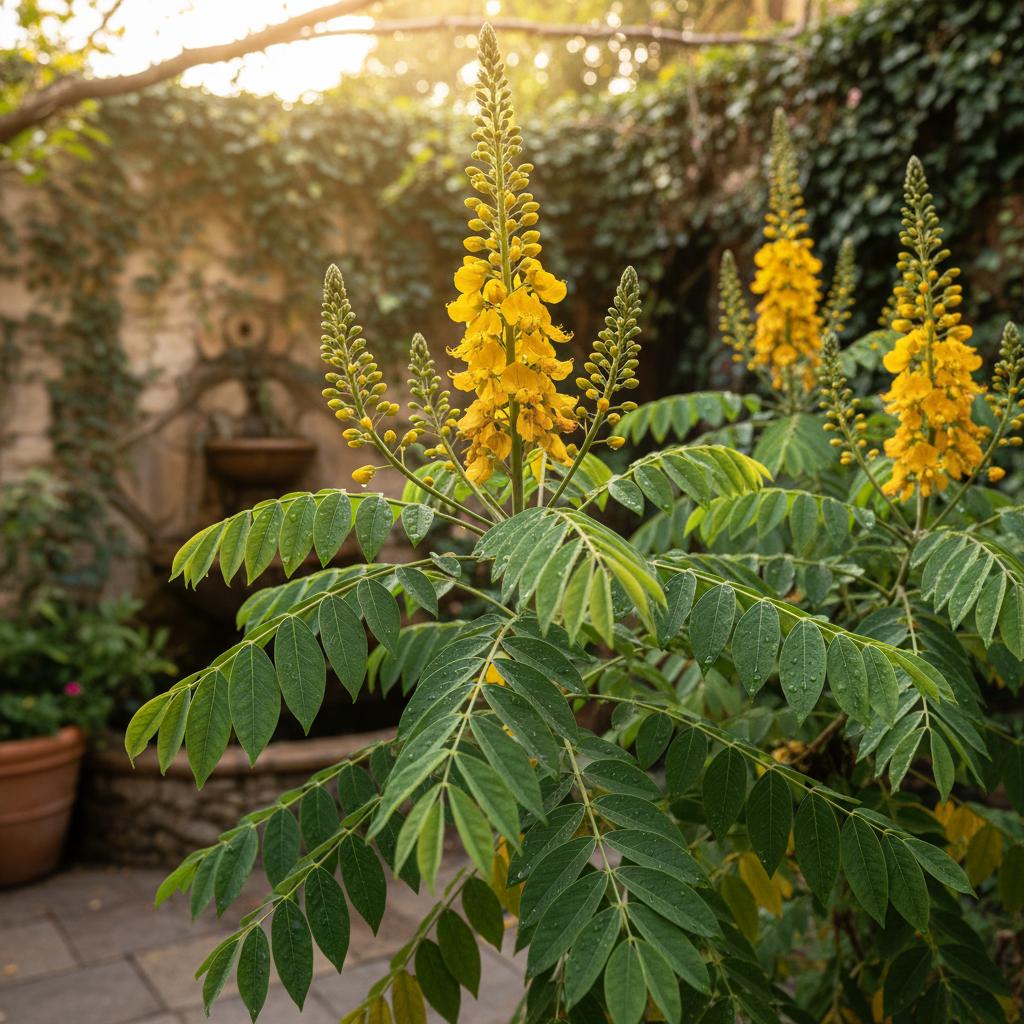
- Leaves: Pinnately compound, large, 50 - 80 cm long, with 8 - 14 pairs of large, oblong to obovate leaflets that fold together at night;
- Flowers: Erect terminal racemes resembling yellow candles, buds covered by yellow bracts that fall as the flowers open;
- Fruit: A straight, dark brown to black pod, 10 - 15 cm long, featuring prominent papery wings along its length;
- Stem: Stout, green, often branching from the base, becoming woody with age.
Care Guide
Water deeply when the top inch of soil feels dry.
Apply a balanced organic fertilizer to encourage foliage growth.. Feed monthly during the growing season; withhold fertilizer in winter.
Banana Peel Tea:Steep chopped banana peels in water for 24-48 hours. Dilute 1:1 with water and pour around the base to encourage vibrant yellow blooms. Discard the solid peels in a compost bin to avoid attracting pests.- Prune heavily after flowering to maintain a compact shape and encourage bushy new growth;
- Remove seed pods before they mature to prevent aggressive self-seeding;
- Cut away any frost-damaged branches in early spring.
Toxicity
Warning: this plant may be toxic.
Pets: Toxic per ASPCA guidelines for Senna species; ingestion causes vomiting and diarrhea.
Humans: Ingestion of leaves or seeds can cause severe gastrointestinal distress due to anthraquinone laxatives.
Garden Uses & Culture
Culture: Widely cultivated in gardens across the Americas and the Caribbean, it is admired for its striking architectural form and vibrant floral display that brightens tropical landscapes.
Usage: Used extensively in ornamental landscaping as a specimen shrub or background border. Historically, its leaves have been used in traditional practices for their fungicidal properties.