 PlantFun
Plant Needs
Sunlight
Requires full, direct sunlight for optimal growth and to maintain a compact, swollen trunk.
Watering
Highly drought-tolerant; water deeply but infrequently during the active growing season, allowing soil to dry completely.
Temperature
Thrives in hot climates; highly frost-sensitive and must be protected from freezing temperatures.
Characteristics
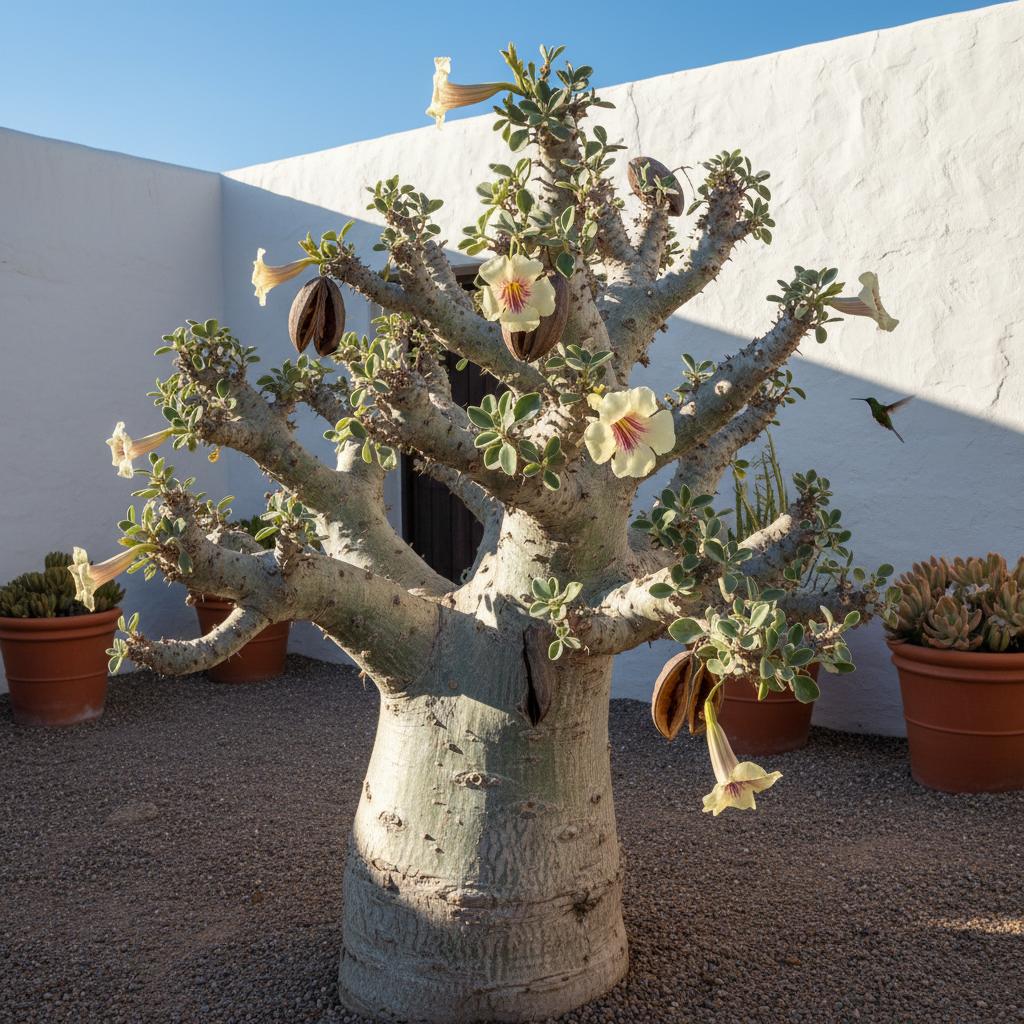
- Trunk: Swollen, pachycaul base (caudex), often bottle-shaped, with peeling yellowish-grey papery bark and stout spines formed from modified petioles;
- Leaves: Small, obovate to spatulate, grey-green, deciduous, clustered on short lateral shoots;
- Flowers: Large, tubular, white to cream-colored, heavily scented at night, with a long slender tube spreading into broad lobes;
- Fruit: Rigid, woody, flattened capsules containing numerous winged seeds.
Care Guide
Watering
Water moderately when the soil is completely dry.
Fertilization
Apply a diluted, low-nitrogen succulent fertilizer once.. Avoid over-fertilizing, which can cause weak, leggy growth and diminish the caudex form.
Banana Peel Tea:Soak chopped banana peels in water for 24 hours. Strain and dilute 1:1 with water. Apply during the growing season to support root health and blooming. Discard solids in compost to avoid attracting pests.Pruning
- Pruning is rarely necessary except to remove dead or damaged branches;
- Wear thick gloves when handling due to the sharp spines;
- Perform any structural pruning during the dry, dormant season to allow cuts to heal quickly and prevent rot.
Toxicity
Warning: this plant may be toxic.
Pets & Humans
Pets: No known toxicity to cats (no ASPCA listing indicating danger for this genus).
Humans: No known toxicity; not considered hazardous for human contact or minor accidental ingestion.
Garden Uses & Culture
Culture: In Western succulent collecting communities, caudiciforms like this are highly prized as "fat plants" for their bizarre, sculptural forms and are often staged as natural bonsai.
Usage: Cultivated primarily as a specimen plant in xeriscaping, botanical gardens, and specialized caudiciform collections.