 PlantFun
Plant Needs
Sunlight
Requires full sun for optimal growth and caudex development.
Watering
Highly drought-tolerant; water only when the soil is completely dry.
Temperature
Thrives in hot climates and is highly sensitive to frost and prolonged cold.
Characteristics
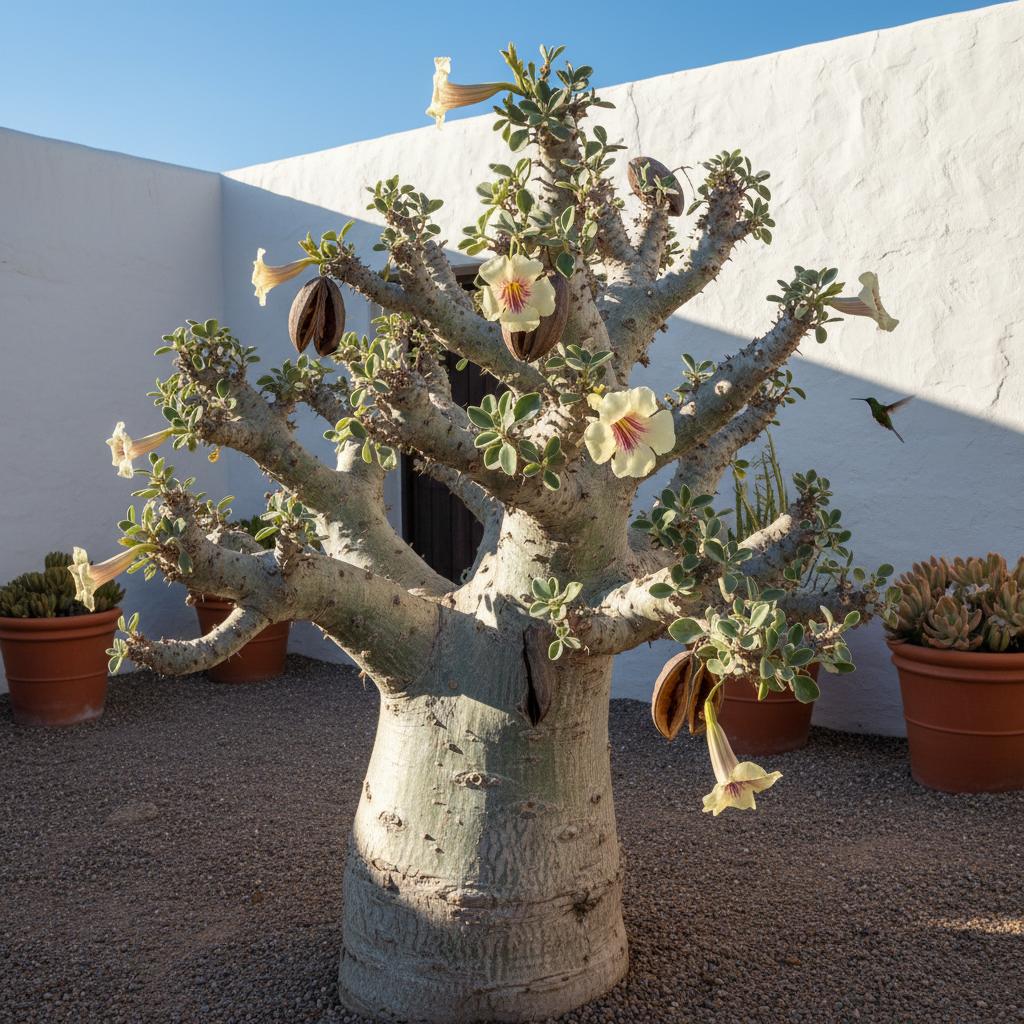
- Stem: Pachycaul or caudiciform with a swollen, succulent basal trunk, peeling papery bark, and branches armed with stiff spines formed from persistent petioles;
- Leaves: Small, obovate to spatulate, green, deciduous during the dry season to conserve water;
- Flowers: Striking, fragrant, tubular flowers with a long slender corolla tube, typically white to pale pink, blooming near the branch tips;
- Fruit: A woody, flattened capsule containing winged seeds adapted for wind dispersal.
Care Guide
Watering
Water thoroughly but infrequently when actively growing and fully leafed out.
Fertilization
Apply a diluted low-nitrogen fertilizer once as new growth begins.. Feed sparingly; over-fertilization can cause weak, unnatural growth.
Banana Peel Tea:Soak chopped banana peels in water for 24 hours. Strain and dilute 1:1 with water. Provides potassium for strong caudex growth. Avoid leaving solid peels on the soil to prevent rot and pests.Pruning
- Remove dead or broken branches during the dry dormant season;
- Handle carefully with thick gloves to avoid the sharp spines;
- Pruning is rarely needed for shaping, as the natural architectural form is highly valued.
Toxicity
Warning: this plant may be toxic.
Pets & Humans
Pets: Non-toxic per general family characteristics, but spines can cause physical injury.
Humans: No known toxicity to humans, though sharp spines pose a mechanical hazard.
Garden Uses & Culture
Culture: Highly prized in Western succulent and caudiciform collector communities for its architectural, bonsai-like appearance and bizarre swollen trunk.
Usage: - Ornamental cultivation in botanical gardens and private succulent collections; - Potted specimen plant for greenhouses and sunny patios.