 PlantFun
Plant Needs
Sunlight
Full sun to partial shade; prefers at least 6 hours of direct sunlight for best blooming.
Watering
Low to moderate water requirements; highly drought-tolerant once established.
Temperature
Hardy to USDA zones 7-10; tolerates winter frosts and hot summers.
Characteristics
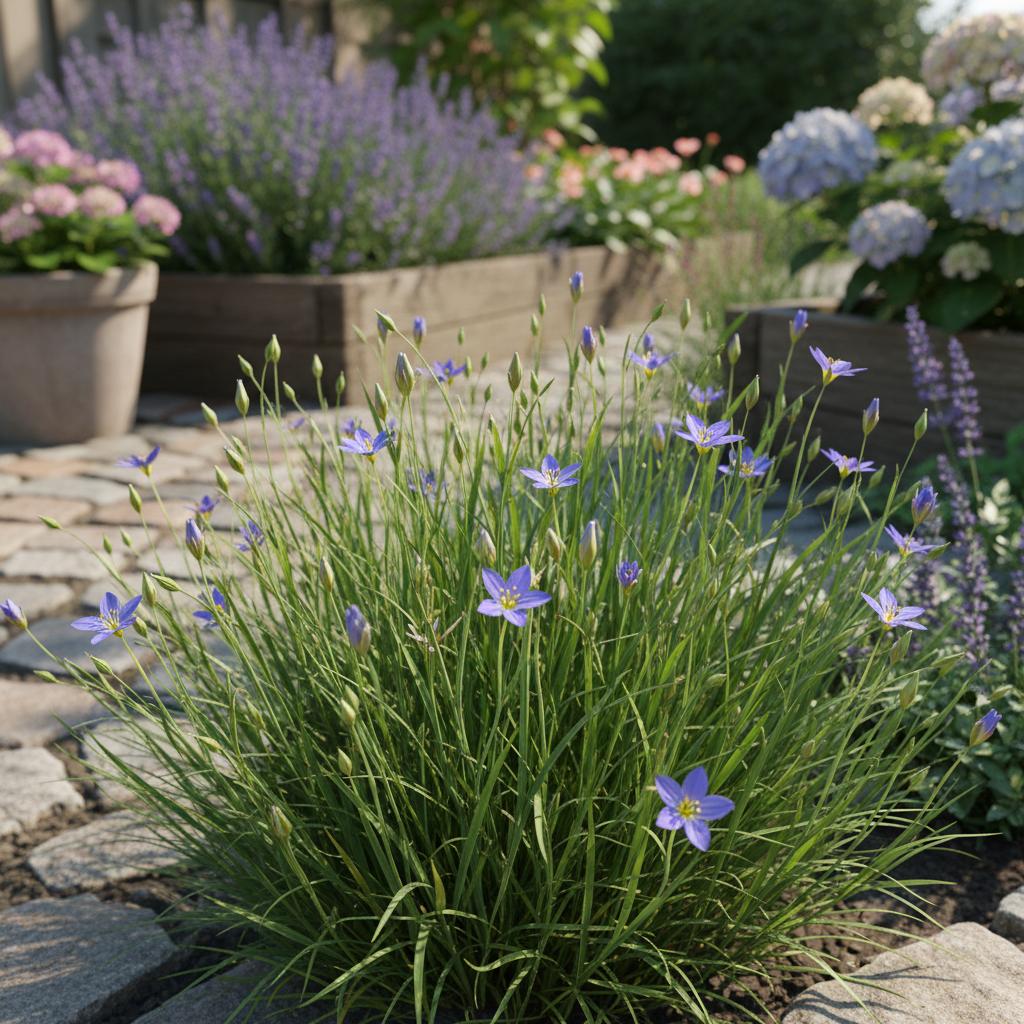
- Leaves: Grass-like, narrow, flat, basal leaves, glaucous green to bluish-green, up to 5 mm wide;
- Flowers: Star-shaped, 1-2 cm across, with 6 purplish-blue to violet tepals featuring bright yellow bases, borne on branching stems;
- Stems: Flattened and distinctly winged, resembling the foliage;
- Roots: Short, creeping rhizomes forming dense tufts.
Care Guide
Watering
Water moderately during spring growth and blooming; reduce significantly in summer as the plant may go dormant.
Fertilization
Apply a light top-dressing of compost or mild organic tea as new growth emerges.. Requires very little fertilization; overly rich soils can lead to floppy foliage and fewer blooms.
Banana Peel Tea:Steep chopped banana peels in water for 24-48 hours, strain, and use the liquid to encourage vibrant spring blooms. Discard peels in compost to avoid attracting pests.Pruning
- Cut back dead or yellowing foliage in late summer or fall to maintain a tidy appearance;
- Divide clumps every 2 to 3 years in early spring or autumn to rejuvenate growth and prevent overcrowding;
- Deadhead spent flowers if self-seeding is not desired, though seed heads provide winter interest.
Toxicity
Warning: this plant may be toxic.
Pets & Humans
Pets: Non-toxic to cats per ASPCA guidelines.
Humans: Non-toxic to humans; safe to handle.
Garden Uses & Culture
Culture: In Western native landscaping, it is highly valued for water-wise gardens and meadow restorations, symbolizing the arrival of spring in California.
Usage: Excellent for rock gardens, borders, native plant meadows, and woodland edges; attracts native bees and pollinators.