 PlantFun
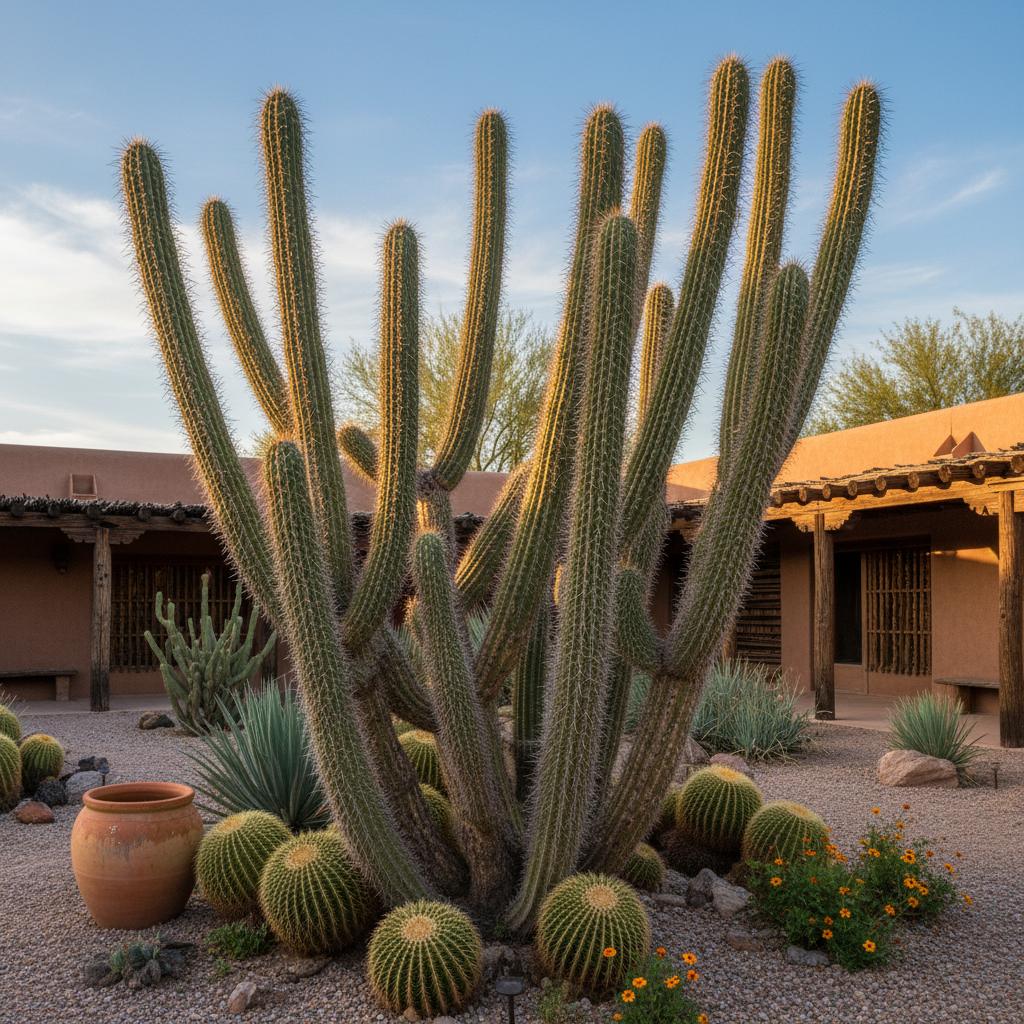
Plant Needs
Sunlight
Requires full sun for optimal growth and fruit production.
Watering
Highly drought-tolerant; water sparingly, allowing soil to dry completely.
Temperature
Tolerates extreme desert heat and moderate winter freezes.
Characteristics
- Stems: Slender, cylindrical, jointed segments, 3-5 mm in diameter, pale green to grayish-green;
- Spines: Areoles bear 1-3 long, slender spines (up to 5 cm) with papery sheaths;
- Flowers: Small, pale yellow to greenish-yellow, opening in late afternoon;
- Fruits: Fleshy, bright red to orange-red berries, persisting through winter.
Care Guide
Watering
Water deeply but infrequently, about once every two weeks
Fertilization
Apply a diluted, low-nitrogen fertilizer once. Requires minimal fertilization.
Banana Peel Tea:Steep chopped banana peels in water for 24 hours. Dilute 1:1 with water. Avoid high salts and do not use raw peels directly on soil to prevent rot.Pruning
- Wear thick, puncture-resistant gloves when handling;
- Prune dead or damaged segments at the joints using long-handled tongs and sterile clippers;
- Remove fallen segments from the ground to prevent unwanted rooting.
Toxicity
Warning: this plant may be toxic.
Pets & Humans
Pets: Not chemically toxic, but spines can cause mechanical injury to mouth, paws, and digestive tract if ingested (per ASPCA).
Humans: Not chemically toxic, but spines and glochids cause mechanical injury and skin irritation.
Garden Uses & Culture
Culture: In the American Southwest, its bright red winter fruits earned it the name "Desert Christmas Cactus," symbolizing resilience and festive color in a harsh landscape.
Usage: Used in xeriscaping, as a natural barrier or security hedge, and historically the fruits were consumed by indigenous peoples of the Sonoran Desert.