 PlantFun
Plant Needs
Sunlight
Prefers bright, indirect light; variegation requires slightly more light than solid green varieties, but avoid direct sun which scorches leaves.
Watering
Keep soil consistently moist but not waterlogged; the plant will dramatically droop when thirsty but recovers quickly after watering.
Temperature
Thrives in warm indoor temperatures; protect from cold drafts and temperatures below 15°C.
Characteristics
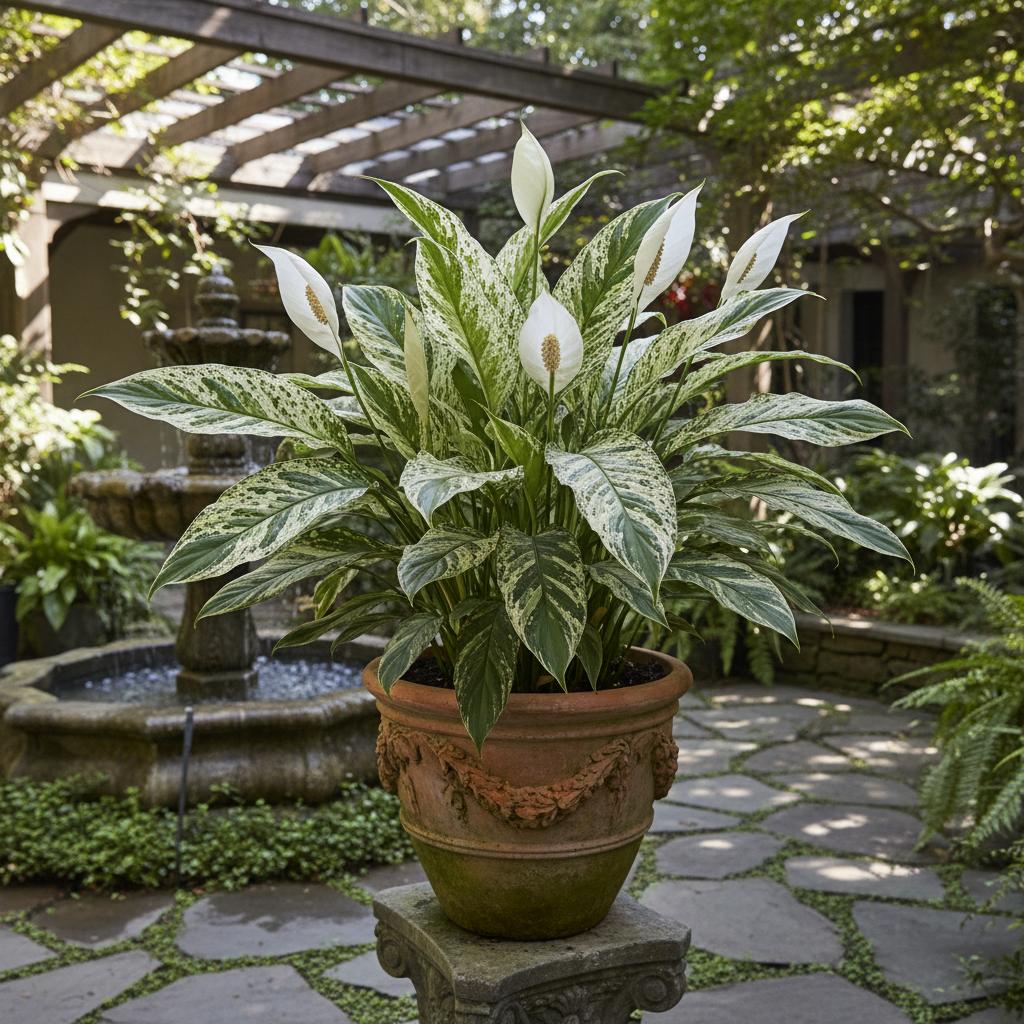
- Leaves: Elliptic to lanceolate, dark green with irregular white or cream variegation, noticeably crinkled or puckered texture;
- Flowers: Inflorescence consists of a central pale yellow to white spadix surrounded by a white, hood-like spathe;
- Stems: Clumping habit, arising from an underground rhizome, lacking a prominent above-ground stem.
Care Guide
Watering
Water thoroughly when the top inch of soil feels dry.
Fertilization
Apply a balanced liquid fertilizer diluted to half strength.. Avoid over-fertilizing, which can cause brown leaf tips.
Aquarium Water:Use old aquarium water when doing water changes; it provides gentle, natural nutrients without burning the roots. Ensure the water does not contain added salts or fish medications.Pruning
- Remove dead or yellowing leaves at the base of the stem;
- Deadhead spent flowers by cutting the stalk as close to the base as possible;
- Wipe leaves with a damp cloth periodically to remove dust and support photosynthesis.
Toxicity
Warning: this plant may be toxic.
Pets & Humans
Pets: Toxic to cats per ASPCA; causes oral irritation, excessive drooling, vomiting, and difficulty swallowing.
Humans: Contains insoluble calcium oxalate crystals; chewing or biting can cause immediate pain and irritation of the mouth and lips.
Garden Uses & Culture
Culture: In Western culture, the white spathe of the peace lily resembles a white flag of surrender, symbolizing peace, purity, and healing.
Usage: Highly valued as an ornamental houseplant and recognized for its ability to help purify indoor air.