 PlantFun
Plant Needs
Characteristics
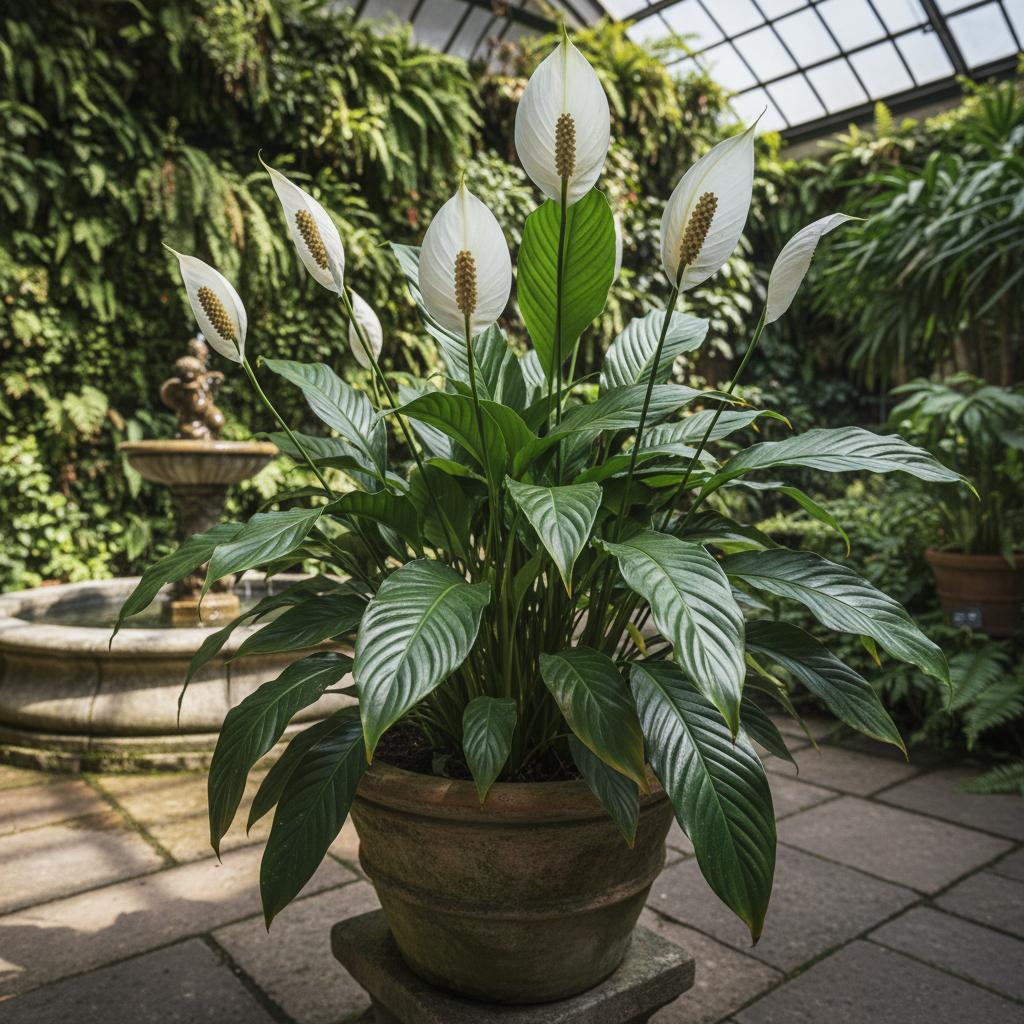
- Leaves: Large, glossy, dark green, elliptic to lanceolate, with prominent depressed veins, growing from a basal rosette;
- Flowers: Inflorescence is a spadix surrounded by a large, white, hood-like spathe (bract) that turns green as it ages;
- Stem: Short, mostly underground rhizome.
Care Guide
Water thoroughly when the top inch of soil feels dry.
Apply a balanced liquid fertilizer diluted to half strength.. Do not over-fertilize, as this can cause brown leaf tips.
Aquarium Water:Use dirty aquarium water when doing water changes. It provides gentle, natural nitrogen. Ensure the water has no added salts or fish medications.- Remove yellowing or dead leaves at the base of the stem;
- Cut spent flower stalks down to the base to redirect energy to new growth;
- Wipe leaves regularly with a damp cloth to remove dust and improve photosynthesis.
Toxicity
Warning: this plant may be toxic.
Pets: Toxic to cats (per ASPCA). Symptoms include oral irritation, intense burning and irritation of mouth, tongue and lips, excessive drooling, vomiting, and difficulty swallowing.
Humans: Contains insoluble calcium oxalate crystals; ingestion causes oral irritation, burning sensation, and possible swelling of lips and tongue.
Garden Uses & Culture
Culture: In Western culture, the white spathe is often associated with the white flag of peace, symbolizing purity, rebirth, and sympathy. It is a traditional condolence gift.
Usage: Widely cultivated as an indoor ornamental plant. Renowned for its ability to purify indoor air, removing VOCs like formaldehyde and benzene.