 PlantFun
Plant Needs
Characteristics
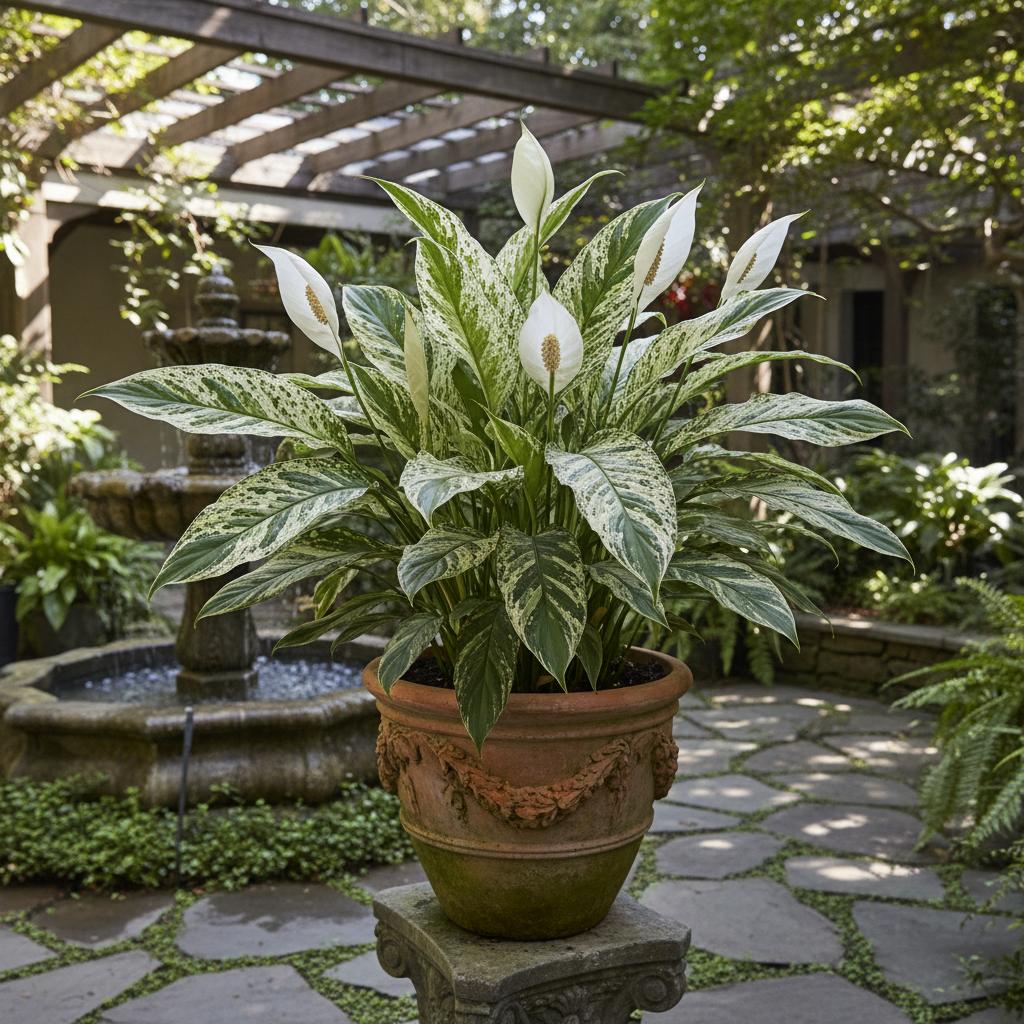
- Leaves: Elliptic to lanceolate, dark green with irregular white or cream variegation, distinctly puckered or crinkled texture, glossy surface;
- Flowers: Inflorescence is a spadix surrounded by a white, hood-like spathe that gradually turns green as it ages;
- Stems: Clump-forming, arising from an underground rhizome, lacking a prominent above-ground stem.
Care Guide
Water thoroughly when the top inch of soil feels dry, keeping it consistently moist.
Apply a balanced liquid fertilizer diluted to half strength.. Do not over-fertilize, as this can cause brown leaf tips.
Banana Peel Tea:Steep chopped banana peels in water for 24 hours. Strain and use the liquid to water the plant. Discard the solid peels in the compost; do not leave them on the soil surface to prevent fungus gnats and mold.- Remove dead or yellowing leaves at the base of the stem using clean, sharp scissors;
- Snip off spent flower stalks at the base to redirect the plant's energy into new foliage and blooms;
- Wipe the leaves periodically with a damp cloth to remove dust and keep the stomata clear.
Toxicity
Warning: this plant may be toxic.
Pets: Toxic to cats per ASPCA. Chewing or biting into the plant releases calcium oxalate crystals, causing tissue penetration and irritation.
Humans: Contains insoluble calcium oxalates which can cause oral irritation and gastrointestinal discomfort if ingested.
Garden Uses & Culture
Culture: In Western culture, the peace lily is a popular symbol of peace, purity, and sympathy. It is frequently gifted as a bereavement plant to offer comfort and represent the rebirth of the soul.
Usage: Widely used as an indoor ornamental plant. It is highly valued for its air-purifying qualities, having been featured in the NASA Clean Air Study for its ability to remove indoor pollutants like formaldehyde, benzene, and trichloroethylene.