 PlantFun
Plant Needs
Characteristics
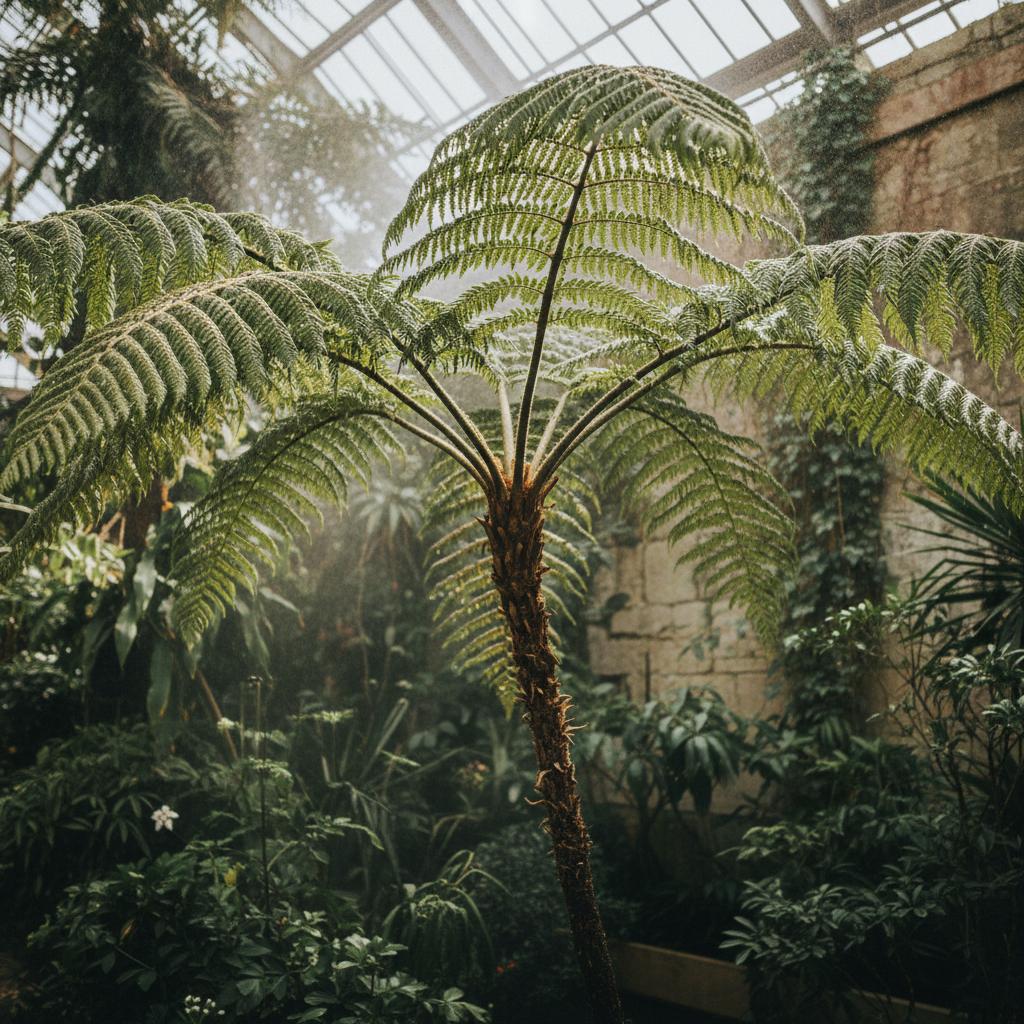
- Fronds: Bipinnate to tripinnate, up to 4-6 meters long, bright green, with a lacy and delicate appearance;
- Trunk: Slender, up to 15 cm in diameter, covered with distinctive oval, coin-like scars left by fallen fronds;
- Scales: The base of the stipe (leaf stalk) is densely covered in long, silky, pale to brown scales;
- Spores: Sori are round, located on the underside of the pinnules, and lack a true indusium (exindusiate).
Care Guide
Water generously and frequently, ensuring the crown and trunk are soaked to maintain humidity.
Apply a balanced, slow-release organic fertilizer around the base.. Ferns are sensitive to strong synthetic fertilizers; use half-strength organic options to avoid burning the delicate roots.
Aquarium Water Feed:Use untreated, changed aquarium water to water the base and trunk. It provides a very mild, natural source of nitrogen perfect for sensitive fern roots. Avoid if the aquarium water has been treated with medications or high salts.- Remove old, yellowing, or dead fronds by cutting them close to the trunk;
- Do not tear fronds off, as this can damage the trunk and ruin the aesthetic coin-like scars;
- Never cut the top crown (the growing point), as this will kill the fern.
Toxicity
Warning: this plant may be toxic.
Pets: Non-toxic to cats per ASPCA guidelines.
Humans: Generally non-toxic; however, handling the hairy scales on the trunk and frond bases may cause mild mechanical skin irritation.
Garden Uses & Culture
Culture: During the Victorian "Pteridomania" (fern craze) in 19th-century Europe, tree ferns were highly prized status symbols, often housed in elaborate glass ferneries to showcase exotic botanical elegance.
Usage: Widely used in ornamental landscaping, tropical-themed gardens, understory plantings, and as striking architectural focal points in conservatories.