 PlantFun
Plant Needs
Sunlight
Full sun to partial shade; blooms best in full sun.
Watering
Moderate water requirements; drought tolerant once established.
Temperature
Highly cold hardy, thriving in USDA zones 3-8.
Characteristics
- Leaves: Rhombic to obovate, 2.5 - 5 cm long, dark blue-green above and pale below, margins coarsely toothed or lobed on the upper half;
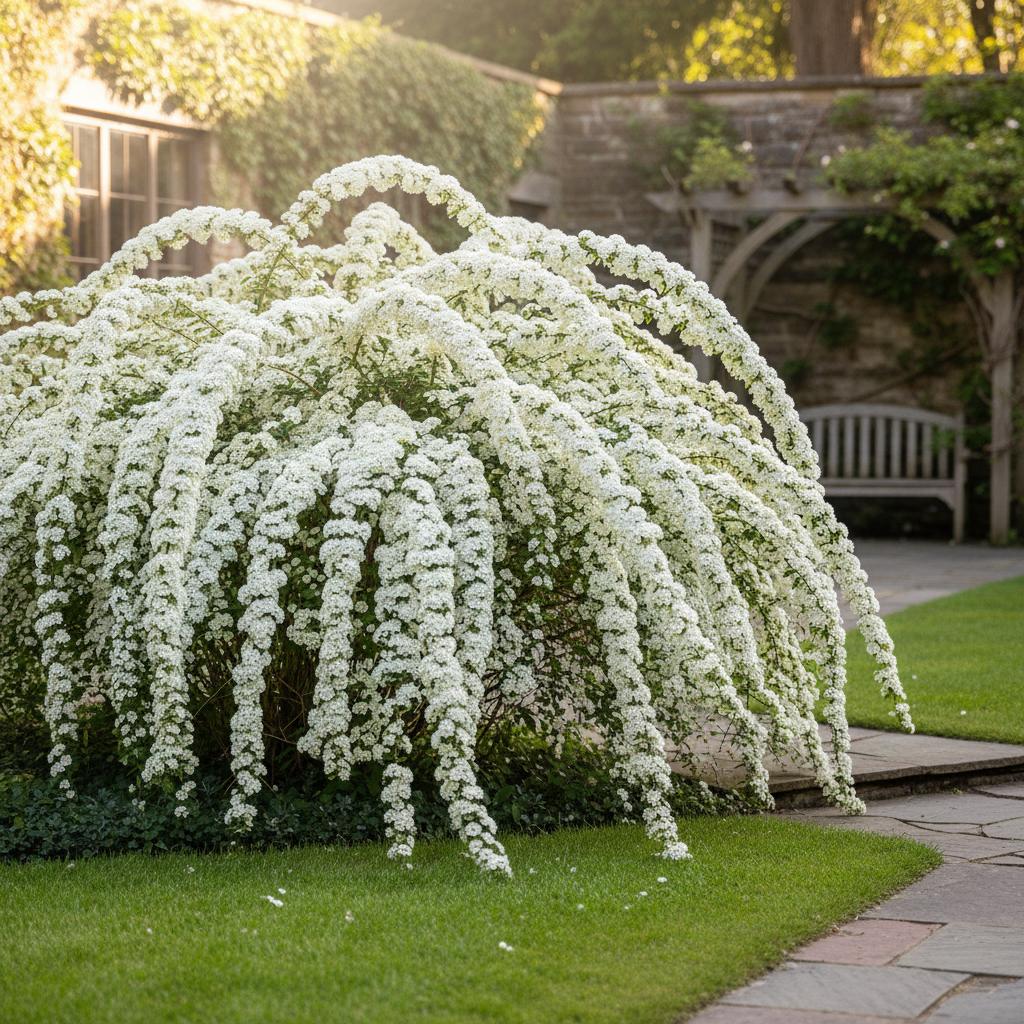
- Flowers: Small, white, 5-petaled, arranged in dense, flat-topped umbels (corymbs) that profusely cover the arching stems;
- Stems: Slender, gracefully arching, creating a fountain-like growth habit;
- Bark: Brown and exfoliating on older, mature stems.
Care Guide
Watering
Water deeply once a week during active growth and dry spells.
Fertilization
Apply a gentle top-dressing of compost or organic matter before new growth begins.. Avoid heavy nitrogen fertilization which promotes foliage at the expense of flowers.
Banana Peel Tea:Steep chopped banana peels in water for 24-48 hours. Use the strained liquid to water the base of the shrub in early spring to support prolific blooming. Discard peels in compost.Pruning
- Prune immediately after flowering, as it blooms on old wood;
- Thin out up to one-third of the oldest stems to the ground annually to rejuvenate the shrub;
- Trim back overly long branches to maintain the natural, cascading fountain shape;
- Remove any dead, damaged, or crossing branches to improve air circulation.
Toxicity
Warning: this plant may be toxic.
Pets & Humans
Pets: Non-toxic to cats per ASPCA guidelines.
Humans: Generally considered non-toxic to humans.
Garden Uses & Culture
Culture: A staple in Victorian and early 20th-century American gardens, it is often associated with traditional cottage gardens and symbolizes purity, grace, and the arrival of spring.
Usage: Excellent as a specimen plant, in informal hedges, mixed shrub borders, or foundation plantings.