 PlantFun
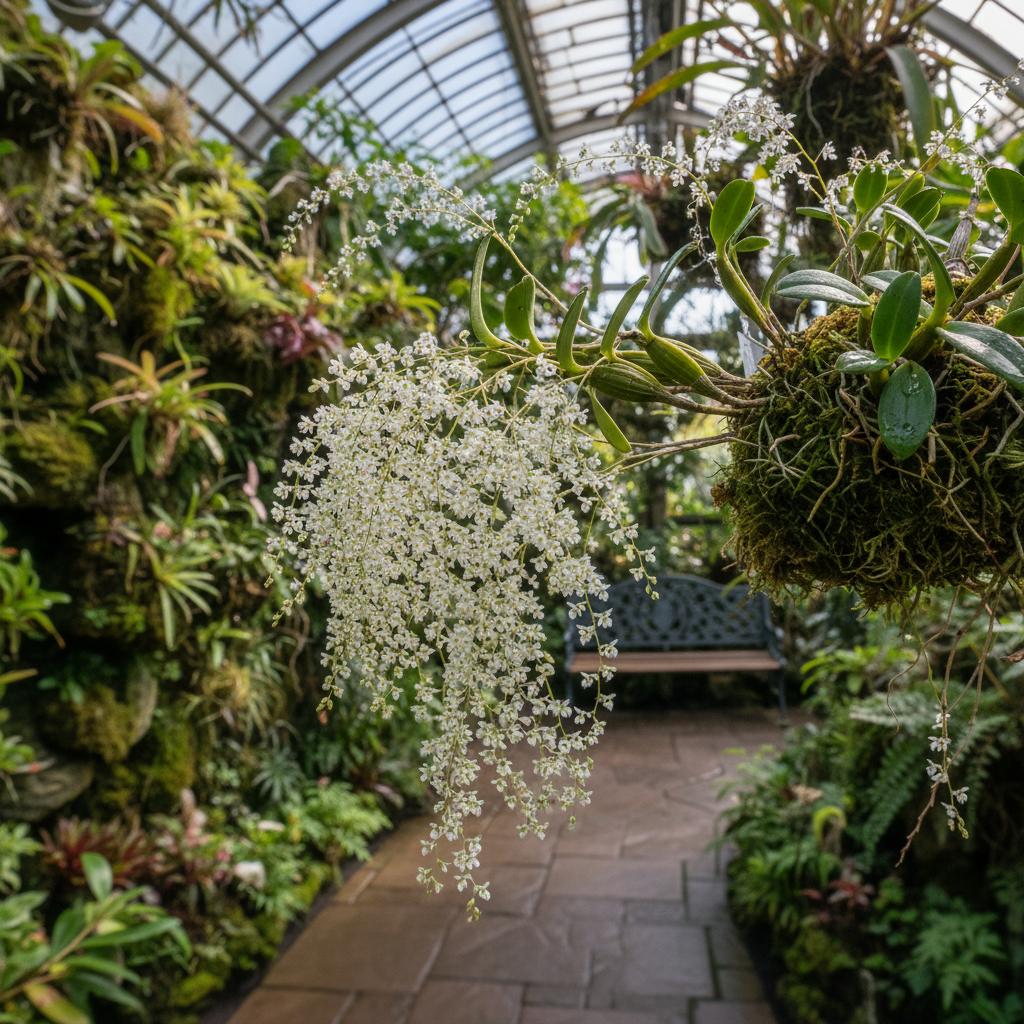
Plant Needs
Sunlight
Requires bright, indirect light or dappled shade; avoid direct midday sun.
Watering
Needs consistent moisture; water when the top of the moss or bark begins to dry.
Temperature
Prefers intermediate to warm temperatures, typical of neotropical cloud forests.
Characteristics
- Leaves: Oblong to elliptic, leathery, arising from a short ramicaul;
- Flowers: Tiny, triangular, arranged densely on a racemose inflorescence; sepals are often silvery, greenish, or purplish;
- Roots: Fine, epiphytic roots adapted for clinging to tree bark and absorbing atmospheric moisture.
Care Guide
Watering
Water frequently to keep the medium evenly moist but not soggy.
Fertilization
Apply a balanced orchid fertilizer at quarter strength weekly.. Orchids are light feeders; flush the pot with plain water once a month to prevent salt buildup.
Banana Peel Tea:Soak chopped banana peels in water for 24 hours, strain, and dilute 1:1 with water. Use sparingly to avoid salt buildup on sensitive orchid roots.Pruning
- Remove spent flower spikes at the base using sterilized tools;
- Trim away dead, hollow, or mushy roots during repotting;
- Do not cut healthy green leaves or ramicauls, as they store vital energy for the plant.
Toxicity
Warning: this plant may be toxic.
Pets & Humans
Pets: Non-toxic to cats per ASPCA guidelines for most Orchidaceae.
Humans: Generally recognized as safe; no known toxicity.
Garden Uses & Culture
Culture: Orchids have long been symbols of love, luxury, and beauty in Western culture, often associated with refinement and rare elegance during the Victorian era's "orchidelirium".
Usage: Primarily cultivated as an ornamental plant by orchid enthusiasts and botanical gardens, especially favored in miniature orchid collections or terrariums.