 PlantFun
Plant Needs
Sunlight
Requires full sun to partial shade; bright, direct light is essential for maintaining compact growth and encouraging blooming.
Watering
Highly drought-tolerant; water only when the soil is completely dry, typically every 2 weeks in summer.
Temperature
Thrives in hot weather; protect from frost and prolonged freezing temperatures.
Characteristics
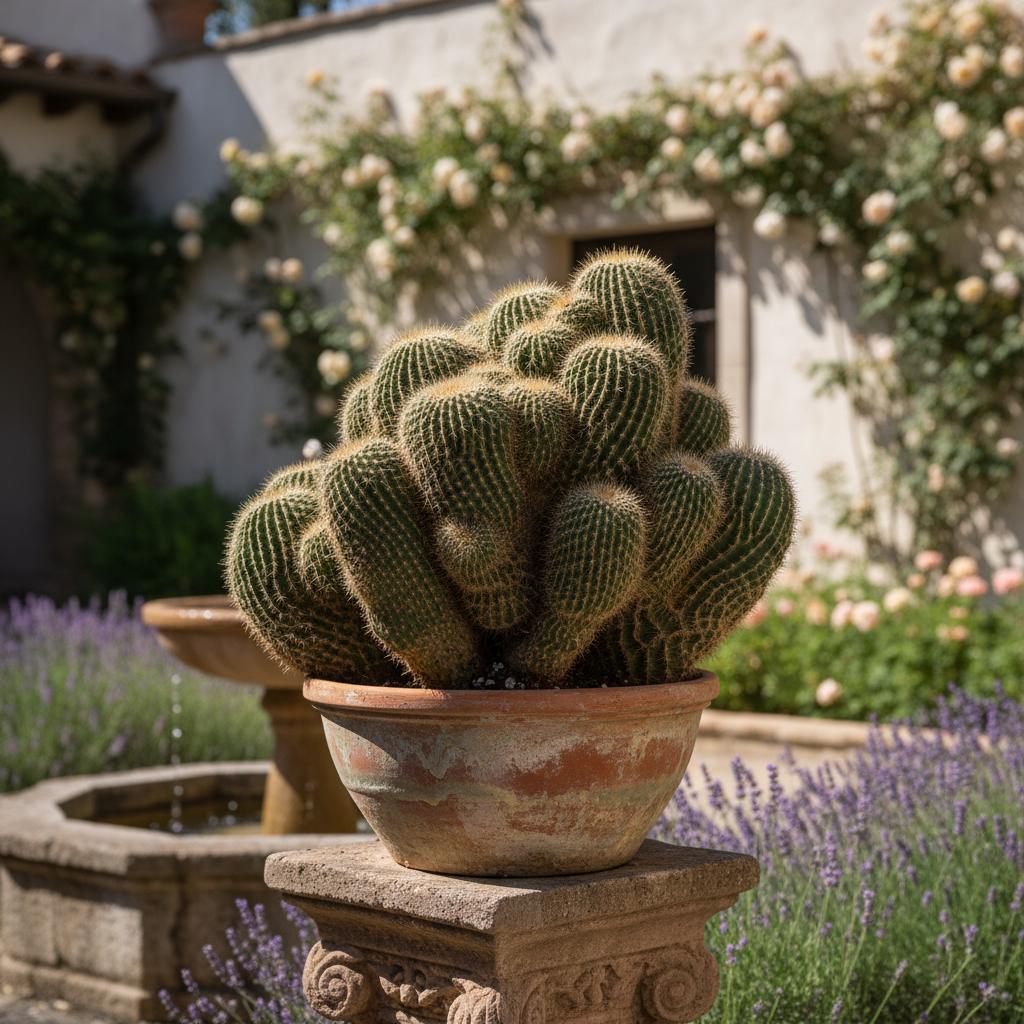
- Stem: Globose to short cylindrical, dark green, featuring 50 to 100+ extremely thin, wavy, and tightly packed ribs resembling a human brain;
- Spines: Areoles bear 2-4 flattened, upward-pointing central spines and several shorter, bristle-like radial spines;
- Flowers: Apical, funnel-shaped, about 2.5 cm wide, white to pinkish with a distinct darker purplish or pink midstripe on the petals;
- Roots: Fibrous root system adapted to shallow, rocky soils.
Care Guide
Watering
Water thoroughly but infrequently, allowing the soil to dry out completely between waterings.
Fertilization
Apply a diluted, low-nitrogen fertilizer once.. Fertilize sparingly during the active growing season.
Banana Peel Tea:Soak chopped banana peels in water for 24-48 hours, strain, and dilute 1:1 with water. Use during the spring watering to encourage blooming. Avoid leaving solid peels on the soil to prevent mold and pests.Pruning
- Debris Removal: Use tweezers or a soft brush to gently remove dust, dead insects, or fallen debris trapped between the tight ribs;
- Deadheading: Carefully pluck off spent, dry flowers to maintain a tidy appearance;
- Root Pruning: Only necessary during repotting if dead or rotting roots are discovered.
Toxicity
Warning: this plant may be toxic.
Pets & Humans
Pets: Non-toxic per ASPCA guidelines for typical cacti, but spines can cause physical trauma.
Humans: Non-toxic, but sharp spines pose a mechanical injury risk.
Garden Uses & Culture
Culture: Highly prized in Western succulent collections and novelty horticulture for its striking resemblance to a human brain, often used as a conversation piece in modern minimalist decor.
Usage: Ideal for rock gardens, desert landscaping, and as a low-maintenance potted houseplant.