 PlantFun
Plant Needs
Sunlight
Requires full, direct sunlight for optimal growth and to prevent etiolation (stretching).
Watering
Highly drought-tolerant; water only when the soil is completely dry to the bottom of the pot or root zone.
Temperature
Thrives in hot climates; must be protected from frost and freezing temperatures.
Characteristics
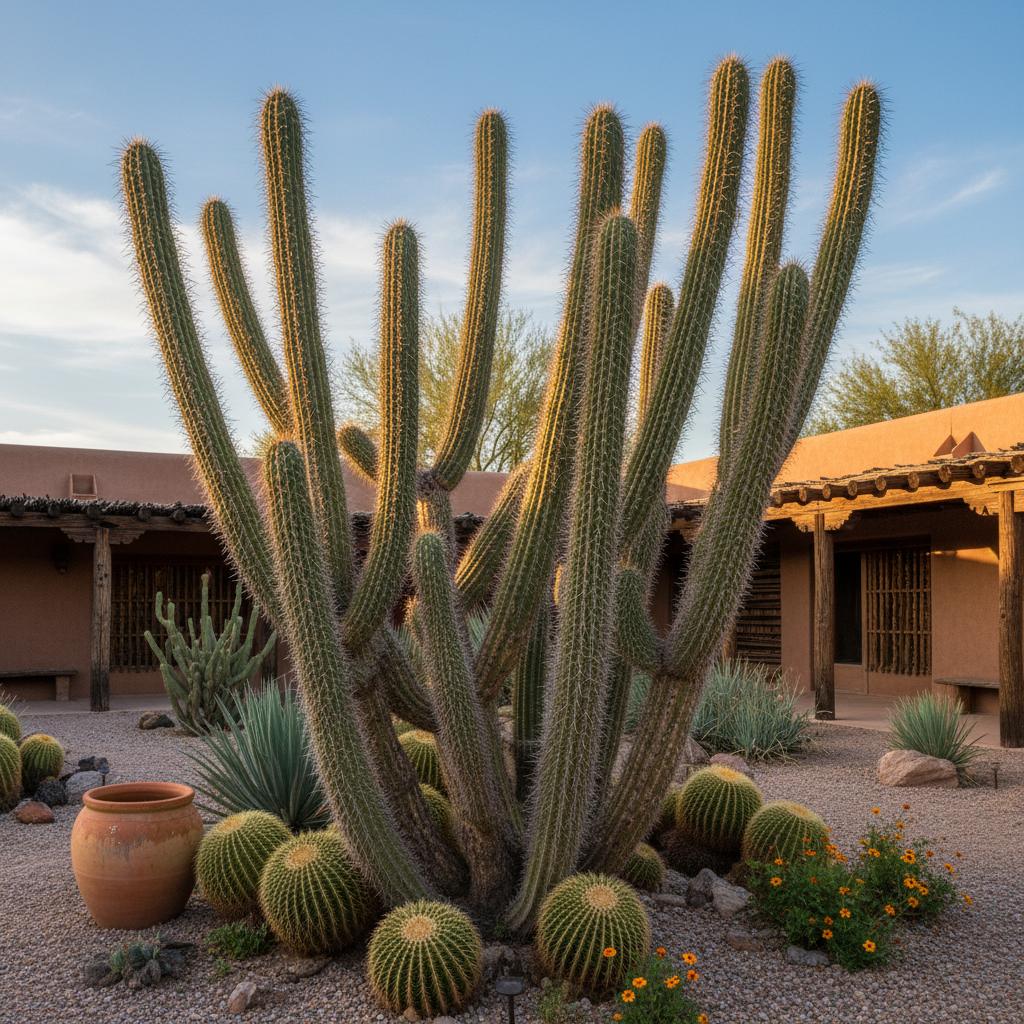
- Stems: Slender, cylindrical, green to grayish-green, with multiple pronounced longitudinal ribs that allow for water storage expansion;
- Areoles and Spines: Areoles closely set along the ribs, bearing clusters of stiff, needle-like radial and central spines;
- Flowers: Funnel-shaped, nocturnal, typically white to pale pink, opening at night and closing by mid-morning;
- Fruits: Globose, fleshy, often spiny but losing spines at maturity, containing numerous small black seeds.
Care Guide
Watering
Water thoroughly when soil is completely dry
Fertilization
Apply a low-nitrogen cactus fertilizer once. Fertilize sparingly during the active growing season; do not fertilize in winter.
Banana Peel and Eggshell Tea:Soak dried banana peels and crushed eggshells in water for 48 hours. Strain and dilute 1:1 with water. Potassium supports blooming and overall health, while calcium strengthens the cellular structure of the stems. Avoid using raw, unsteeped organic matter directly on the soil to prevent fungal gnats.Pruning
- Sanitation: Pruning is rarely necessary except to remove dead, diseased, or severely damaged stems;
- Tools: Always use heavy leather gloves and sterile, sharp saws or knives;
- Cuttings: If propagating or reducing height, allow the cut end to callous over in a dry, shaded area for several weeks before replanting.
Toxicity
Warning: this plant may be toxic.
Pets & Humans
Pets: Non-toxic per ASPCA, but sharp spines can cause mechanical injury to eyes and skin.
Humans: Non-toxic; fruits of many Stenocereus species are edible, though spines pose a physical hazard.
Garden Uses & Culture
Culture: Columnar cacti are iconic symbols of the American Southwest and Mexican landscapes, frequently featured in Western cinema and desert art as emblems of endurance.
Usage: Used in xeriscaping, desert gardens, as natural barrier fencing, and occasionally cultivated for its edible fruits (similar to pitaya).