 PlantFun
Plant Needs
Sunlight
Bright, indirect light; avoid direct midday sun which can scorch the leaves.
Watering
Allow the top inch of soil to dry out between waterings; highly susceptible to root rot if overwatered.
Temperature
Prefers moderate room temperatures; suffers in extreme heat above 26°C.
Characteristics
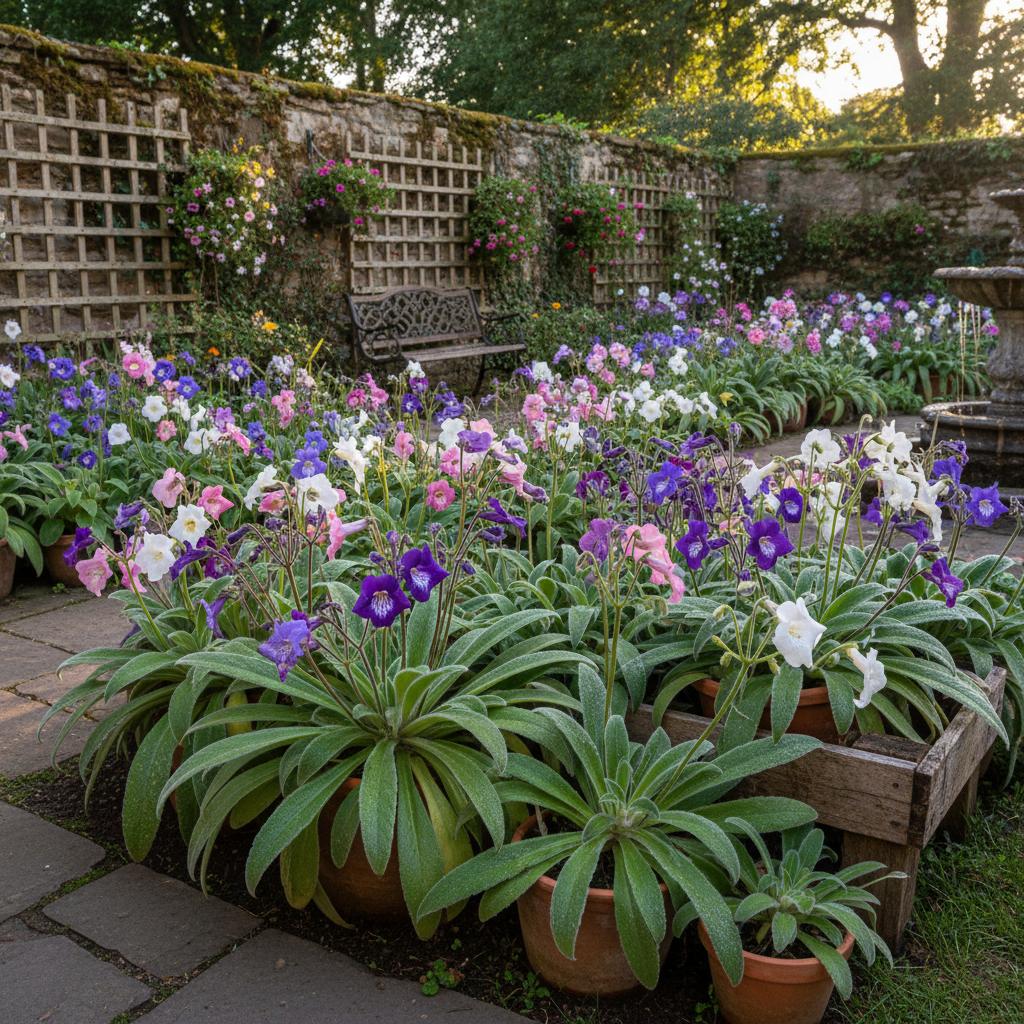
- Leaves: Long, strap-shaped, heavily veined and wrinkled (rugose), velvety texture, dark green, forming a basal rosette;
- Flowers: Trumpet-shaped, five-lobed, borne on wiry peduncles, available in shades of purple, blue, pink, red, and white, often with contrasting throats or veining;
- Roots: Fine, shallow, and fibrous root system typical of epiphytic or lithophytic ancestors.
Care Guide
Watering
Water thoroughly when the soil surface feels dry, avoiding water on the leaves.
Fertilization
Apply a diluted, high-potassium liquid fertilizer.. Feed regularly during the active growing season.
Banana Peel Tea:Steep chopped banana peels in water for 24 hours, strain, and dilute 1:1 with water. Apply to the soil to encourage blooming. Avoid leaving raw peels on the soil to prevent fungus gnats.Pruning
- Remove spent flower stalks by cutting them at the base to encourage more blooms;
- Trim away old, yellowing, or damaged leaves to maintain plant vigor and improve air circulation;
- Divide overcrowded plants during repotting in spring.
Toxicity
Warning: this plant may be toxic.
Pets & Humans
Pets: Non-toxic to cats per ASPCA.
Humans: Non-toxic to humans.
Garden Uses & Culture
Culture: Highly prized in Victorian England as a parlor plant, valued for its ability to bloom profusely in the lower light conditions of 19th-century homes.
Usage: Primarily grown as an indoor ornamental potted plant for its showy, long-lasting flowers.