 PlantFun
Plant Needs
Sunlight
Prefers bright, indirect light or dappled shade; direct sunlight can scorch the leaves.
Watering
Requires moderate watering; allow the top inch of soil to dry out between waterings to prevent root rot.
Temperature
Thrives in average room temperatures; not frost tolerant and dislikes extreme heat.
Characteristics
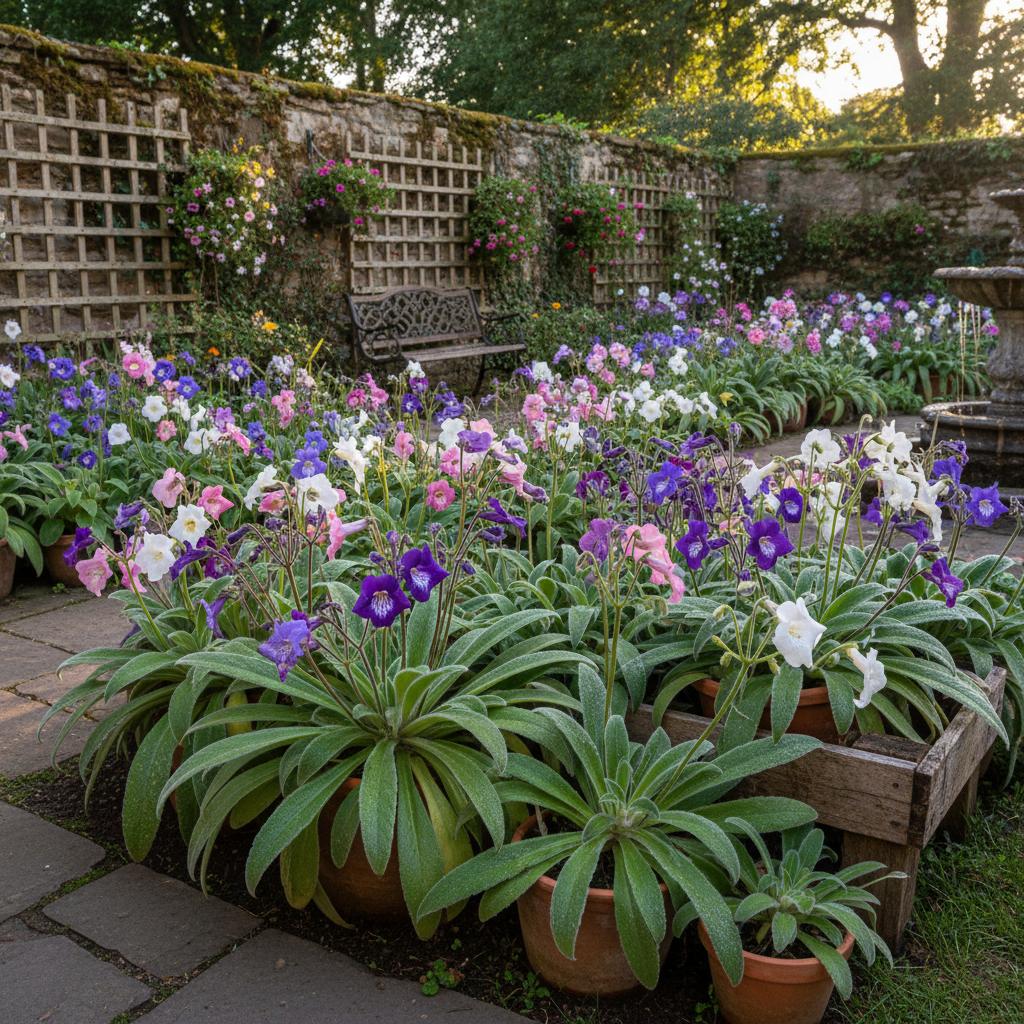
- Leaves: Rosette-forming, elongated, strap-shaped, with a wrinkled (rugose) texture, pubescent surfaces, and scalloped margins;
- Flowers: Funnel-shaped or tubular, typically pale blue, lilac, or white with darker purple nectar guides in the throat, borne on slender leafless peduncles;
- Fruit: A spirally twisted capsule that unwinds to release seeds, characteristic of the genus.
Care Guide
Watering
Water thoroughly when the soil surface feels dry, ensuring good drainage.
Fertilization
Apply a diluted, balanced fertilizer to support new growth.. Feed regularly during the active growing season.
Banana Peel Tea:Steep chopped banana peels in water for 24-48 hours, strain, and dilute 1:1 with water. Apply to the soil to promote blooming. Discard solids in compost to avoid attracting pests.Pruning
- Snip off spent flower stalks at the base to encourage continuous blooming;
- Remove yellowing, dead, or damaged leaves to maintain plant hygiene and appearance;
- Divide overcrowded rosettes during repotting in spring to rejuvenate the plant.
Toxicity
Warning: this plant may be toxic.
Pets & Humans
Pets: Non-toxic to cats per ASPCA.
Humans: Non-toxic to humans.
Garden Uses & Culture
Culture: Popularized in Victorian England, it became a staple of 19th-century glasshouses and conservatories, prized for its continuous blooms and shade tolerance.
Usage: Widely cultivated as an indoor flowering houseplant and used extensively in hybridization to create modern Streptocarpus cultivars.