 PlantFun
Plant Needs
Sunlight
Requires bright, indirect light; direct sunlight will scorch the leaves and fade the variegation.
Watering
Keep soil consistently moist but not waterlogged; highly sensitive to fluoride and chlorine in tap water.
Temperature
Prefers warm temperatures and high humidity (above 60%).
Characteristics
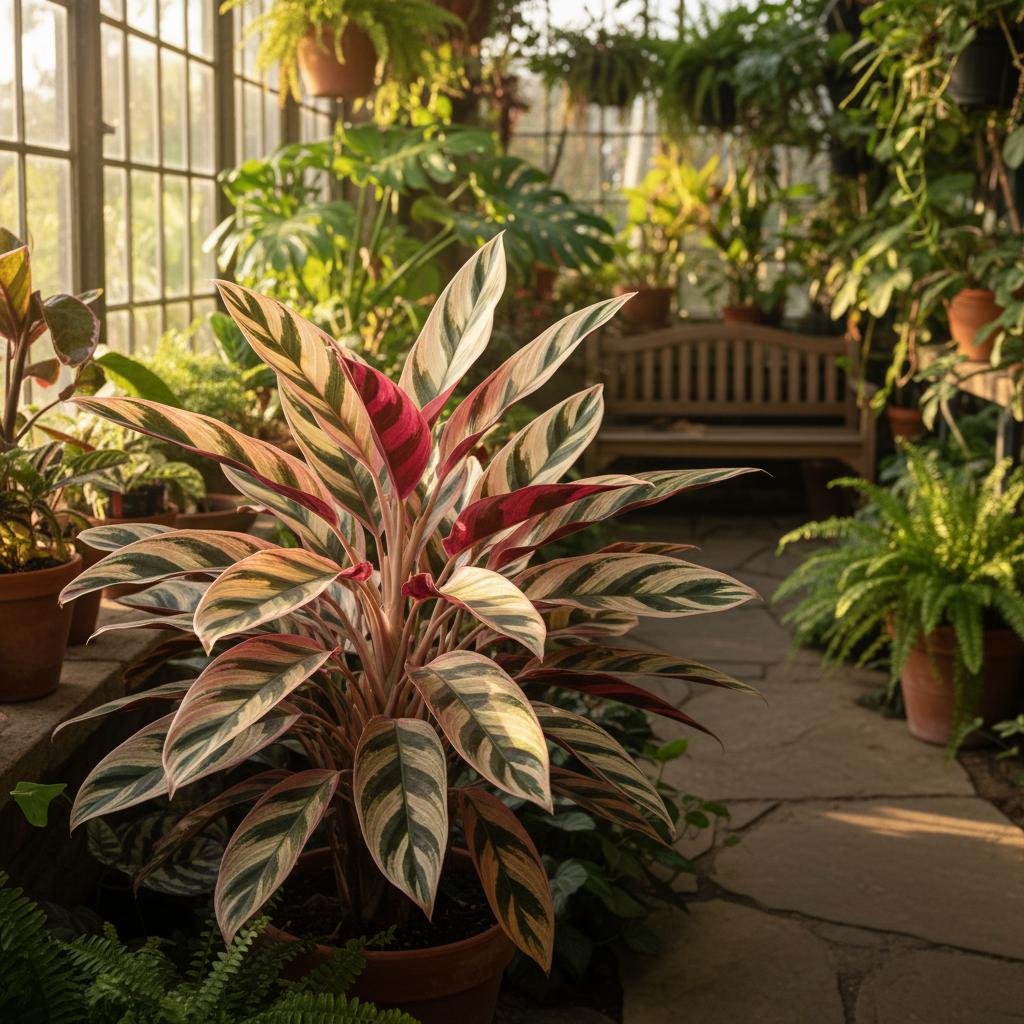
- Leaves: Oblong to lanceolate, thick and glossy, upper surface dark green with irregular white and pink variegation, undersides vibrant magenta or burgundy; exhibits nyctinasty (folding at night);
- Flowers: Panicles emerging from reddish-orange bracts, bearing small, tubular white or cherry-pink flowers (rarely blooms indoors);
- Stems: Short, clumping stems emerging from underground rhizomes.
Care Guide
Watering
Water thoroughly when the top inch of soil feels dry, using distilled or rainwater to prevent brown leaf tips.
Fertilization
Apply a diluted, balanced fertilizer.. Avoid over-fertilizing, which can burn the sensitive roots.
Aquarium Water Fertilizer:Use dirty water from freshwater aquarium changes. It provides a gentle, chemical-free source of nitrogen and beneficial microbes. Ensure the water has no added aquarium salts or medications.Pruning
- Grooming: Wipe leaves regularly with a damp cloth to remove dust and deter spider mites;
- Maintenance: Trim away any entirely brown or yellowed leaves at the base of the stem using sterilized shears;
- Tip Pruning: If only the tips are brown, you can trim the crispy edges following the natural curve of the leaf.
Toxicity
Warning: this plant may be toxic.
Pets & Humans
Pets: Non-toxic to cats per ASPCA guidelines.
Humans: Non-toxic to humans; safe to handle.
Garden Uses & Culture
Culture: Highly prized in modern Western interior design for its bold, painted-looking foliage that adds a dramatic tropical flair to indoor spaces and conservatories.
Usage: Primarily grown as an ornamental houseplant; used in shaded tropical landscape beds in frost-free climates.