 PlantFun
Plant Needs
Characteristics
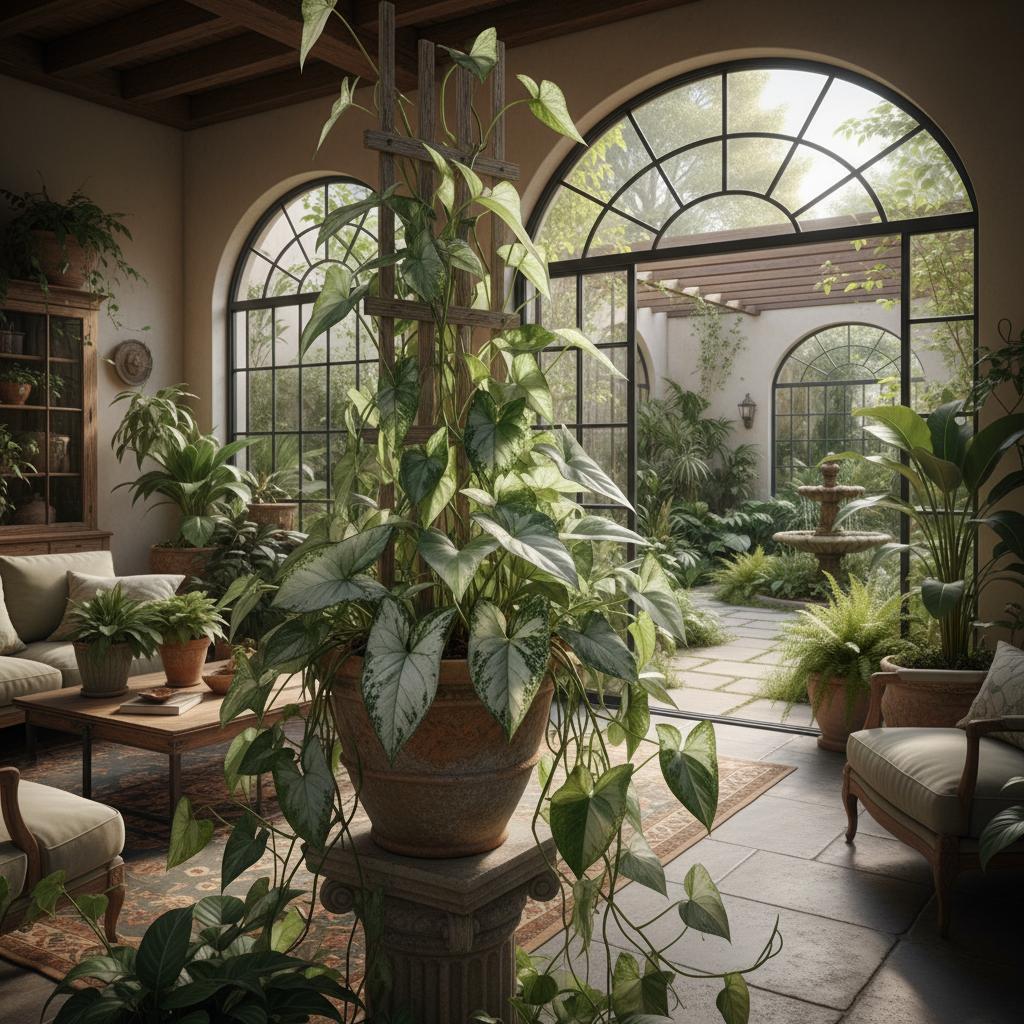
- Leaves: Arrow-shaped (sagittate) when young, maturing to deeply lobed; features a frosty, silvery-white center with contrasting dark green margins.
- Stems: Fleshy, green, producing aerial roots at the nodes for climbing.
- Growth Habit: Vining and trailing; starts compact but will climb vigorously if provided with a moss pole or trellis.
Care Guide
Water thoroughly when the top inch of soil is dry.
Apply a balanced liquid fertilizer diluted to half strength.. Feed regularly during the growing season, pausing in winter.
Banana Peel Tea:Soak chopped banana peels in water for 24 hours, strain, and use the liquid to water the plant. Discard peels in compost to avoid attracting pests.- Pinch back new growth to maintain a bushy, compact shape if desired.
- Remove any yellowing or dead leaves at the base of the stem to maintain hygiene.
- Take stem cuttings just below a node for easy water propagation.
Toxicity
Warning: this plant may be toxic.
Pets: Toxic per ASPCA. Causes oral irritation, intense burning of the mouth, tongue and lips, excessive drooling, vomiting, and difficulty swallowing.
Humans: Chewing or ingestion causes severe mouth pain, swelling, and gastrointestinal upset due to insoluble calcium oxalate crystals.
Garden Uses & Culture
Culture: Arrowhead vines became highly popular in Western interior design during the houseplant boom of the 1970s, valued for their adaptability and striking foliage.
Usage: Excellent as a trailing plant in hanging baskets, a tabletop bushy plant, or a climber on a moss pole.