 PlantFun
Plant Needs
Characteristics
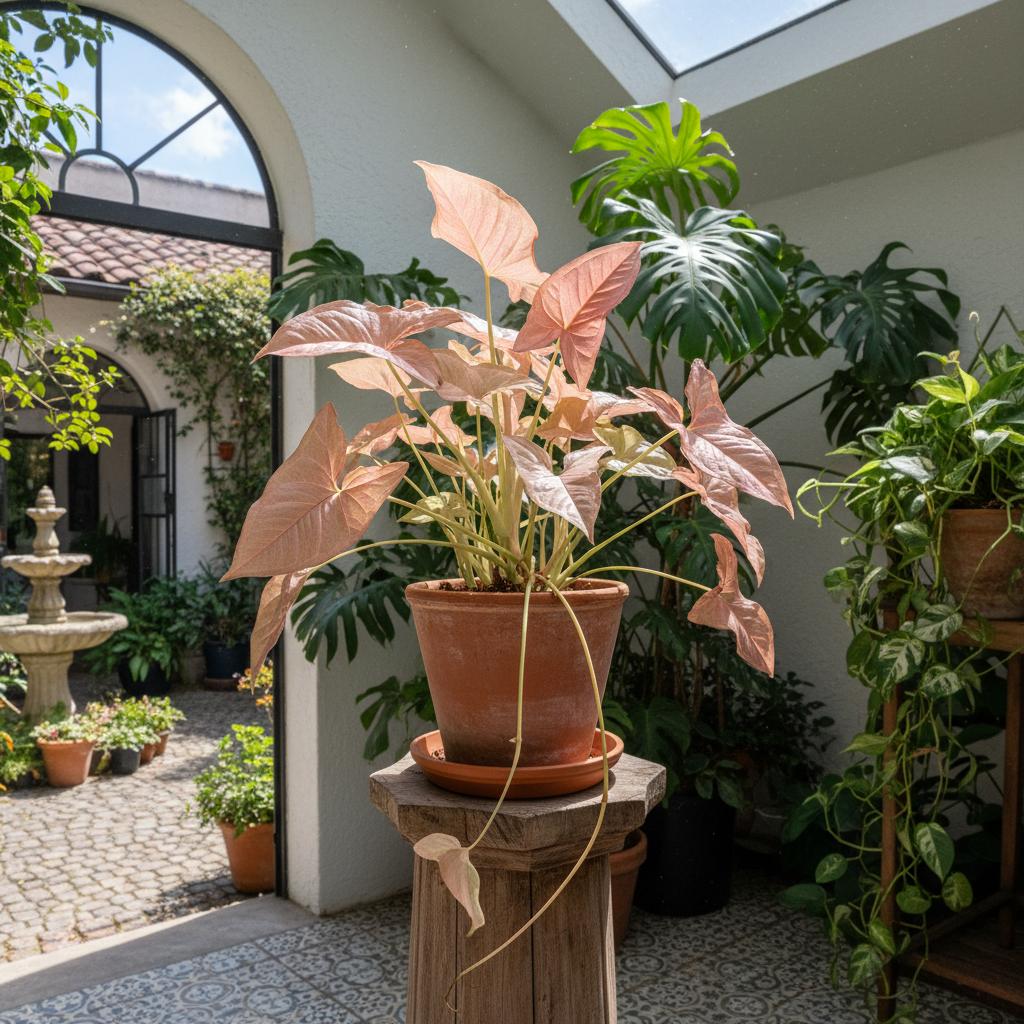
- Leaves: Arrowhead-shaped (sagittate) when young, maturing to a multi-lobed shape; striking dusty pink to iridescent neon pink upper surface with green undersides;
- Stems: Fleshy, green to pinkish, producing aerial roots at the nodes for climbing;
- Flowers: Typical aroid inflorescence with a greenish-white spathe and spadix, though extremely rare in indoor cultivation.
Care Guide
Water thoroughly when the top inch of soil feels dry, keeping it evenly moist.
Apply a balanced liquid fertilizer diluted to half strength.. Feed monthly during the growing season; halt fertilization during the winter dormancy period.
Aquarium Water:Use dirty water from routine freshwater aquarium changes to water the plant. It provides gentle, natural nitrogen. Ensure the aquarium water does not contain added salts or medications.- Pinch back: Pinch off the growing tips to encourage a bushier, more compact shape;
- Remove dead foliage: Cut away any yellowing or dead leaves at the base to maintain aesthetics and prevent pests;
- Manage vines: Trim excessively long trailing vines if a compact desktop look is preferred, or train them up a moss pole.
Toxicity
Warning: this plant may be toxic.
Pets: Toxic to cats per ASPCA. Causes oral irritation, intense burning of mouth, tongue and lips, excessive drooling, and vomiting.
Humans: Contains calcium oxalate crystals which cause oral irritation and gastrointestinal upset if ingested.
Garden Uses & Culture
Culture: Popularized in Western houseplant culture during the 1970s, the Arrowhead Plant has experienced a massive resurgence in modern indoor plant collections due to the highly sought-after pastel pink aesthetic of the 'Neon Robusta' cultivar.
Usage: Excellent for hanging baskets, terrariums, desktop pots, or trained to climb up a moss pole or trellis in indoor settings.