 PlantFun
Plant Needs
Sunlight
Requires full sun for optimal blooming and dense, sturdy growth.
Watering
Drought-tolerant once established; prefers deep, infrequent watering.
Temperature
Thrives in extreme heat; frost-sensitive but often recovers from the roots in USDA zones 8b-9.
Characteristics
- Leaves: Pinnately compound, opposite, with 5 to 11 lanceolate to ovate leaflets, margins sharply serrated, bright green and slightly glossy;
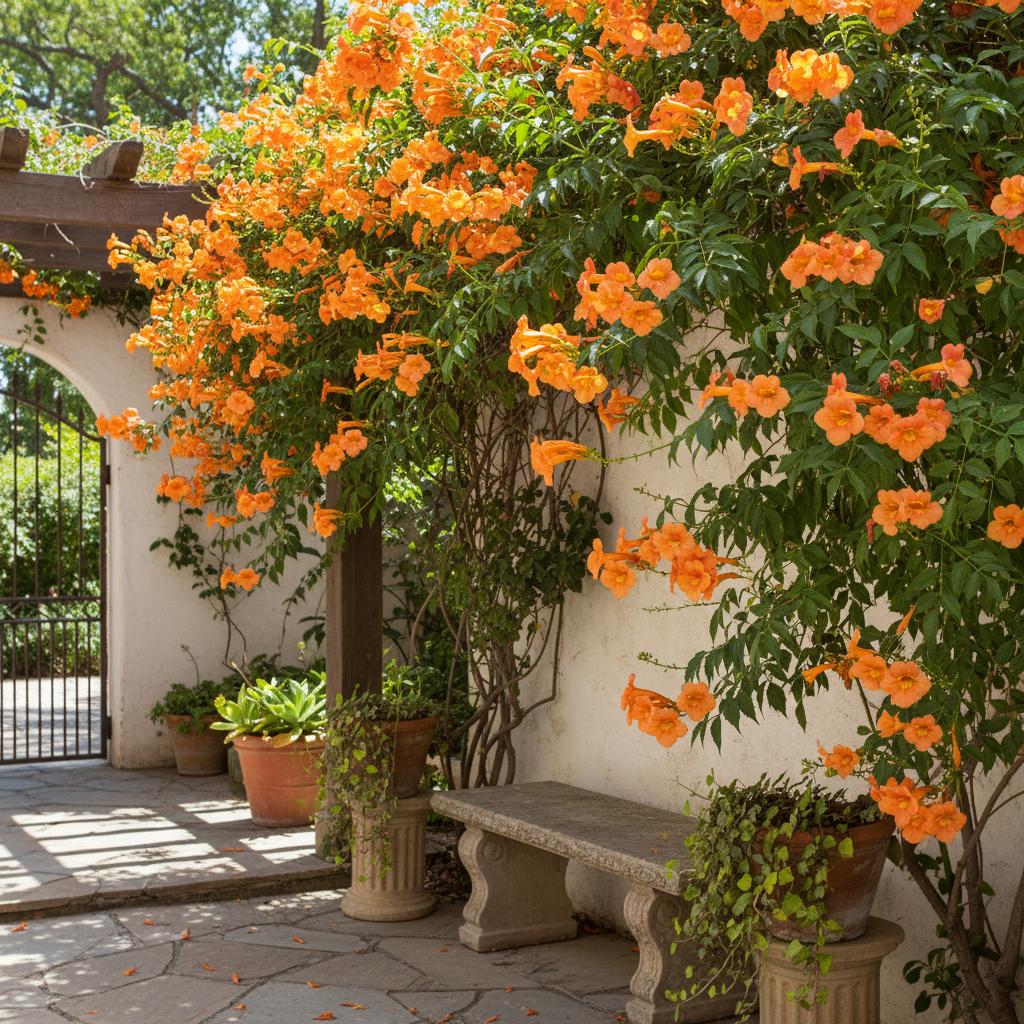
- Flowers: Tubular to bell-shaped, bright orange to red-orange, borne in large, showy terminal clusters (panicles or racemes);
- Stems: Woody, branching upright, developing a light brown to grayish bark as the plant matures.
Care Guide
Watering
Water deeply once a week during active growth and extreme heat.
Fertilization
Apply a balanced, slow-release fertilizer as new growth emerges.. Avoid over-fertilizing with nitrogen, which promotes foliage growth at the expense of flowers.
Banana Peel Tea:Steep chopped banana peels in water for 24-48 hours. Dilute 1:1 with water and apply to the base to encourage prolific blooming. Discard solids in compost to avoid attracting pests.Pruning
- Prune heavily in late winter or early spring to remove frost damage and encourage bushy new growth;
- Deadhead spent flower clusters to promote continuous blooming throughout the summer;
- Thin out older, woody stems to improve air circulation and light penetration.
Toxicity
Warning: this plant may be toxic.
Pets & Humans
Pets: Non-toxic to cats (per ASPCA guidelines for Tecoma species).
Humans: No known toxicity; generally considered safe for humans.
Garden Uses & Culture
Culture: In warm Southern US and Mediterranean-style gardens, it is celebrated as a staple for xeriscaping and is highly prized for attracting hummingbirds and pollinators.
Usage: Excellent as a screening shrub, background border, or standalone specimen in water-wise and desert landscapes.