 PlantFun
Plant Needs
Characteristics
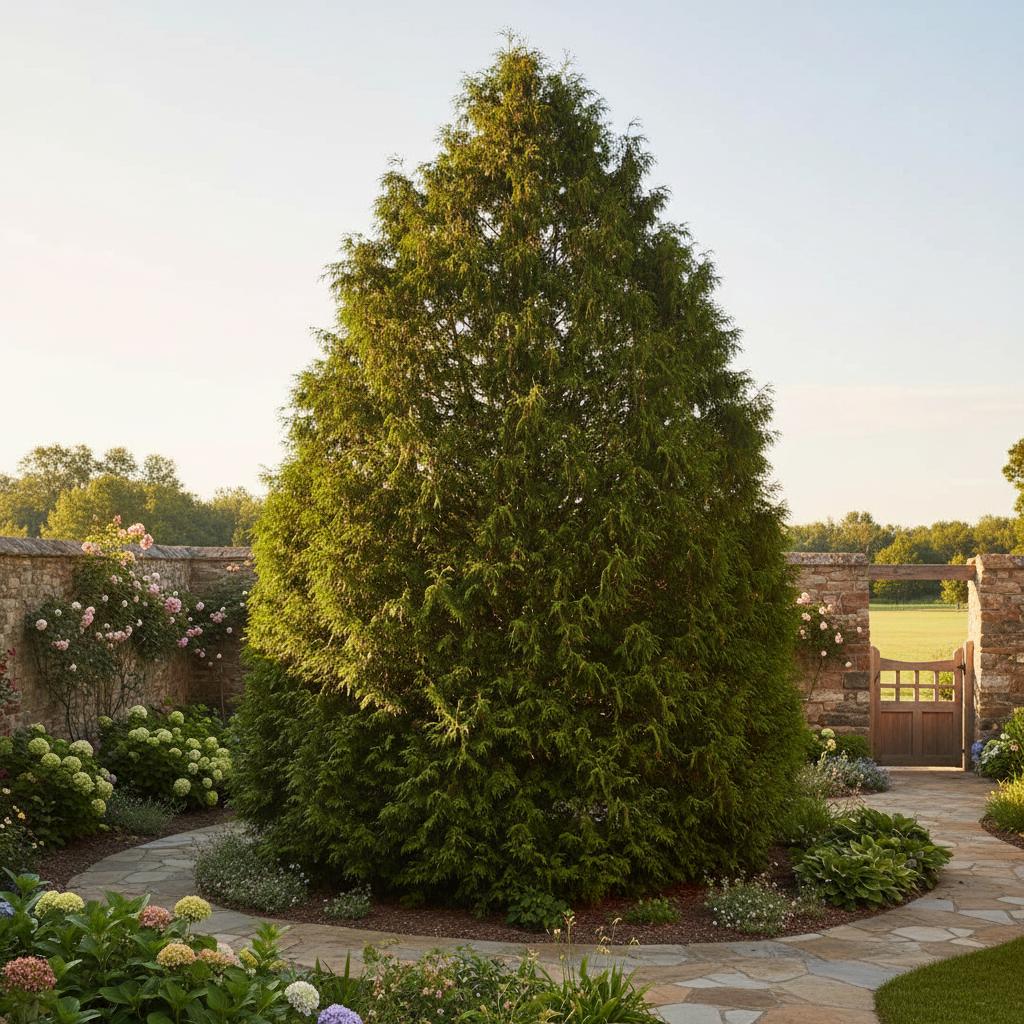
- Leaves: Scale-like, tightly appressed, rich green foliage arranged in flattened sprays that darken slightly in winter but do not yellow;
- Form: Pyramidal to conical habit with dense, uniform branching all the way to the ground;
- Bark: Reddish-brown, fibrous, and exfoliating in narrow longitudinal strips on mature trunks;
- Cones: Small, upright, oblong seed cones, approximately 1.2 cm long, emerging green and turning brown at maturity.
Care Guide
Water deeply once a week during the first two growing seasons; established trees rely on natural rainfall.
Apply a balanced, slow-release evergreen fertilizer at the drip line just before new growth begins.. Fertilize lightly only during the first few years of establishment; mature trees rarely need supplemental feeding.
Coffee Grounds Compost:Mix used coffee grounds with standard garden compost and spread a thin layer around the drip line in early spring. This provides a gentle nitrogen boost and helps maintain slight soil acidity. Avoid piling directly against the trunk.- Timing: Prune in early spring or mid-summer if shaping or height control is desired;
- Method: Lightly shear the outer green foliage to maintain a tight hedge; never cut back into old, brown wood as it will not regrow;
- Maintenance: Naturally maintains a uniform pyramidal shape, so pruning is strictly optional;
- Clearance: Remove any dead, broken, or diseased branches as soon as they are noticed.
Toxicity
Warning: this plant may be toxic.
Pets: Non-toxic per ASPCA; ingestion of large amounts of foliage may cause mild, self-limiting gastrointestinal upset.
Humans: Generally safe; prolonged skin contact with foliage or sap may cause mild dermatitis in highly sensitive individuals.
Garden Uses & Culture
Culture: Celebrated in American landscaping as the ultimate fast-growing privacy screen, it has largely replaced the disease-prone Leyland Cypress in suburban and rural estates.
Usage: Extensively used for privacy hedges, windbreaks, noise reduction screens, and as a standalone specimen tree.