 PlantFun
Plant Needs
Characteristics
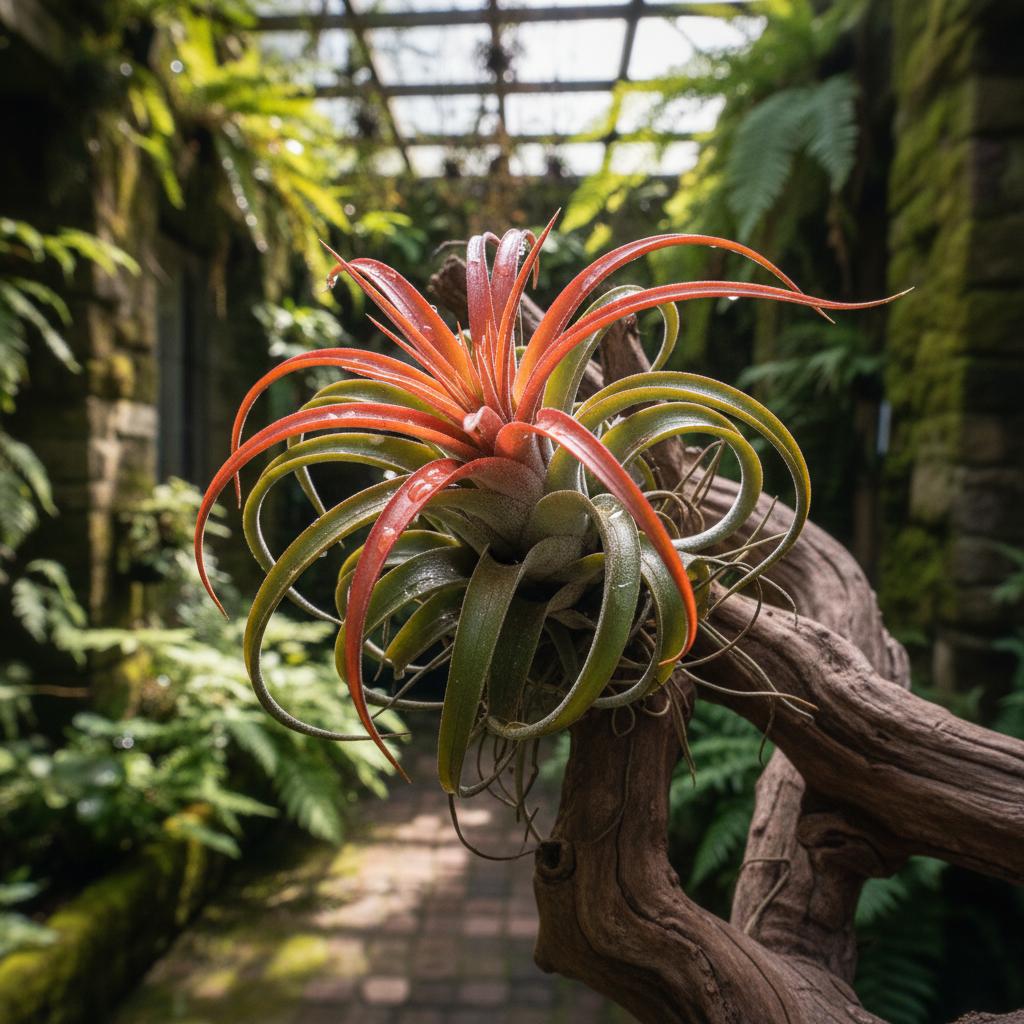
- Leaves: Rosette of soft, velvety leaves densely covered in trichomes, turning a striking vibrant red or maroon prior to and during blooming;
- Flowers: Tubular, violet-purple flowers emerging directly from the center of the brightly colored rosette;
- Roots: Wiry, sparse, and non-absorbent, functioning solely as holdfasts to anchor the plant to tree bark or rocks.
Care Guide
Soak once a week for 20-30 minutes, or mist heavily 2-3 times a week. Ensure good airflow so the plant dries within 4 hours.
Mist with a highly diluted (1/4 strength) bromeliad or orchid fertilizer once a month.. Fertilize sparingly; air plants are sensitive to heavy salts and copper.
Banana Peel Tea Spray:Steep a small piece of banana peel in water for 24 hours, dilute 1:4 with rainwater, and lightly mist the leaves. Avoid heavy application to prevent rot and discard any unused tea immediately to prevent odors.- Trim brown or dried leaf tips at an angle with sterilized scissors to mimic the natural leaf shape;
- Remove spent flower stalks at the base after blooming finishes to encourage pup production;
- Gently peel away dead or rotting basal leaves to maintain airflow and prevent fungal issues.
Toxicity
Warning: this plant may be toxic.
Pets: Non-toxic to cats per ASPCA guidelines for Tillandsia species.
Humans: Non-toxic to humans.
Garden Uses & Culture
Culture: In modern Western interior design, air plants symbolize freedom and minimalist living, often displayed in geometric himmeli brass sculptures or suspended glass globes to emphasize their soil-free nature.
Usage: - Indoor ornamental display (terrariums, driftwood mounts, hanging glass orbs); - Vertical gardens and living walls; - Desktop or windowsill accents.