 PlantFun
Plant Needs
Sunlight
Requires bright, indirect light or filtered sunlight; avoid harsh, direct midday sun which can scorch the leaves.
Watering
Needs no soil; water by misting heavily 2-3 times a week or soaking the entire plant in water for 20-30 minutes once a week.
Temperature
Prefers warm, humid environments; must be protected from frost and freezing temperatures.
Characteristics
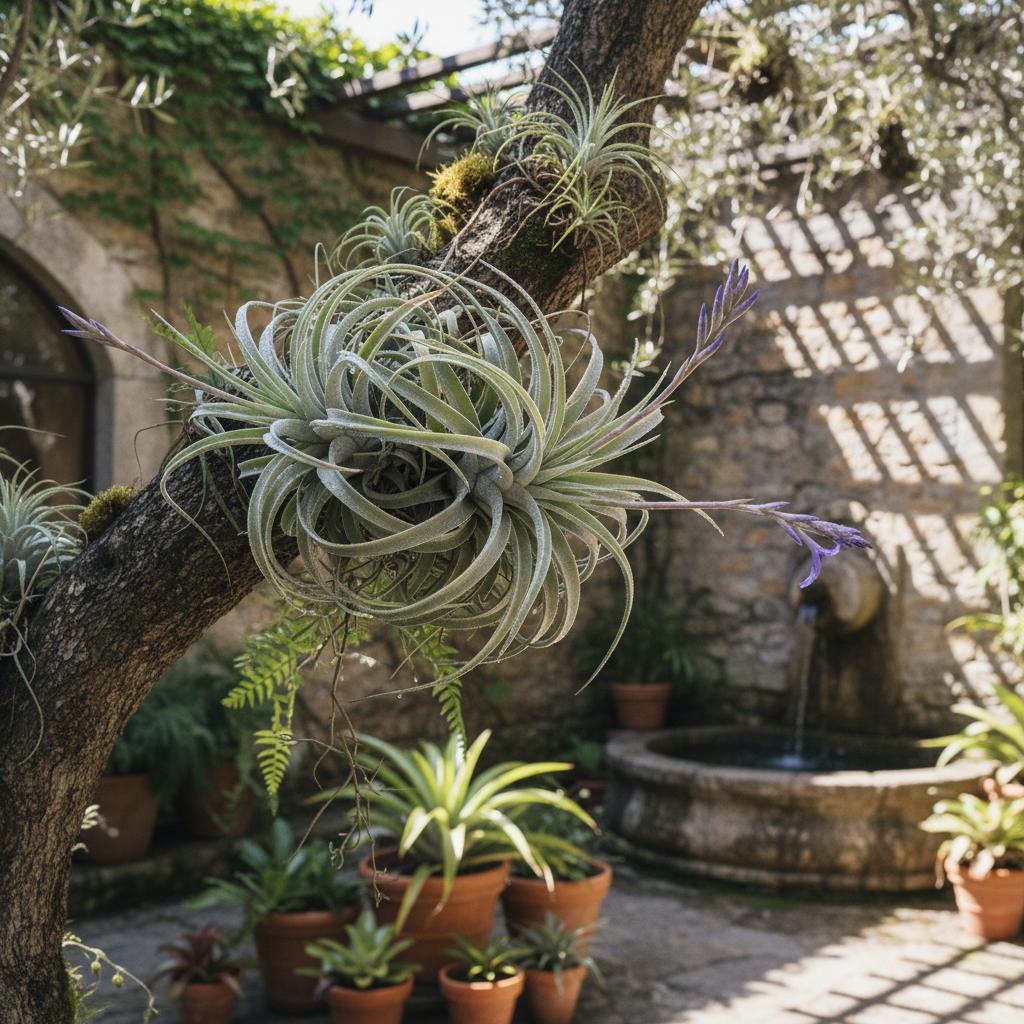
- Leaves: Silvery-green, covered in moisture-absorbing trichomes, forming a dense, slightly stiff but gracefully recurving rosette;
- Flowers: Produces a striking terminal inflorescence with bright pink to reddish bracts and small, tubular violet or blue flowers;
- Roots: Minimal and wiry, functioning solely as holdfasts to anchor the plant to branches or rocks, not for nutrient absorption.
Care Guide
Watering
Soak the plant in room-temperature water for 20-30 minutes once a week. Shake gently upside down afterward to prevent water from pooling in the crown.
Fertilization
Mist with a highly diluted, low-copper epiphytic fertilizer once a month.. Fertilizer is not strictly necessary but encourages blooming and pup production.
Aquarium Water Soak:Use water from a freshwater aquarium change to soak the air plant for 20 minutes. Ensure the water has no added salts or medications. Shake gently afterward to prevent crown rot.Pruning
- Gently pull away any brown, dried basal leaves at the bottom of the rosette;
- Snip off the flower spike at its base once the blooms have completely faded and dried;
- Do not separate "pups" (offsets) until they are at least one-third the size of the mother plant.
Toxicity
Warning: this plant may be toxic.
Pets & Humans
Pets: Non-toxic to cats per ASPCA guidelines.
Humans: Non-toxic to humans; safe to handle and display indoors.
Garden Uses & Culture
Culture: Highly valued in Western contemporary and bohemian interior design for its soil-free, architectural aesthetic, often featured in minimalist living spaces.
Usage: Mounted on cork bark, driftwood, or displayed in hanging glass aeriums and vertical wall gardens.