 PlantFun
Plant Needs
Sunlight
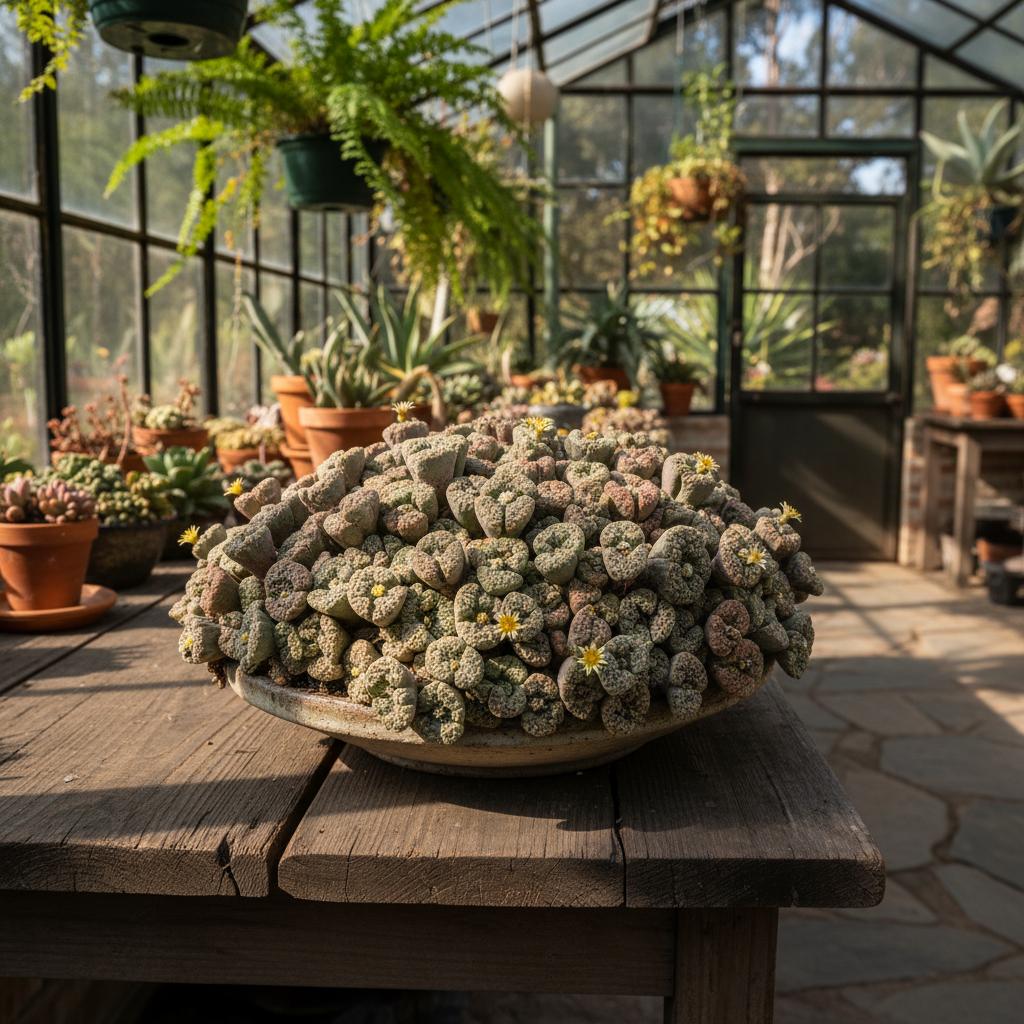
Requires bright, direct sunlight to maintain its compact shape and the vibrant coloration of its warty leaf tips.
Watering
Extremely drought-tolerant. Water only when the soil is completely dry, typically once every two to three weeks.
Temperature
Prefers warm days and cool nights; can tolerate brief, light frosts only if the soil is bone dry.
Characteristics
- Leaves: Fleshy, spatulate leaves forming compact basal rosettes; the truncated tips are heavily encrusted with rough, warty, grayish-white to reddish tubercles resembling limestone.
- Flowers: Solitary, daisy-like, yellow to dark orange, approximately 2 cm in diameter, opening in the afternoon sunlight.
- Roots: Thick, fleshy taproot designed to store water during prolonged droughts.
Care Guide
Watering
Water sparingly during spring. In peak summer heat, the plant may enter dormancy; reduce watering to a bare minimum to prevent rot.
Fertilization
Apply a highly diluted, low-nitrogen succulent fertilizer once at the beginning of the growing season.. Fertilize very sparingly, as excess nutrients cause unnatural, bloated growth.
Eggshell Tea:Crush clean, dry eggshells and steep in water for 3-4 days. Strain and use the water. The added calcium supports the development of their natural calcareous, warty leaf tips. Avoid high-nitrogen organic matter like coffee grounds.Pruning
- Gently remove spent flower stalks after they have completely dried.
- Carefully extract any dried, papery basal leaves using tweezers to prevent moisture trapping and fungal rot.
Toxicity
Warning: this plant may be toxic.
Pets & Humans
Pets: Non-toxic to cats per ASPCA guidelines for the Aizoaceae family.
Humans: Non-toxic to humans; safe to handle.
Garden Uses & Culture
Culture: Highly prized by succulent collectors in Europe and the Americas for its remarkable mimicry of mineral formations, often displayed in specialized rock staging.
Usage: Ideal for miniature rock gardens, specialized succulent collections, and shallow terracotta pots.