 PlantFun
Plant Needs
Characteristics
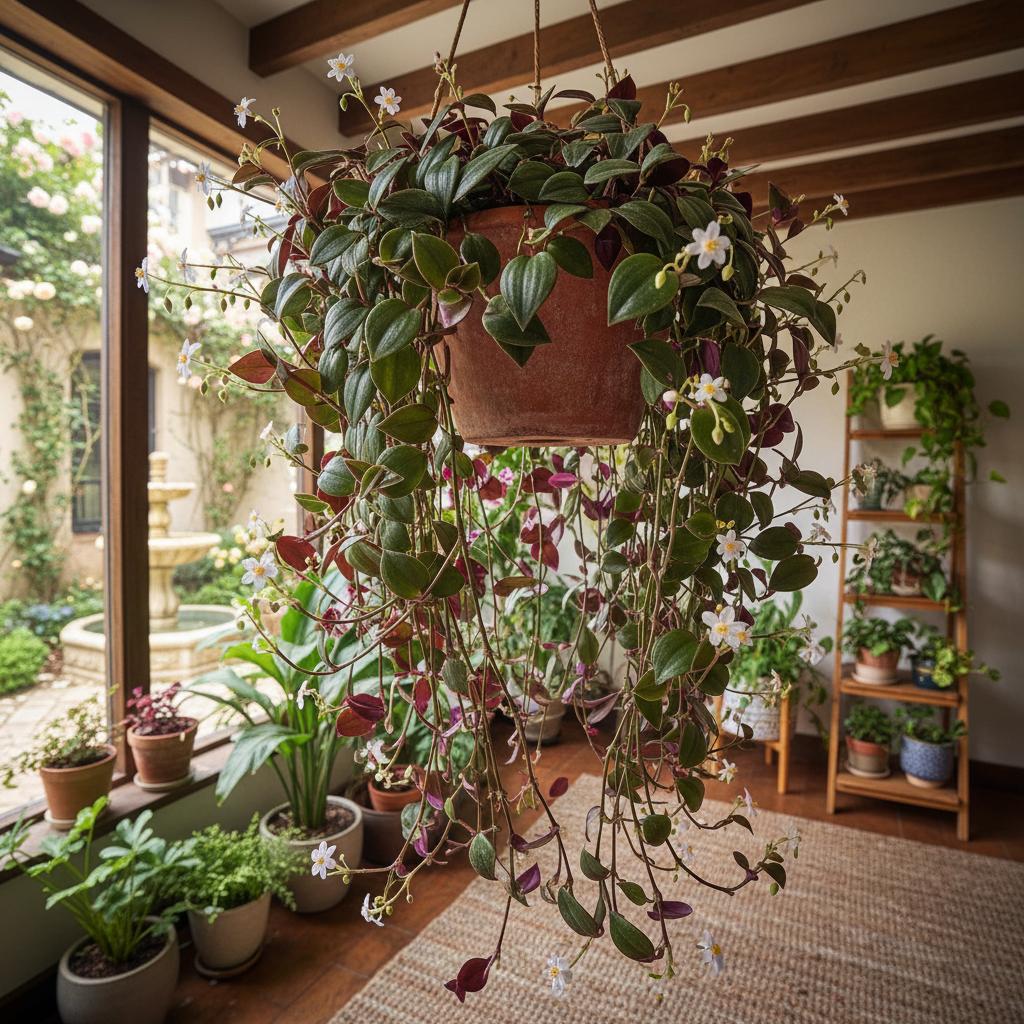
- Leaves: Thick, fleshy, elliptic to lanceolate, olive-green above and densely pubescent (fuzzy) with a vibrant purple underside;
- Stems: Succulent, trailing, densely covered in fine white hairs, rooting readily at the nodes;
- Flowers: Small, three-petaled, pink to white, clustered at the tips of the stems, featuring fuzzy sepals;
- Roots: Fibrous, shallow root system that develops quickly from stem nodes touching the soil.
Care Guide
Water thoroughly when the top inch of soil is dry.
Apply a balanced, diluted fertilizer to support active growth.. Do not over-fertilize, as this can cause the leaves to lose their vibrant variegation and turn mostly green.
Banana Peel Tea:Steep chopped banana peels in water for 24-48 hours, strain, and use the liquid to water the plant. This provides gentle potassium for stem strength. Discard the peels in compost to avoid attracting gnats.- Pinch back the growing tips regularly to encourage branching and a bushier appearance;
- Remove any dead, yellowing, or damaged leaves near the soil line to maintain hygiene;
- Use pruned healthy stem cuttings for easy propagation in water or directly in soil.
Toxicity
Warning: this plant may be toxic.
Pets: Toxic per ASPCA (Tradescantia spp.); frequent contact can cause allergic dermatitis, and ingestion may lead to mild gastrointestinal upset.
Humans: Sap may cause minor skin irritation or contact dermatitis in sensitive individuals.
Garden Uses & Culture
Culture: Highly popular during the 1970s houseplant boom in North America and Europe, often featured in macrame hanging baskets due to its vigorous, trailing growth habit.
Usage: Excellent for hanging baskets, elevated plant stands, or as a trailing component in mixed indoor container gardens.