 PlantFun
Plant Needs
Sunlight
Prefers bright, indirect light to maintain vibrant leaf coloration; can tolerate some direct morning sun.
Watering
Keep soil evenly moist but not waterlogged; allow the top inch of soil to dry out between waterings.
Temperature
Thrives in average to warm room temperatures; protect from frost and cold drafts.
Characteristics
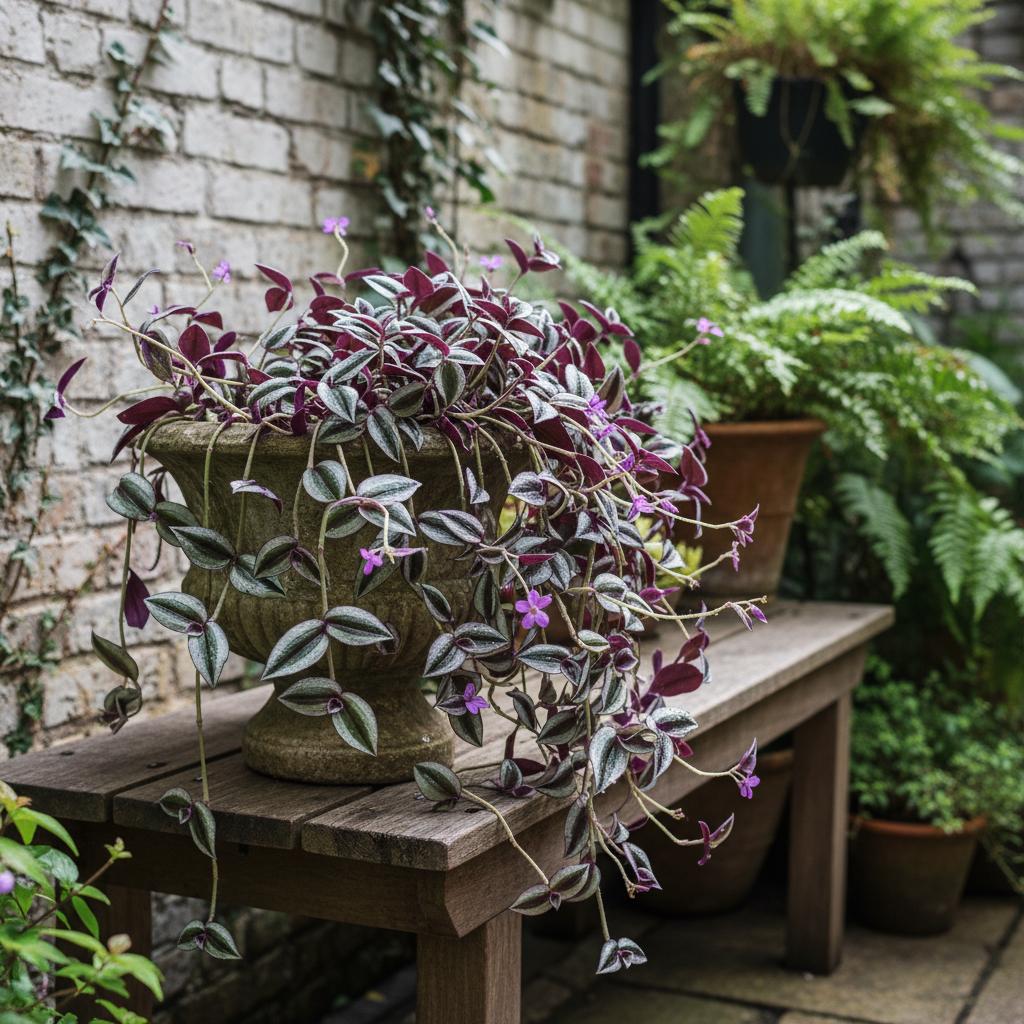
- Leaves: Ovate to lanceolate, fleshy, upper surface with silver and green longitudinal stripes, undersides deep magenta or purple;
- Flowers: Small, three-petaled, pink to purple, emerging from boat-shaped bracts at the stem tips;
- Stems: Fleshy, trailing or decumbent, rooting readily at the nodes, often tinged with purple.
Care Guide
Watering
Water thoroughly when the top inch of soil feels dry.
Fertilization
Apply a balanced liquid fertilizer diluted to half strength.. Feed monthly during the active growing season; halt fertilization during the winter dormancy period.
Banana Peel Tea:Soak chopped banana peels in water for 24-48 hours, strain, and use the liquid to water the plant. Avoid leaving solid peels on the soil to prevent fungus gnats.Pruning
- Pinch back stem tips regularly to encourage bushier growth and prevent legginess;
- Remove any dead, yellowing, or damaged leaves to maintain appearance;
- Propagate healthy stem cuttings in water or soil to easily create new plants.
Toxicity
Warning: this plant may be toxic.
Pets & Humans
Pets: Toxic per ASPCA; contact with sap can cause dermatitis, and ingestion may lead to mild gastrointestinal upset.
Humans: Sap may cause minor skin irritation or contact dermatitis in sensitive individuals.
Garden Uses & Culture
Culture: Popularized in Victorian times as a classic parlor plant, it has remained a staple in Western indoor gardening due to its resilience and striking foliage.
Usage: Widely used as a hanging basket plant, trailing shelf accent, or ground cover in frost-free climates.