 PlantFun
Plant Needs
Sunlight
Requires full, direct sunlight for optimal growth and prolific blooming.
Watering
Highly drought tolerant; allow the soil to dry out completely between waterings.
Temperature
Prefers warm, arid conditions; protect from hard frosts and prolonged freezing temperatures.
Characteristics
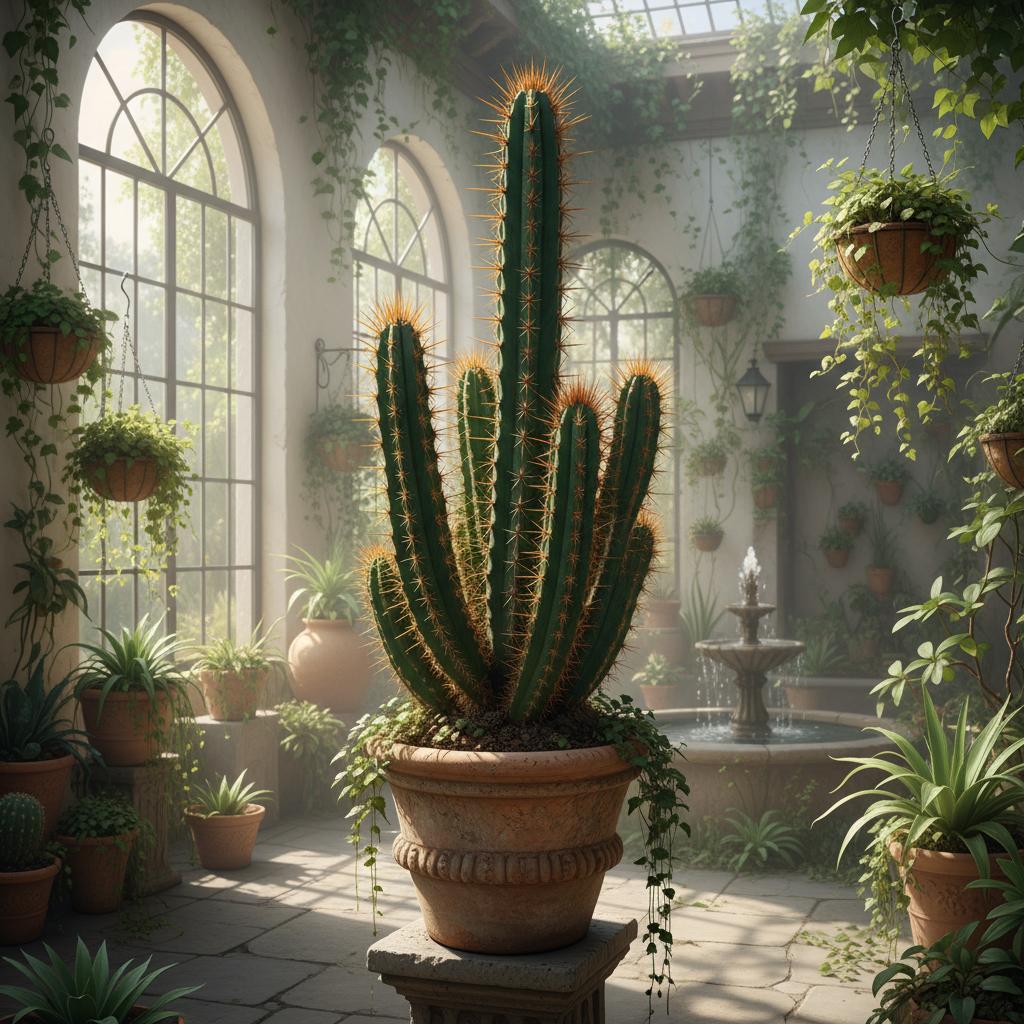
- Stems: Cylindrical, prominently ribbed, dark green, often clustering at the base to form dense clumps;
- Spines: Yellowish to brown, needle-like, emerging from fuzzy areoles along the ribs;
- Flowers: Very large (up to 15 cm across), funnel-shaped, diurnal, blooming in brilliant shades of red, pink, orange, yellow, or white depending on the specific hybrid.
Care Guide
Watering
Water deeply when the soil is completely dry.
Fertilization
Apply a low-nitrogen, high-phosphorus fertilizer to promote blooming.. Feed only during the active growing season; withhold all fertilizer during winter dormancy.
Banana Peel Tea:Soak chopped banana peels in water for 24 hours, strain, and use the diluted liquid to water the cactus. This provides potassium for large, vibrant blooms. Discard solid peels to prevent attracting pests.Pruning
- Wear thick, puncture-resistant gloves or use rolled newspaper when handling the plant;
- Remove spent flowers gently once they have completely dried and shriveled;
- If a stem is damaged or rotting, cut it away with a sterile knife until only healthy green tissue remains, allowing the cut to callous over.
Toxicity
Warning: this plant may be toxic.
Pets & Humans
Pets: Non-toxic to cats per ASPCA guidelines, but spines pose a significant puncture risk.
Humans: Non-toxic to humans, but sharp spines can cause mechanical injury and skin irritation.
Garden Uses & Culture
Culture: In Western landscaping, columnar cacti symbolize the rugged beauty, resilience, and endurance of the American Southwest desert aesthetic.
Usage: Excellent for xeriscaping, rock gardens, and as a striking container specimen on sunny patios.