 PlantFun
Plant Needs
Sunlight
Prefers full sun to partial shade.
Watering
Moderate watering; drought tolerant once established but prefers evenly moist soil.
Temperature
Highly cold tolerant and adaptable to a wide range of temperatures.
Characteristics
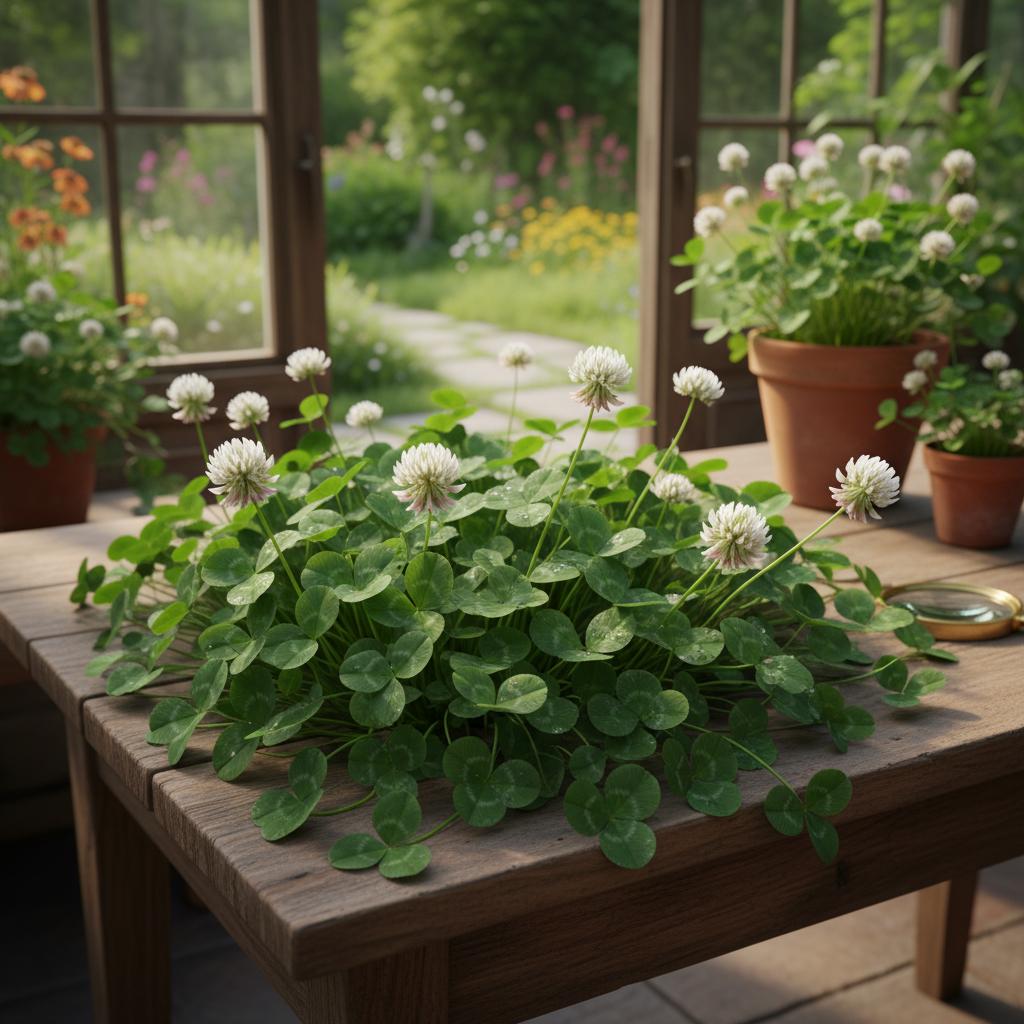
- Leaves: Trifoliate, leaflets obovate to obcordate, often with a white V-shaped crescent mark, margins finely denticulate;
- Flowers: Inflorescence a globose raceme, 1.5-2 cm across, consisting of 20-40 white or pale pink papilionaceous flowers;
- Stems: Creeping stolons that root at the nodes, glabrous.
Care Guide
Watering
Water when the top inch of soil feels dry
Fertilization
Apply a light compost top-dressing if needed. Avoid high-nitrogen fertilizers, as clovers are nitrogen-fixing legumes.
Banana Peel Tea:Soak chopped banana peels in water for 24-48 hours. Dilute 1:1 with water and apply to the soil to support blooming without adding excess nitrogen. Discard peels in compost to avoid pests and odors.Pruning
- Mow or trim regularly if grown as a lawn alternative to maintain a low profile;
- Deadhead spent blooms to tidy appearance and prevent excessive self-seeding;
- Edge beds to control the spread of creeping stolons.
Toxicity
Warning: this plant may be toxic.
Pets & Humans
Pets: Non-toxic per ASPCA.
Humans: Generally safe; leaves and flowers are edible in moderation, though raw leaves can be hard to digest.
Garden Uses & Culture
Culture: Deeply rooted in Western folklore, the three-leaf clover is associated with the Christian Holy Trinity by St. Patrick in Ireland, while the rare four-leaf clover is a universal Western symbol of good luck.
Usage: Used as a lawn alternative, cover crop, green manure, and forage for livestock. Also highly valued as a nectar source for honeybees.