 PlantFun
Plant Needs
Characteristics
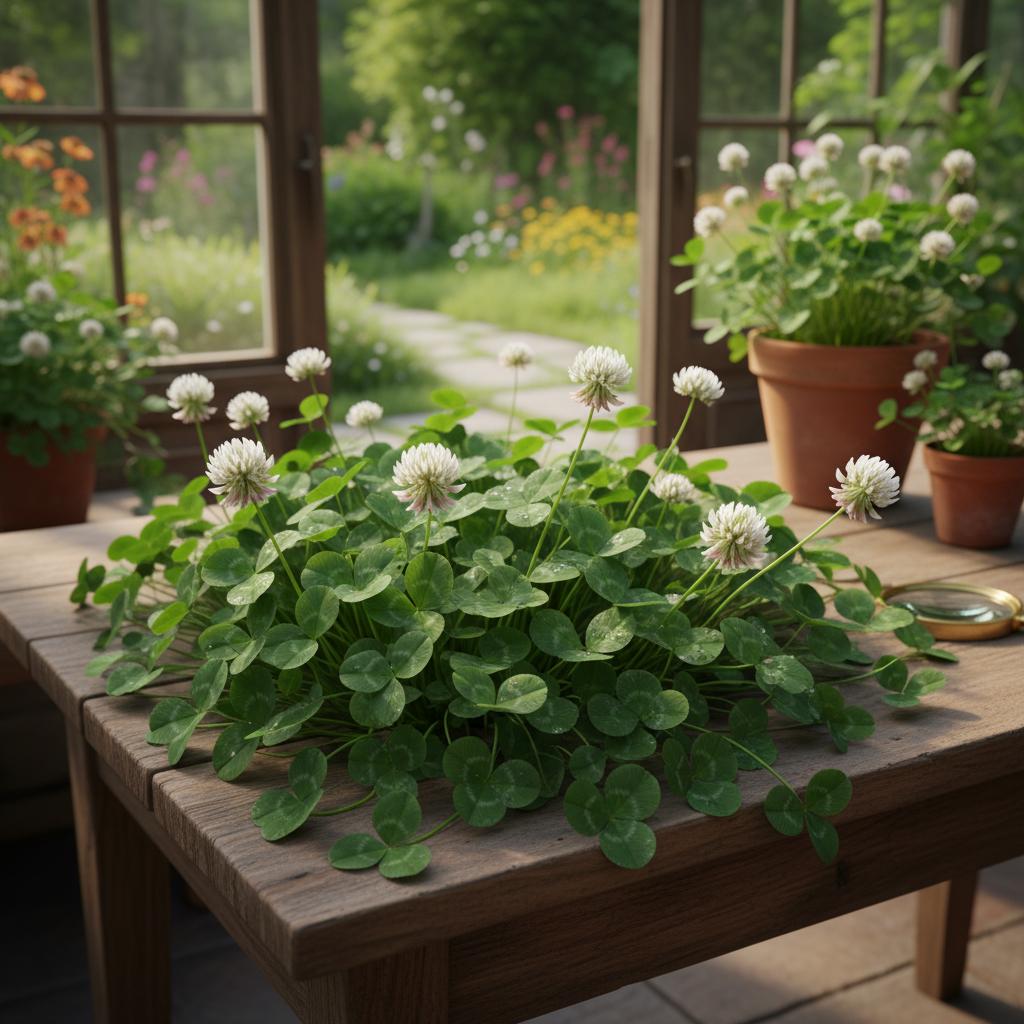
- Leaves: Trifoliate, leaflets obovate to obcordate, 1-3 cm long, often featuring a distinct white V-shaped watermark, margins finely denticulate;
- Flowers: Inflorescence a dense globose head (1.5-2 cm across) borne on a long peduncle, corolla white to pale pink, papilionaceous;
- Stems: Creeping stolons that root at the nodes, glabrous, forming dense mats.
Care Guide
Water deeply when the top inch of soil feels dry to encourage deep root growth.
Rarely needed; if grown in pots, a light application of phosphorus/potassium can boost blooms.. Fertilization recommendations description
Banana Peel Tea:Steep chopped banana peels in water for 24-48 hours. Use the strained liquid to water the clover. This provides potassium and phosphorus to support root health and blooming without adding unnecessary nitrogen, which the plant already fixes from the air.- Mowing: Mow or trim occasionally to maintain a low profile and encourage dense, spreading growth;
- Deadheading: Remove spent flower heads if you wish to prevent aggressive self-seeding;
- Edging: Trim stolons that creep into unwanted garden beds or pathways.
Toxicity
Warning: this plant may be toxic.
Pets: Non-toxic per ASPCA.
Humans: Generally safe; leaves and flowers are edible in small quantities, though raw consumption in large amounts may cause bloating.
Garden Uses & Culture
Culture: Deeply rooted in Western folklore, the three-leaf clover (shamrock) is associated with Saint Patrick and the Holy Trinity in Ireland. The rare four-leaf clover is a universal Western symbol of good luck, with the leaves representing hope, faith, love, and luck.
Usage: Widely used as a lawn alternative, groundcover, cover crop, green manure, and forage for livestock. It is also a crucial nectar source for honeybees and other pollinators.