 PlantFun
Plant Needs
Characteristics
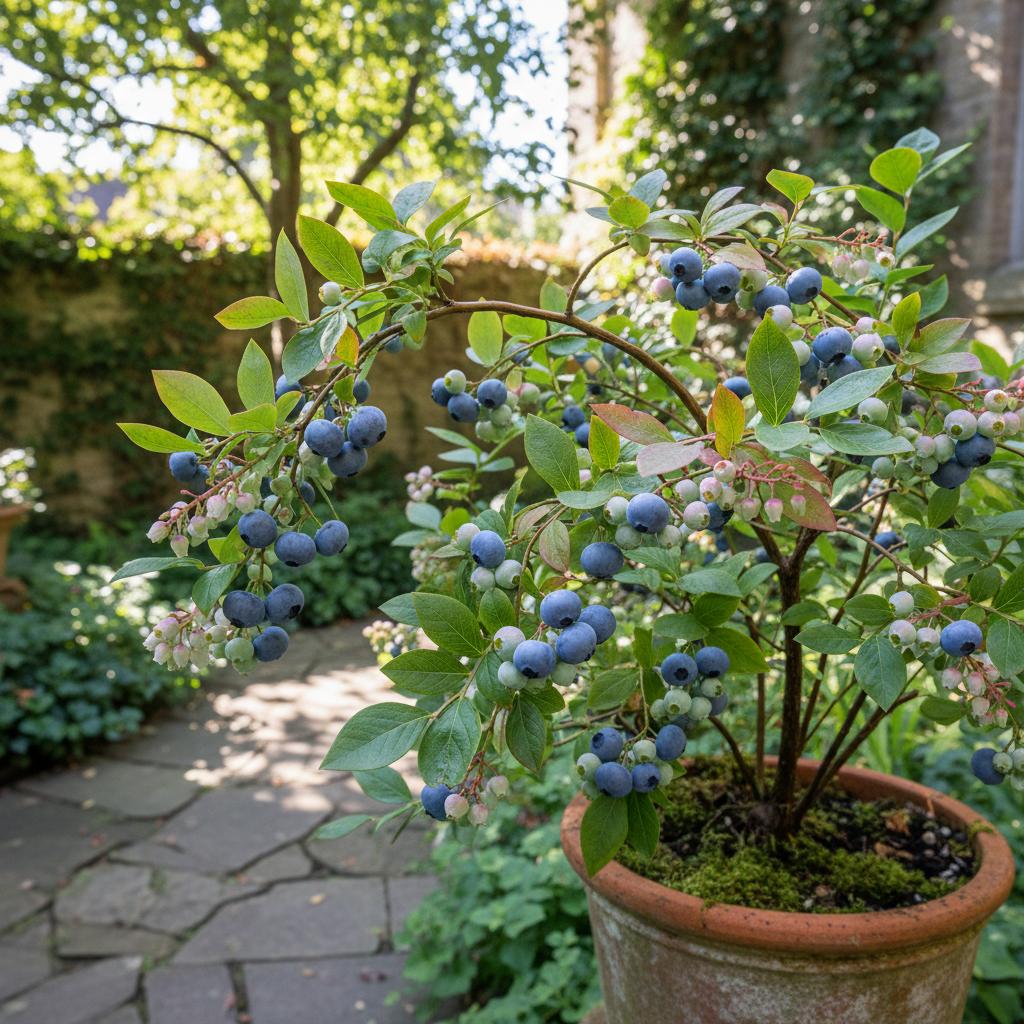
- Leaves: Alternate, simple, ovate to lanceolate, 2-8 cm long, glossy dark green in summer, turning brilliant shades of red, orange, and purple in autumn;
- Flowers: Urn-shaped (campanulate), white to pale pink, approximately 8-10 mm long, borne in drooping clusters (racemes) in spring;
- Fruit: Globose true berries, initially pale green, ripening to a powdery blue-black with a waxy bloom, 1-2 cm in diameter;
- Stems: Woody, multi-stemmed shrub with a branching habit; young stems are often yellowish-green or reddish, becoming gray and shreddy with age.
Care Guide
Water deeply and consistently, especially during fruit set and ripening, keeping the soil evenly moist.
Apply an acid-forming organic fertilizer just as buds begin to swell.. Avoid fertilizing late in the summer to prevent tender new growth before frost.
Coffee Grounds and Pine Needle Mulch:Mix used coffee grounds lightly into the topsoil to provide a gentle nitrogen boost and help maintain soil acidity. Top with dried pine needles as mulch to retain moisture and slowly lower pH as they decompose. Avoid thick, uncomposted layers that might block water.- Prune during late winter or early spring while the plant is fully dormant;
- Remove any dead, diseased, or crossing branches to improve airflow and sunlight penetration;
- Cut back canes that are older than 4-5 years to the ground to encourage vigorous, productive new shoots;
- Thin out weak, twiggy growth at the base to direct energy into the strongest fruiting wood.
Toxicity
Warning: this plant may be toxic.
Pets: Non-toxic to cats per ASPCA guidelines.
Humans: Fruits are highly nutritious and safe for human consumption; no toxic parts.
Garden Uses & Culture
Culture: In North America, blueberries hold deep historical and cultural significance. Indigenous peoples revered the "star berry" (named for the five-pointed star shape at the blossom end of the berry) as a gift from the Great Spirit, using it extensively in pemmican for winter survival and early trade.
Usage: - **Culinary**: Fruits are eaten fresh, baked into pies and muffins, or preserved as jams and jellies; - **Landscaping**: Highly valued as an ornamental edible shrub for its spring flowers and striking red autumn foliage; - **Wildlife**: Attracts pollinators (especially bumblebees) and provides food for native birds.